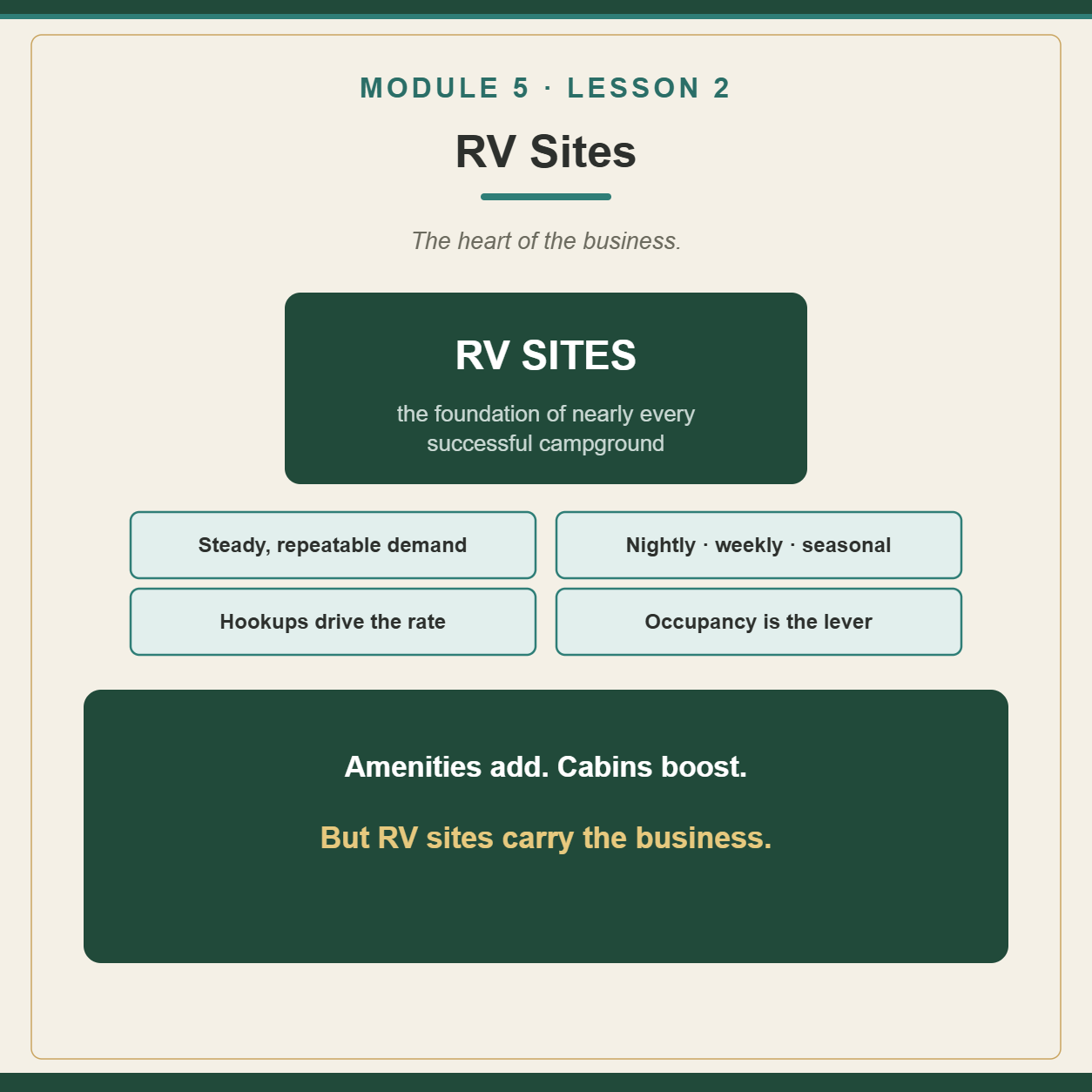
RV sites are the foundation of nearly every successful campground. While amenities and cabins can generate significant revenue, RV sites remain the primary income source for most parks.
Not all RV sites generate the same revenue. Understanding the different site types helps buyers recognize both current income and future opportunity.
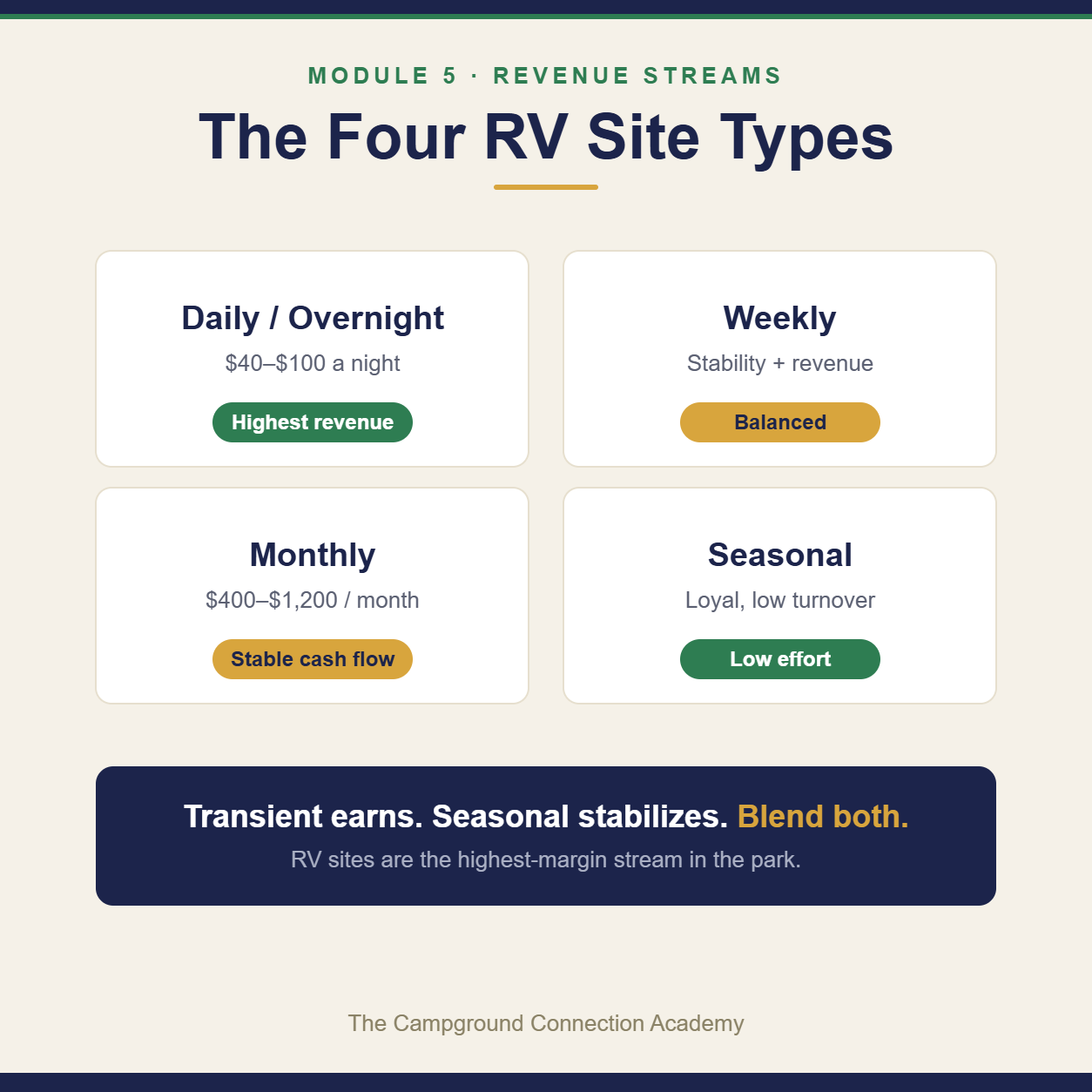
1. Daily / Overnight RV Sites (Highest Revenue Per Site)
These guests typically produce the highest revenue on a per-night basis. Typical rates: $40–$100+ per night (varies by market and amenities).
Characteristics: highest revenue potential, frequent turnover, heavy influence from online reviews, popular with travelers and vacationers.
Pros: highest revenue per site, easier to increase rates, strong online booking demand.
Cons: higher labor and utility costs, more maintenance and wear, seasonal fluctuations.
2. Weekly RV Sites
A balance between transient and long-term camping. Weekly guests often provide more stable occupancy, less turnover than nightly guests, and higher revenue than monthly sites. Ideal for vacationers, traveling workers, and guests extending their stay.
3. Monthly RV Sites (Stable Cash Flow)
Monthly sites generally produce lower revenue per night but offer dependable income. Typical monthly rates: $400–$1,200+.
Pros: consistent cash flow, predictable occupancy, lower labor, helpful during slower seasons.
Cons: lower revenue than nightly camping, potential long-term residency concerns, local regulations may limit occupancy.
Banks often appreciate stable monthly income because it creates consistency in the financial statements.
4. Seasonal RV Sites
Seasonal campers often become the foundation of many successful campgrounds. Typical seasonal rates: $1,500–$5,000+ per season.
Pros: revenue secured before the season begins, minimal turnover, lower operating costs, strong customer loyalty.
Cons: lower nightly-revenue equivalent, fewer sites available for transient guests, requires good customer relationships and management.
Well-managed seasonal parks can be among the most profitable operations in the industry.
Understanding Your Customer Mix
One of the biggest factors affecting campground revenue is who your customers are. In general:
- ✔ Short-term campers often generate more total revenue than long-term campers — they buy more nights, plus storage, firewood, ice, propane, rentals, and other amenities.
- ✔ Families and younger campers often spend more throughout the campground than guests who mainly use the site as a place to park. (Gen Z campers spend about $266 a day versus roughly $134 for boomers.)
That doesn’t make one guest “better” than another — different customer groups simply spend money differently. Understanding your customer mix helps you make smarter operating decisions.
“After fifty years, here’s what I look at first: who’s actually camping here. A park full of older seasonals on cheap monthly rates can feel safe, but it’s the families and younger campers who spend all over the park — firewood, the store, golf-cart rentals, a cabin upgrade. Build the park around the guest who spends, keep enough sites open to capture the short-term crowd, and a fifty-site park will out-earn a hundred-site park every time.”
Every Campground Is Different
Today’s industry serves many different types of campers. There are roughly 16 different campground styles and market segments, each serving different customer needs. Examples include:
- ✔ Destination resorts
- ✔ Overnight travel parks
- ✔ Seasonal campgrounds
- ✔ Family campgrounds
- ✔ Glamping resorts
- ✔ Adult communities
- ✔ Luxury RV resorts
- ✔ Fishing and hunting campgrounds
Each attracts a different guest — and each has a different revenue model. Successful owners know who their ideal customer is and build the campground around that experience. (Module 7 covers the primary park types in depth.)
Lesson Takeaway
The most profitable campground isn’t always the one with the most sites. It’s the one that understands its customers and maximizes the value of every site.
“The question isn’t how many sites you have — it’s how well each site performs.”