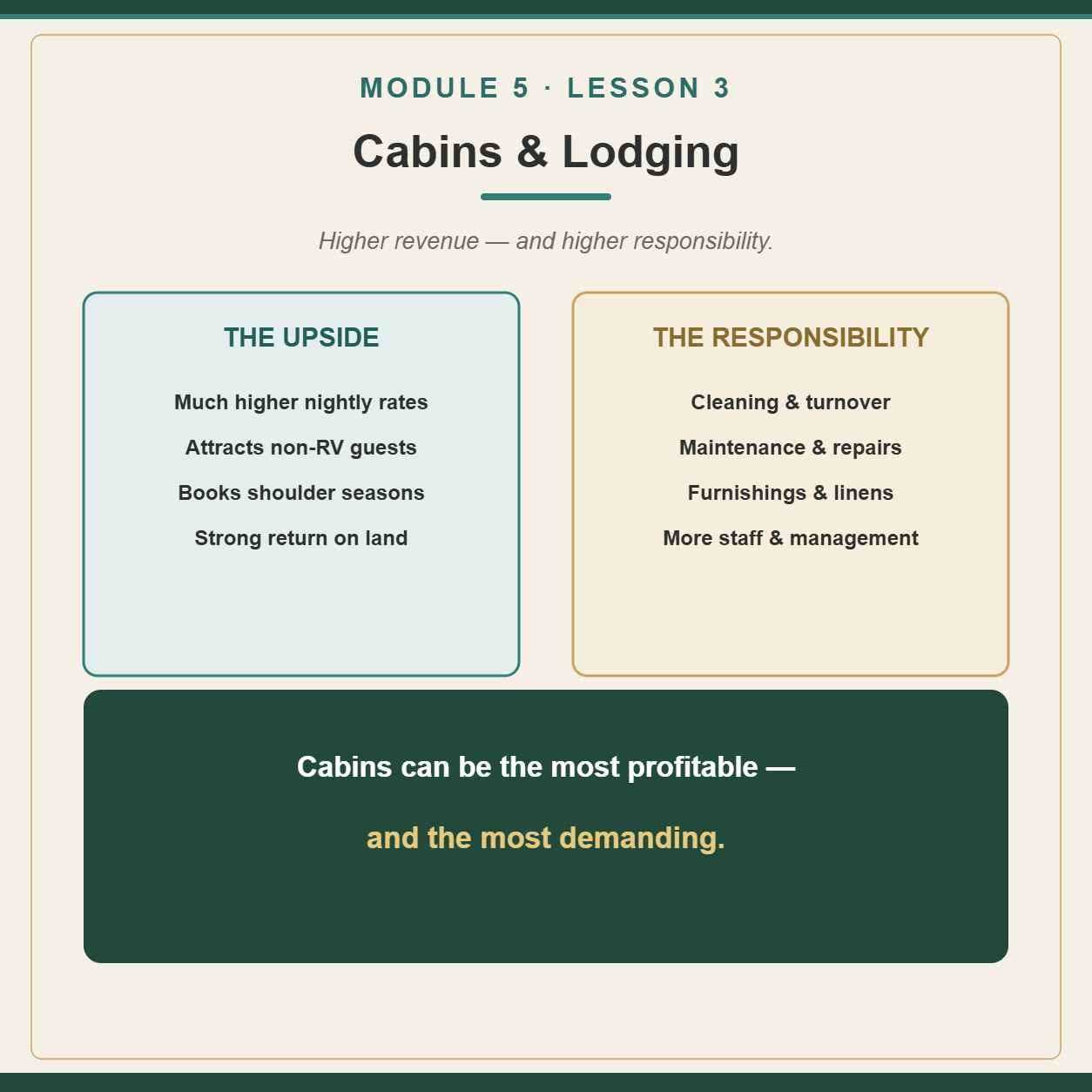
Cabins can be one of the most profitable parts of a campground. They can also become one of the most expensive assets to own and maintain. Successful buyers understand both the revenue potential and the ongoing operating costs before adding or purchasing cabins.
Common Types of Cabin Accommodations
Basic Camping Cabins — simple accommodations designed primarily for sleeping. Typically include beds, electricity, and minimal furnishings.
Advantages: lower construction cost, lower utility costs, easier maintenance, faster cleaning.
Deluxe Cabins — often include a kitchen, bathroom, heating & air conditioning, and living space. Typical nightly rates: $100–$250+ (depending on market).
Advantages: higher nightly rates, appeals to families, extends the camping season.
Trade-offs: more utilities, more maintenance, more cleaning, higher replacement costs.
Park Models / Tiny Homes — one of the fastest-growing accommodation types, typically built under 400 square feet — the size that keeps them classified as RVs rather than homes: high guest demand, premium nightly rates, excellent shoulder-season occupancy, and popular with couples and families.
Every Cabin Is a Business Decision
Before purchasing or adding cabins, ask:
- ✔ What will they cost to purchase?
- ✔ What will they cost to maintain?
- ✔ Will my market support the nightly rate needed to justify the investment?
Higher revenue does not always mean higher profit. The numbers must work.
“A cabin is a business, not a decoration. I’ve watched buyers fall in love with a pretty cabin and forget what it costs to clean it, heat it, insure it, and replace the appliances down the road. Before you add one, run the whole number — purchase, upkeep, taxes, insurance, all of it — and ask honestly whether your market will pay enough to make it worth it. The cabin doesn’t make you money. The math does.”
Additional Costs Buyers Often Forget
Cabins require ongoing:
- ✔ Cleaning
- ✔ Repairs
- ✔ Inspections
- ✔ Furnishings
- ✔ Appliance replacement
- ✔ Insurance
- ✔ Utilities
- ✔ Turnover management
These operating costs should always be included when evaluating profitability.
Understand the Tax Implications
Not all cabins are treated the same. Depending on the structure, foundation, wheels, size (park models are generally under 400 square feet), local regulations, and state laws, tax treatment can vary widely. During due diligence, verify:
- ✔ Property tax classification
- ✔ Personal property tax requirements
- ✔ Registration requirements (if applicable)
- ✔ Depreciation opportunities
- ✔ Local assessment rules
Always discuss these items with your accountant and local taxing authority before purchasing.
Think About Revenue Per Acre
One reason cabins are attractive is their ability to increase revenue per acre. In many markets, one well-managed cabin can generate substantially more annual revenue than a traditional RV site. The goal isn’t simply adding cabins — it’s adding cabins that produce a strong return on investment.
Lesson Takeaway
Cabins can significantly increase campground revenue — but only when they make financial sense for your market. Before adding cabins, understand the full picture: purchase cost, operating expenses, maintenance, taxes, insurance, and expected return on investment.
“Don’t buy cabins because they’re popular. Buy them because the numbers support the investment.”