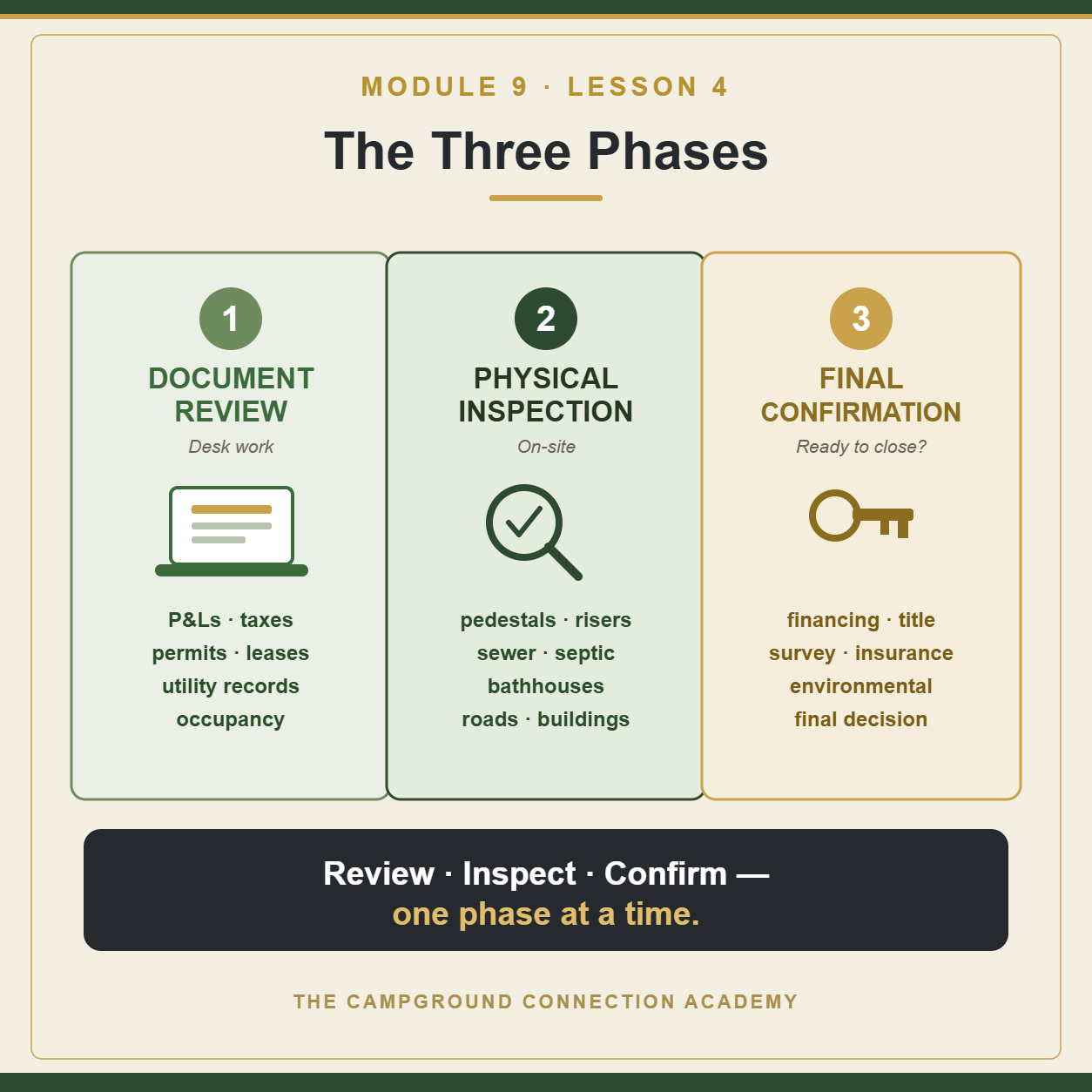
Due diligence is easiest to manage when you break it into clear phases. That keeps the process organized, helps you focus on the right tasks at the right time, and reduces the chance of missing something important.
Most campground due diligence can be organized into three phases, each with a different purpose:
PHASE 1
Document Review
PHASE 2
Physical Inspection
PHASE 3
Final Confirmation
Phase 1 — Document Review (Desk Due Diligence)
This is the paper-review stage. Here you review the records, reports, and documents that help you understand how the campground performs, how it operates, and what risks may exist.
Financial: profit-and-loss statements (typically 3 years plus the trailing 12 months), tax returns, add-backs and owner adjustments, expense detail, payroll records, insurance information, and bank statements when needed.
Operational: reservation software reports, rate sheets, occupancy history, vendor contracts, and staff or organizational information.
Utilities & infrastructure: septic system records and pump reports, well logs, water tests, electrical schematics, site maps, and engineering drawings if available.
Compliance & property records: zoning, Special Use Permit (SUP) if applicable, environmental reports, maintenance logs, and other licenses or permits.
The purpose of Phase 1 is to understand the business and identify what requires deeper follow-up.
Phase 2 — Physical Inspection (On-Site Due Diligence)
This is where you, your inspectors, or other professionals verify the physical condition of the property and its systems.
RV sites: water risers, sewer drops, electric pedestals, grading, and drainage.
Bathhouses: plumbing, roofs, hot water systems, and general condition.
Septic fields / sewer systems: tank condition, pump stations, and drain-field performance or saturation concerns.
Water system: pressure, flow, pump house, and distribution lines.
Electrical system: pedestals, breakers, panels, and transformers.
Buildings & improvements: cabins, motels, store, laundry, clubhouse, office, and other structures.
Roads & site infrastructure: road condition, drainage patterns, and other visible concerns.
The purpose of Phase 2 is to confirm the physical property matches your expectations and to identify material repair, replacement, or infrastructure concerns.
Phase 3 — Final Confirmation
Once your document review and physical inspections are complete, the final step is to confirm whether you’re ready to move forward. This phase may include financing approval, insurance approval, title review, survey review, environmental clearance when applicable, and a final evaluation of whether the campground matches the business and property you believed you were buying.
THE QUESTION AT THE END
Do the facts support moving forward to closing?
If yes, you proceed. If material issues are discovered, you may have the right to renegotiate, request additional time, or terminate — depending on the terms of your agreement.
LESSON TAKEAWAY
Break due diligence into phases: review the records, inspect the property, then confirm whether the facts support closing. Handled in order, these three phases help you stay organized, make better decisions, and move toward closing with confidence.