Due diligence is designed to uncover things you couldn’t fully see before making your offer. Some findings are normal. Others deserve much closer attention.
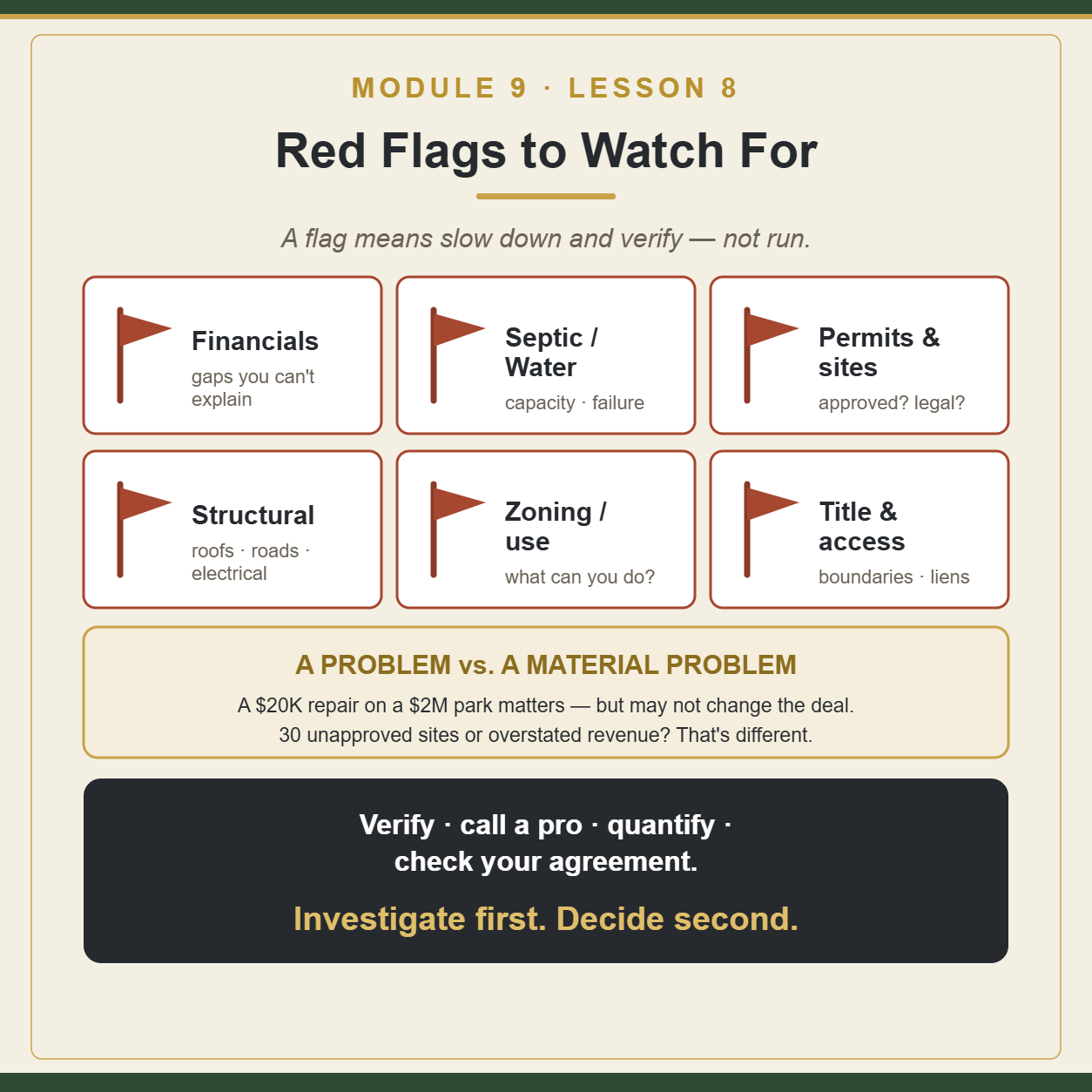
A red flag does not automatically mean you should walk away. It means: stop, ask questions, verify the facts, and understand the cost and consequences before moving forward. The most important question isn’t “Did we find a problem?” — it’s “How material is the problem, and what does it mean for this campground?”
1. Financials that don’t tell a consistent story
Unexplained differences between P&Ls and tax returns, revenue that reservation records can’t support, large or questionable add-backs, expense categories that disappear without explanation, payroll that looks unusually low for the operation, or big NOI swings with no clear reason. An inconsistency isn’t automatically fraud — it’s a reason to investigate. The seller or accountant may have a perfectly reasonable explanation. Your job is to get one.
2. Major or unexplained utility spikes
A sudden jump in electric, water, sewer, or propane deserves attention — leaks, aging equipment, electrical problems, higher occupancy, provider rate increases, or infrastructure issues. Look at several years. One high bill may mean little; a repeated pattern may mean much more.
3. Septic or wastewater systems with significant issues
Failing tanks, saturated drain fields, pump or lift-station problems, systems operating beyond designed capacity, poor maintenance records, repeated backups, or lagoon compliance issues. Wastewater can get expensive fast — and it can affect whether you’re able to add sites or expand. If there’s a concern, bring in a qualified professional.
4. Water-system problems
Poor pressure, inadequate flow, failed water-quality tests, aging wells, repeated pump problems, undocumented lines, or systems that can’t support current or future demand. For seasonal parks, understand how the system is winterized — water lines designed for seasonal operation aren’t automatically a problem. A system that repeatedly freezes, leaks, or is used beyond its design may be.
5. Undocumented or unapproved expansions
A campground may appear to have 150 sites — but how many are actually licensed or approved? Verify the licensed site count, approved site plans, expansion permits, utility approvals, septic capacity, and zoning. Don’t assume that because a site exists physically, it’s legally approved to operate — this matters most when you’re paying a premium based on site count or future expansion.
6. Zoning or use issues
Watch for operations that may not match current zoning, Special Use Permit requirements, local ordinances, conditional-use approvals, or health-department requirements. Understand whether the park is conforming, legally nonconforming, or operating under a special permit. A legally nonconforming use isn’t necessarily bad — but you need to know exactly what you can and cannot do with the property after closing.
7. Unpermitted buildings, cabins, or additions
Don’t assume every structure you see was properly approved. Verify significant improvements — cabins, rental units, bathhouses, decks, pools, pavilions, added RV sites, major building additions. If permits can’t be located, determine whether they were required and whether the municipality has records.
8. Structural or major physical issues
Foundation problems, roof failure, significant water intrusion, unsafe decks or stairs, major electrical concerns, failing retaining walls, drainage problems, serious road deterioration. This is where professional inspections matter most — don’t guess what a major repair will cost. Get qualified input.
9. Sellers who can’t — or won’t — support material information
There’s a difference between “I don’t have that document” and “I won’t provide anything that verifies what I’ve represented.” Older campgrounds may legitimately have incomplete files; that alone isn’t alarming. But if material financial, licensing, ownership, or operational claims can’t be supported — and reasonable attempts to verify them are repeatedly blocked — investigate further.
10. Environmental concerns
Underground fuel tanks, contaminated soil, old maintenance areas, dump stations, fuel storage, wetlands, floodplain exposure, or prior uses that may create concerns. Your lender may require an environmental assessment; even when it doesn’t, some properties justify additional review.
11. Long-term occupancy that doesn’t match approvals
Seasonal, monthly, extended-stay, or year-round occupants can be perfectly legitimate — but verify that long-term occupancy is consistent with zoning, campground licensing, local ordinances, health regulations, and the guest agreements. Don’t assume that because something has happened for years, it’s automatically approved.
12. Title, survey, or access problems
Easy to overlook because they aren’t visible on a tour: boundary disputes, encroachments, easements that affect operations, roads crossing neighboring property, campsites outside the property lines, unclear access rights, or liens and title exceptions. Your attorney, title company, and surveyor help identify these.
NOT EVERY RED FLAG IS A DEAL KILLER
A $20,000 repair on a multimillion-dollar campground matters — but it may not materially change the economics. Now imagine finding that 30 sites aren’t legally approved, the septic can’t support the park, revenue is substantially overstated, or the park can’t legally operate the way you expected. Those have a very different impact.
Learn to separate a problem from a material problem.
What to do when you find a red flag
1. Verify it. Make sure you understand what was actually discovered.
2. Bring in the right professional. Don’t diagnose technical issues yourself.
3. Determine the cost or consequence. What will it actually take to resolve?
4. Determine whether it changes the deal. Does it materially affect value, operations, financing, or your intended use?
5. Review your agreement. Understand your rights, deadlines, and options before acting.
LESSON TAKEAWAY
Due diligence will uncover issues — that’s what it’s supposed to do. A red flag doesn’t automatically mean the campground is a bad investment; it means the issue deserves verification, professional review, and a clear understanding of its impact. Don’t ignore red flags — but don’t panic over them either. Investigate first. Decide second.