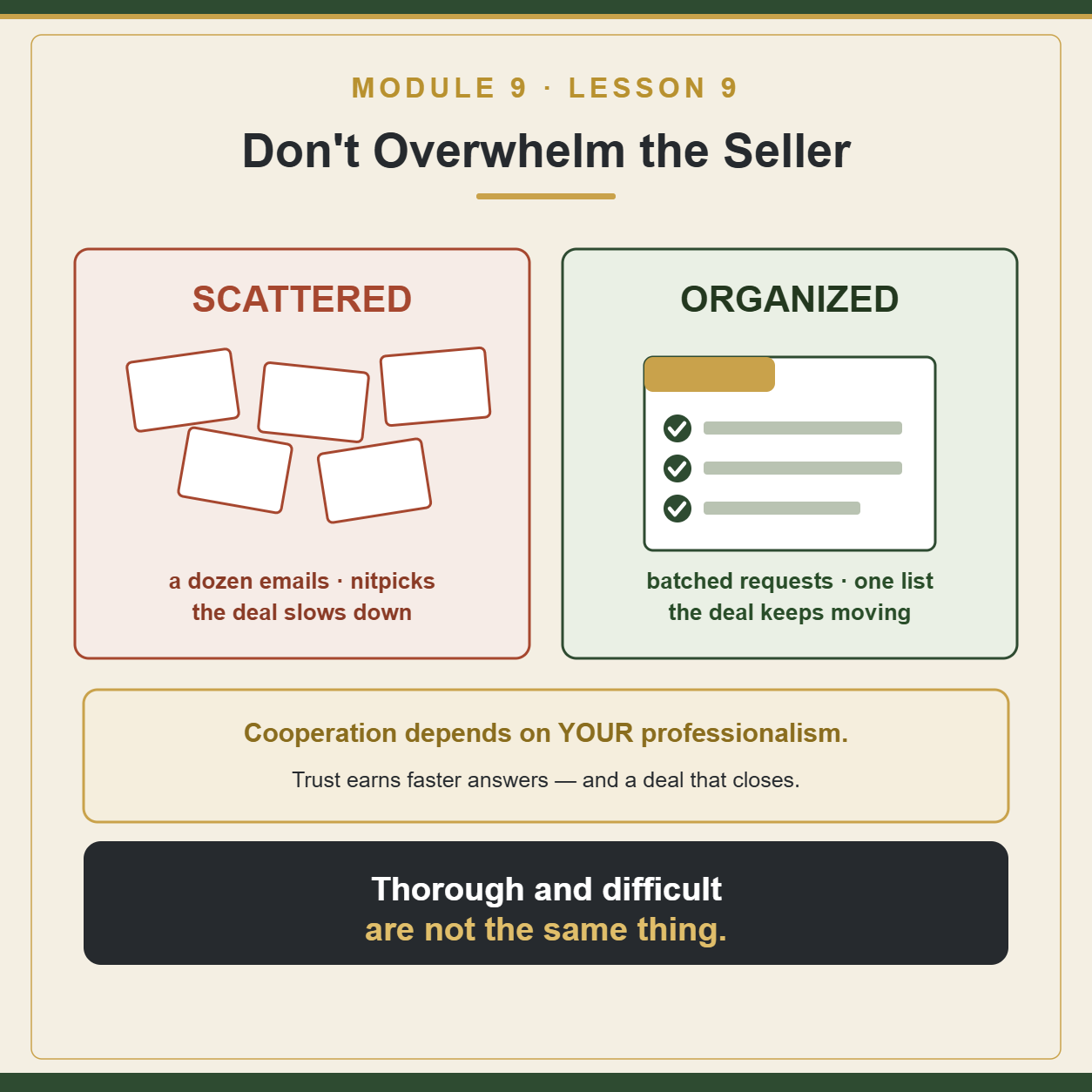
Due diligence can generate a lot of questions, documents, inspections, and follow-up. The way you manage that process matters.
A seller may be operating the campground full-time while responding to requests from you, your lender, attorney, accountant, inspectors, appraiser, and title company. That can become overwhelming quickly. Your goal isn’t to ask fewer important questions — it’s to make the process organized, efficient, and professional.
1. Ask for documents in batches
Avoid sending a new request every few hours. Organize requests by category — financial, operational, utilities, property, licenses and permits, contracts, insurance — and send one clear list rather than a stream of separate emails. It makes it easier for everyone to track what’s been requested and what’s still outstanding.
2. Group your questions
Reviewing the financials? Collect your financial questions together. Reviewing septic records? Group those. Avoid jumping back and forth between unrelated topics — a seller is far more likely to give a useful answer when the question is clear and easy to follow.
3. Keep communication clear
Be specific. Instead of “Can you explain the utilities?” ask “We noticed electric expense increased substantially from one year to the next — was that a rate increase, additional sites, or another change?” Specific questions produce better answers.
4. Don’t turn every small detail into a problem
Due diligence will surface small inconsistencies, maintenance items, and questions — that’s normal. Not every issue needs to become a negotiation or an emergency. Ask yourself: does this need clarification, does it require professional review, or is it material to the transaction? Those are three different levels of concern.
5. Use your professionals effectively
Your attorney, accountant, lender, and inspectors should help you evaluate information in their areas. Before firing every technical question at the seller, consider whether your professional can answer it first — an accountant may explain why two statements differ, an inspector whether a repair is significant, an attorney a title or contract question, a lender a financing requirement. Use your team. That’s why you hired them. (And still ask questions and understand their findings — using pros doesn’t mean switching off your own judgment.)
6. Follow the due-diligence timeline
Due diligence has deadlines. Don’t wait until the final few days to schedule inspections, request major documents, contact your lender, order a survey, review title, or raise important questions. Start early, track deadlines, and follow up on outstanding items. Good organization protects you and keeps the transaction moving.
7. Don’t assume something is being hidden
A missing document doesn’t automatically mean the seller is hiding something. Sometimes it doesn’t exist, it’s stored elsewhere, the municipality has it, no one’s ever asked for it before, the record is decades old, or the seller just needs time to locate it. Ask first, investigate second, and draw conclusions only after you understand the facts.
8. Respect confidentiality
You may receive sensitive information about employees, payroll, customers, vendors, contracts, and business operations. Treat it carefully and don’t share confidential documents outside your professional team. And remember — campground employees may not even know the property is being sold. Confidentiality matters.
9. Designate a point person
When possible, avoid five different people sending unrelated requests directly to the seller. Choose one primary point of contact to coordinate document requests, buyer questions, inspector questions, lender requests, and follow-ups. One organized communication channel reduces duplicate requests and confusion — and makes a huge difference.
PROFESSIONAL DOES NOT MEAN PASSIVE
Being organized doesn’t mean avoiding difficult questions. If something matters, ask. If something doesn’t make sense, investigate. If a document is important, request it. If an inspection finds a serious issue, address it.
Professionalism means asking the right questions in the right way.
Why this matters
A campground transaction requires cooperation. When the process is organized, questions get answered faster, duplicate requests drop, professionals can do their jobs, deadlines are easier to manage, and problems are easier to solve. Good communication doesn’t weaken your due diligence — it makes it better.
LESSON TAKEAWAY
Be thorough without creating chaos. Group your questions, organize document requests, use your professional team, respect confidentiality, stay on schedule, and investigate concerns without assuming the worst. The best due diligence is thorough, organized, and professional.