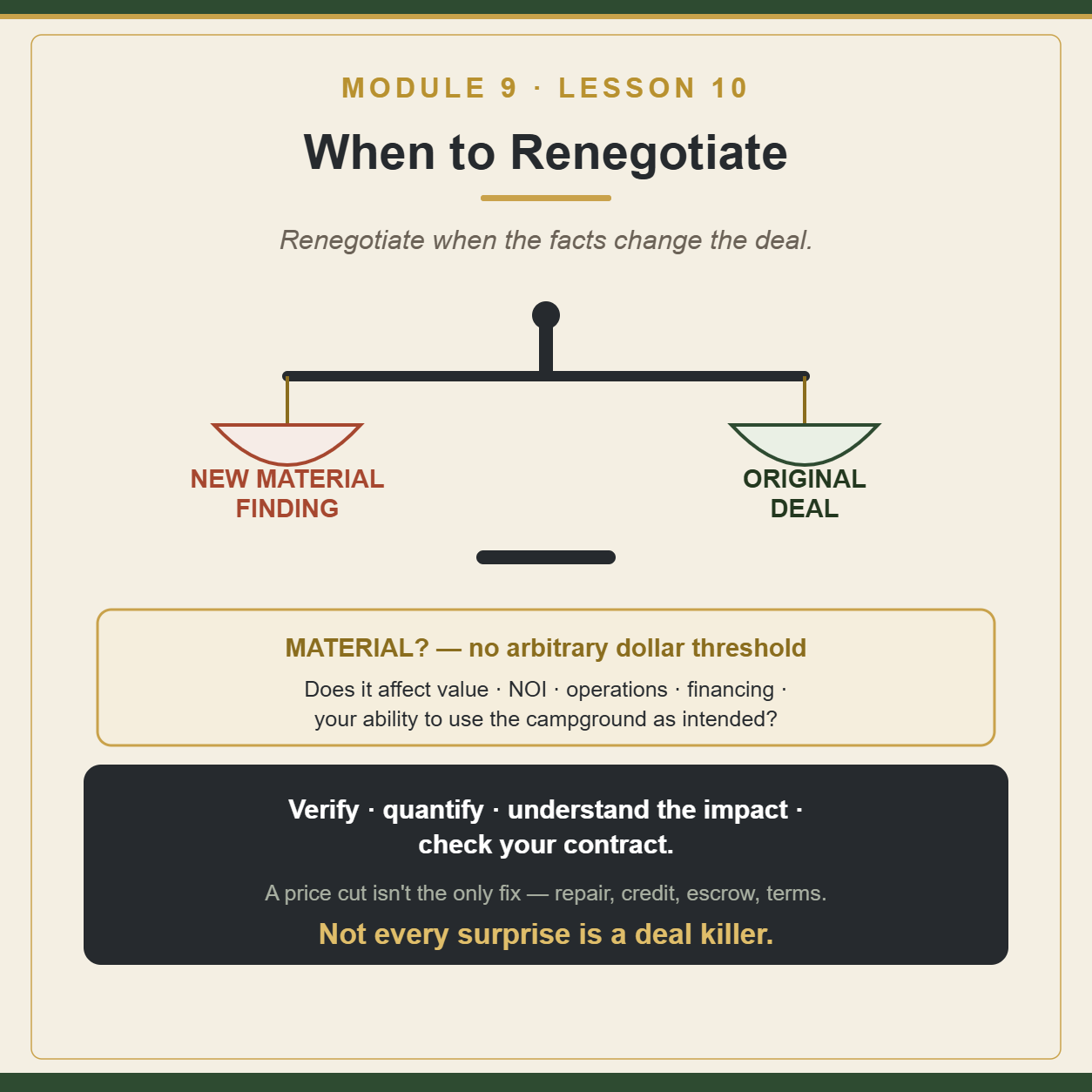
Due diligence may uncover something that materially changes the deal you originally agreed to make. When that happens, it may be appropriate to revisit the terms — but renegotiation should be based on new, material information, not simply wanting a better price after getting under contract.
THE QUESTION TO ASK
Did we discover something significant that changes the value, operation, condition, financing, or future use of the campground? If yes, another conversation may be justified.
When renegotiation may be appropriate
✔ A major structural issue — foundation, roof failure, serious water intrusion, unsafe improvements — not reasonably understood at offer.
✔ A major utility or infrastructure problem — failing septic, inadequate wastewater capacity, major well or electrical deficiencies.
✔ Material financial discrepancies — revenue materially lower, expenses understated, unsupported add-backs, a materially lower verified Adjusted NOI.
✔ A licensing, zoning, or site-count issue — you believed 150 sites; only 120 are approved. That changes revenue, value, financing, and expansion.
✔ An environmental issue — contamination, underground tanks, violations requiring significant remediation.
✔ A title, survey, or access issue — boundary discrepancies, improvements outside the line, restrictive easements, unresolved title defects.
✔ An appraisal or financing change — an appraisal materially below price can affect what the lender will finance (your rights here depend on your agreement).
When renegotiation is generally NOT appropriate
Due diligence shouldn’t become an excuse to reopen every term. It’s generally not justified simply because you discover normal maintenance items, cosmetic imperfections, aging-but-functioning equipment, minor repairs, small explainable accounting differences, things you already knew before offering, improvements you plan to make later, or a change in your own enthusiasm. There’s a difference between “I discovered something materially different” and “Now that I’m under contract, I’d like a better deal.”
DON’T DOUBLE-COUNT KNOWN CONDITIONS
If a condition was already obvious and reflected in the price, you shouldn’t “rediscover” it during due diligence and treat it as new. If you toured the park and knew the bathhouse needed renovation before offering, that renovation shouldn’t suddenly become a surprise negotiation item. Due diligence uncovers unknown or materially different conditions — not things you already saw.
Verify the problem before you negotiate
Don’t negotiate on assumptions. If an inspector flags a significant problem, get the report, bring in a specialist if needed, understand the scope, get a reasonable estimate, and determine the actual impact — then decide whether it materially changes the transaction. A professional opinion is far stronger than “we think this could be expensive.”
Renegotiation doesn’t always mean lowering the price
Sometimes the best solution isn’t a price cut. Depending on the issue and your agreement, the parties might consider the seller completing a repair, a credit at closing, an escrow for a specific issue, a price adjustment, additional seller financing, an extension of due diligence or closing, or additional documentation and testing. The goal is to solve the material problem — not automatically demand money off the price.
KEEP MATERIALITY IN PERSPECTIVE — NO ARBITRARY DOLLAR THRESHOLD
A repair may sound expensive on its own yet be small next to the value and income of the campground. At the same time, a seemingly small issue may reveal a much larger underlying problem. That’s why there’s no fixed dollar cutoff. Ask instead:
Does it materially affect value? NOI? Operations? Financing? My ability to use the campground as intended?
Your contract still controls
Finding a material issue doesn’t automatically give you unlimited rights to renegotiate or terminate. Your options depend on the purchase agreement, due-diligence provisions, financing and inspection contingencies, appraisal provisions, notice requirements, and deadlines. Review the agreement with your attorney before taking action.
LESSON TAKEAWAY
Renegotiation should be driven by new, verified, material information. Not every repair deserves a price reduction, not every surprise is a deal killer, and not every finding changes the economics. When something significant surfaces: verify it, quantify it, understand its impact, review your contractual rights — then address it fairly. Renegotiate the deal when the facts change the deal.