MODULE 6 RECAP
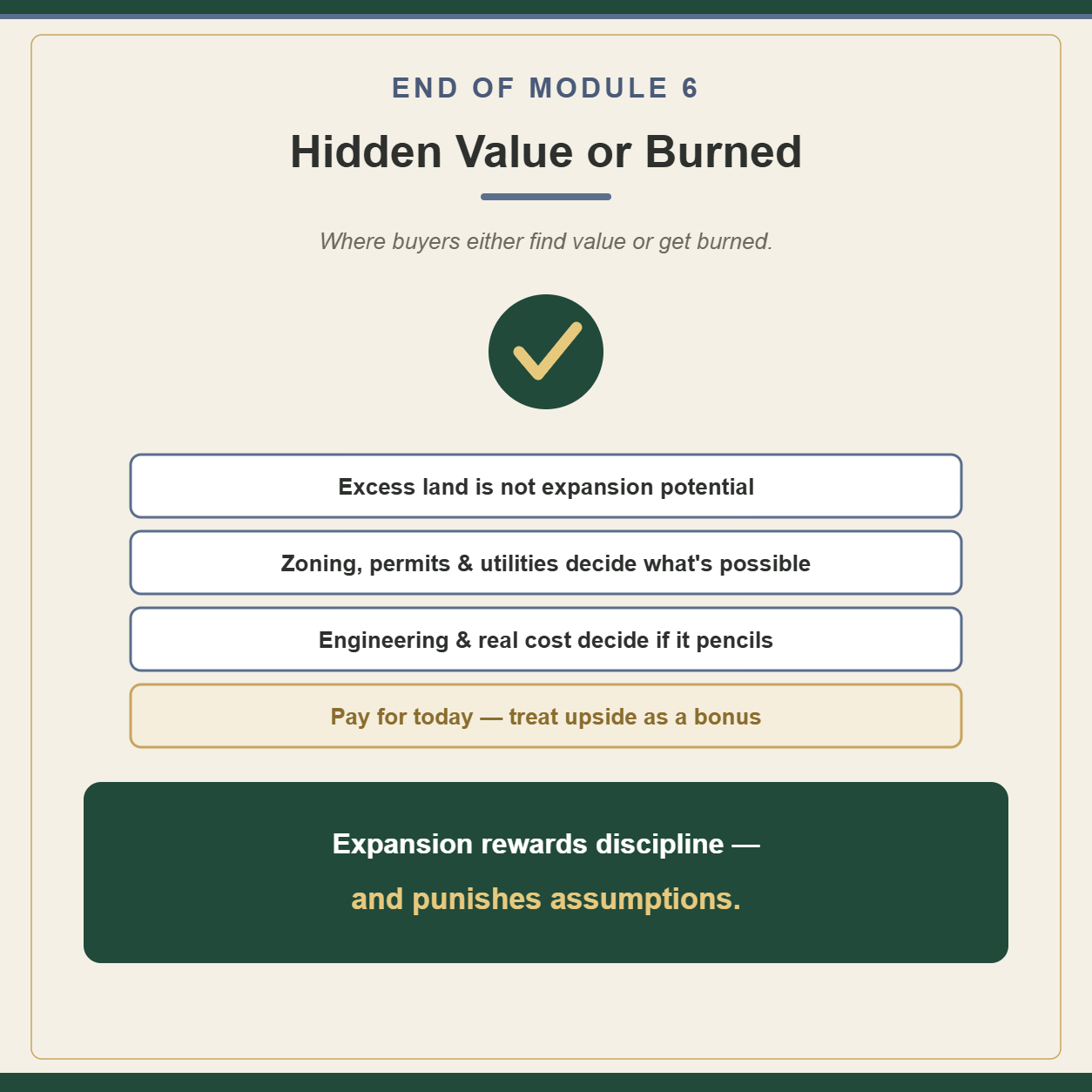
Expansion is where buyers either find hidden value or get burned. The whole module comes down to a few hard truths: excess land does not equal expansion potential; approvals, utilities, and engineering — not acreage — decide what you can build; every new site is a five-figure, often-financed decision that has to pay itself back; and the cheapest growth is almost always optimizing the park you already own. Value a park on what it is, and treat verified expansion as upside — never a premium you pay the seller.
YOUR EXPANSION DUE-DILIGENCE CHECKLIST
Before you ever pay for “room to grow,” work through this:
- Pull the current zoning and confirm the use is conforming — in writing from the municipality
- Ask whether expansion needs a special-use permit, and whether the existing permit transfers on sale
- Get a wetland delineation and FEMA floodplain map, and calculate net buildable acres
- Get the well yield, septic design flow, and electrical service ratings — plus a will-serve letter from the utility
- Have a civil or environmental engineer confirm capacity and what the build really takes
- Price the all-in cost per site for your region — including the cost of borrowing
- Run the payback and NOI math before you count a single new site
- Bring your banker in early — let the numbers, not the dream, decide
- First, list every way to grow revenue without building anything at all
To put this into practice, download each as a printable PDF:
✓ Expansion Feasibility Self-Test
✓ Zoning & Permitting Checklist
✓ Cost-per-New-Site Calculator
✓ Cabin / Glamping Planning Sheet
✓ Land-Use Restrictions Guide
WHERE THIS LEAVES YOU
You now evaluate expansion the way a developer does, not the way a brochure sells it: legal first, physical second, financial third, and personal last. That discipline is exactly what protects you from overpaying for a dream — and what helps you spot the rare park whose real, buildable upside nobody else noticed.