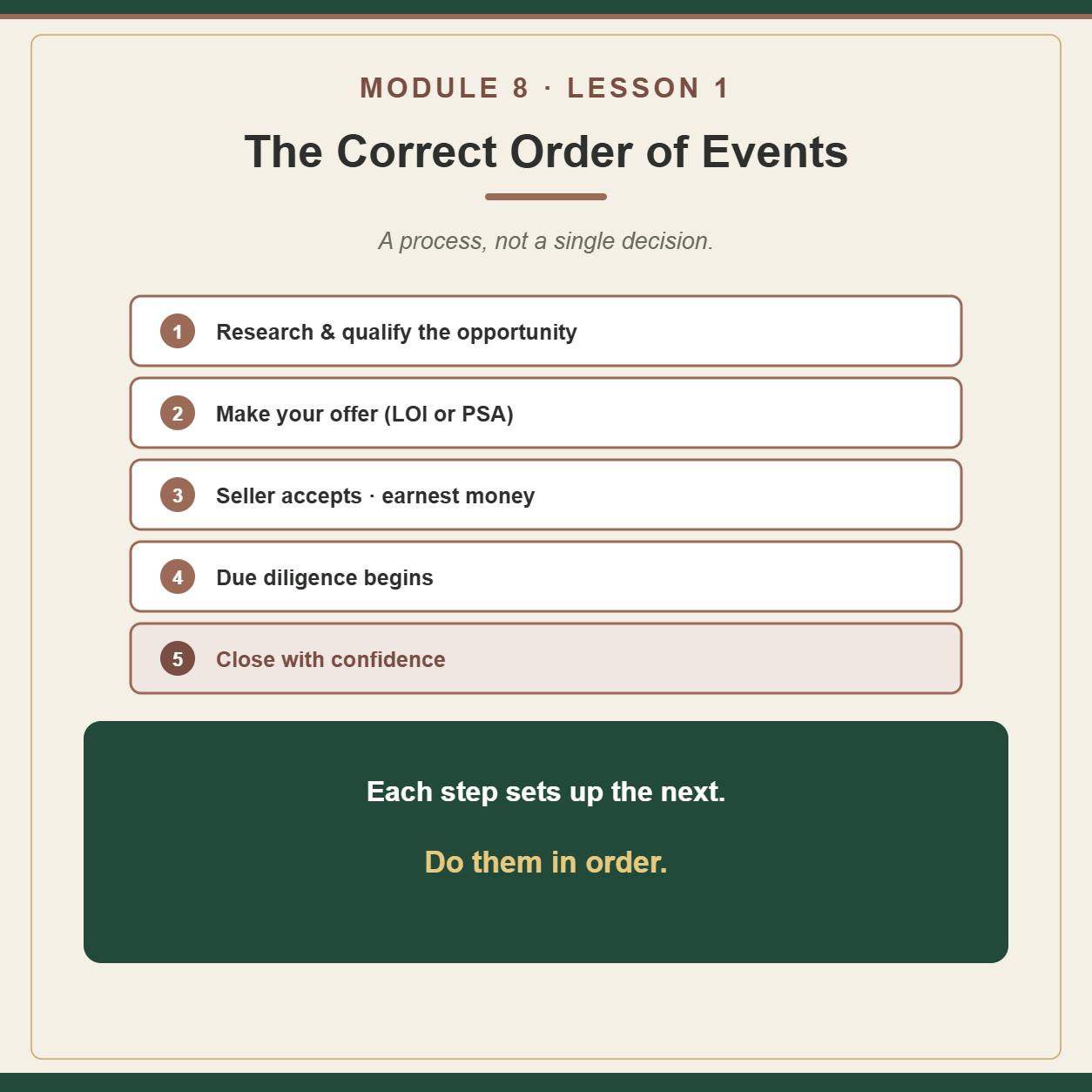
A PROCESS, NOT AN EVENT
Buying a campground isn’t one decision — it’s a series of steps, each designed to reduce risk for both the buyer and the seller. The buyers who understand the process move through it with greater confidence and far fewer surprises. And here’s the key idea behind this entire module: each step earns the right to the next.
Keep this roadmap handy — nearly every lesson that follows is one stop along it.
THE PROCESS, STEP BY STEP
Ask yourself: “Does this campground fit my goals?”
You’re gathering enough to decide whether the opportunity is worth pursuing.
Not every campground deserves an offer. If it fits your budget, lifestyle, and experience — and appears financially viable — it’s time to move ahead.
Walk the property in person before you write anything. You’re confirming it’s worth an offer — not running formal inspections yet.
An accepted offer opens the door to due diligence.
This is where facts replace assumptions.
With due diligence complete, work with your lender to secure financing and satisfy any remaining loan conditions.
Transfer licenses, contracts, and utility accounts, take over operations — and begin running your new campground.
THE BIGGEST MISTAKE BUYERS MAKE
Many buyers try to jump straight from the initial summary to full due diligence — asking for every confidential document before they’ve shown they’re a serious buyer. That’s simply not how campground transactions work, and it stalls more deals than almost anything else. The process exists to protect both sides.
You don’t ask someone to hand over their whole life story the first time you meet. You get to know each other, build a little trust, and decide whether you’re a good fit — then you move forward. Buying a campground works much the same way. Each step builds the confidence the next one requires.
“Steps one through four just tell you whether you’re interested. But before you ever write an offer, go stand on the property. Walk it, kick the gravel, look at the sites and the roads and the office. Then submit your LOI. You don’t run your full due diligence first — that comes after — but in all my years I’ve never once told a buyer to make an offer on a park they hadn’t laid eyes on in person. See it, then offer.”
Every step in the buying process has a purpose. Trying to skip steps usually creates frustration, delays, and missed opportunities. Successful buyers respect the process — because they understand it protects everyone involved.
“The right information comes at the right time. Trust the process, and let each step earn the next.”