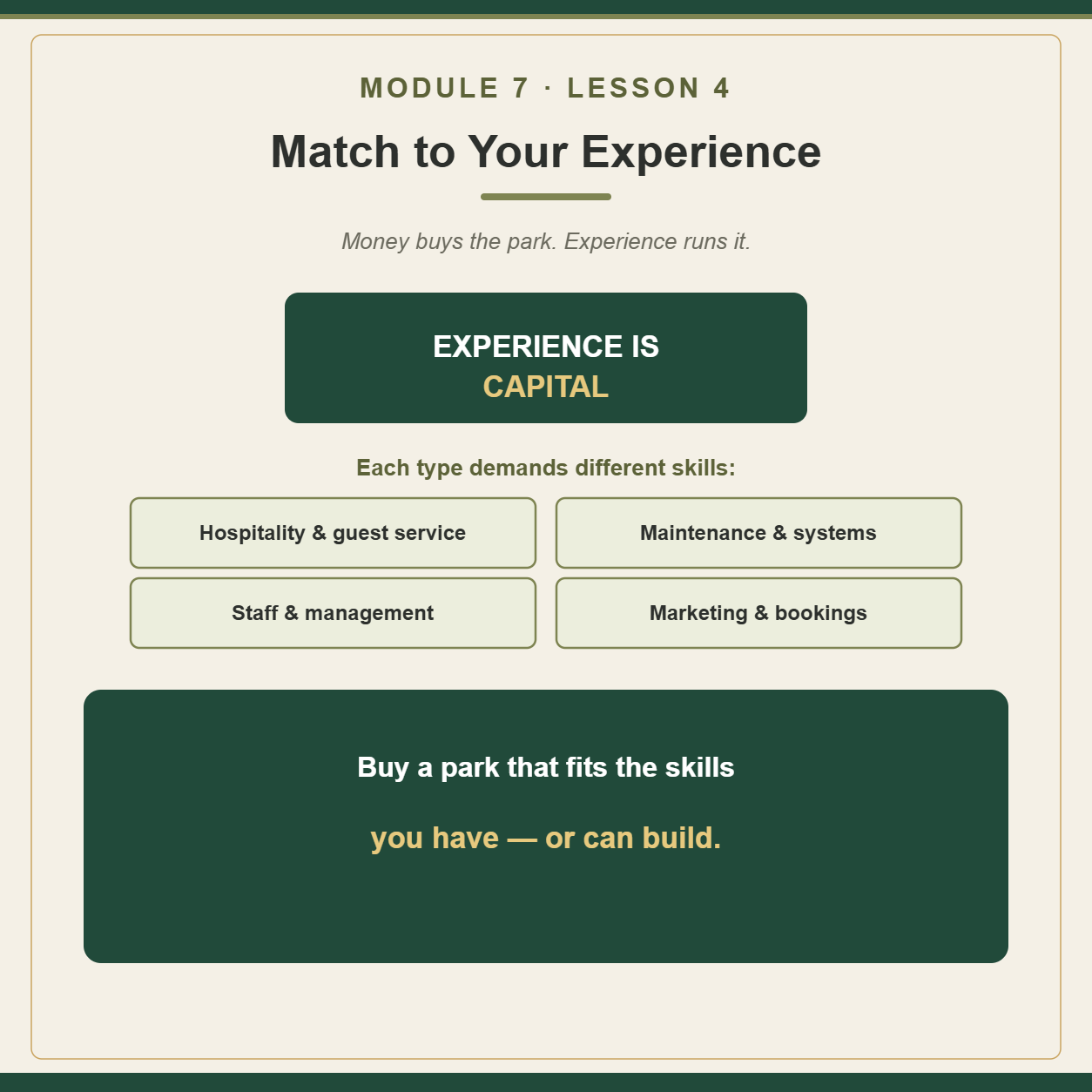
EXPERIENCE IS CAPITAL
Money buys the park. Experience runs it. Every type of campground demands a specific set of skills — and the most dangerous purchase in the whole business is a complex park bought by someone who has never run anything like it. A resort, a marina, or a restaurant looks like a dream on the tour and feels like a riptide by your first busy weekend. So before you fall for a park, match its demands to your experience — or have a real plan to close the gap.
WHAT EACH PARK DEMANDS OF YOU
The price tag tells you what a park costs. This tells you what it asks of you:
| Park type | Experience demand | What it really takes |
|---|---|---|
| Rustic / Mom & Pop | Low | Hands-on work, basic maintenance, simple books |
| Seasonal | Low–Medium | Relationship & community management, contracts |
| Overnight / Transit | Medium | Marketing, online booking, housekeeping, fast turnover |
| Waterfront | Med–High | Docks, environmental rules, insurance, premium guests |
| Destination / Resort | High | Staff management, systems, payroll, high expectations |
| Mixed-Use | Very High | Multiple businesses & licenses, bookkeeping, staff |
HONESTLY ASSESS WHAT YOU BRING
Experience matters most with the complex types — motels, large parks, restaurants, marinas, and cabin-heavy operations. Ask yourself, honestly:
- Have you ever managed employees?
- Have you ever run a service business?
- Have you handled customer complaints?
- Do you understand bookkeeping?
- Are you comfortable owning a property with guests living on-site?
- Do you know basic maintenance?
And here’s the part buyers miss: it doesn’t have to be campground experience. If you’ve managed a team, run a shop or restaurant, served customers, kept books, or you’re handy with tools, those skills transfer directly. Most buyers undervalue what they already bring — and overvalue their readiness for complexity they’ve never handled.
CLOSE THE GAP THREE WAYS
An experience gap isn’t a stop sign — it’s a decision. You can close it three ways:
- Buy simpler and grow into it. Start with a park you can run today, learn the business cold, then trade up to the complex one in a few years.
- Hire the expertise. A seasoned manager or GM can run what you can’t — just budget their salary into the deal, and know enough to manage them.
- Learn before you leap. Work at a park for a season, partner with an experienced operator, or find a mentor before you sign.
If you can’t honestly check most of those boxes and you’re not bridging the gap — start smaller. There’s no shame in it, and there’s a fortune in avoiding the park that buries you.
“Owning a campground, you’ll eventually wear about seventy-five different hats — plumber, marketer, accountant, referee, electrician, host, landscaper, counselor, sometimes all before lunch. So here’s my honest gut-check: do you even know what a screwdriver looks like? There’s no wrong answer — but if you don’t, buy a simpler park or hire someone handy. The more of those hats you’ve already worn, the fewer will catch you off guard. You don’t need all seventy-five on day one — just buy a park where you can wear most of them, and learn or hire the rest before they pile up on you.”