Your first 90 days give you the foundation. Your first year teaches you how the campground truly performs through an entire operating cycle. No formula guarantees a smooth first year — but the right habits dramatically improve your chances of making good decisions and protecting your investment.
THE FIRST-YEAR FORMULA
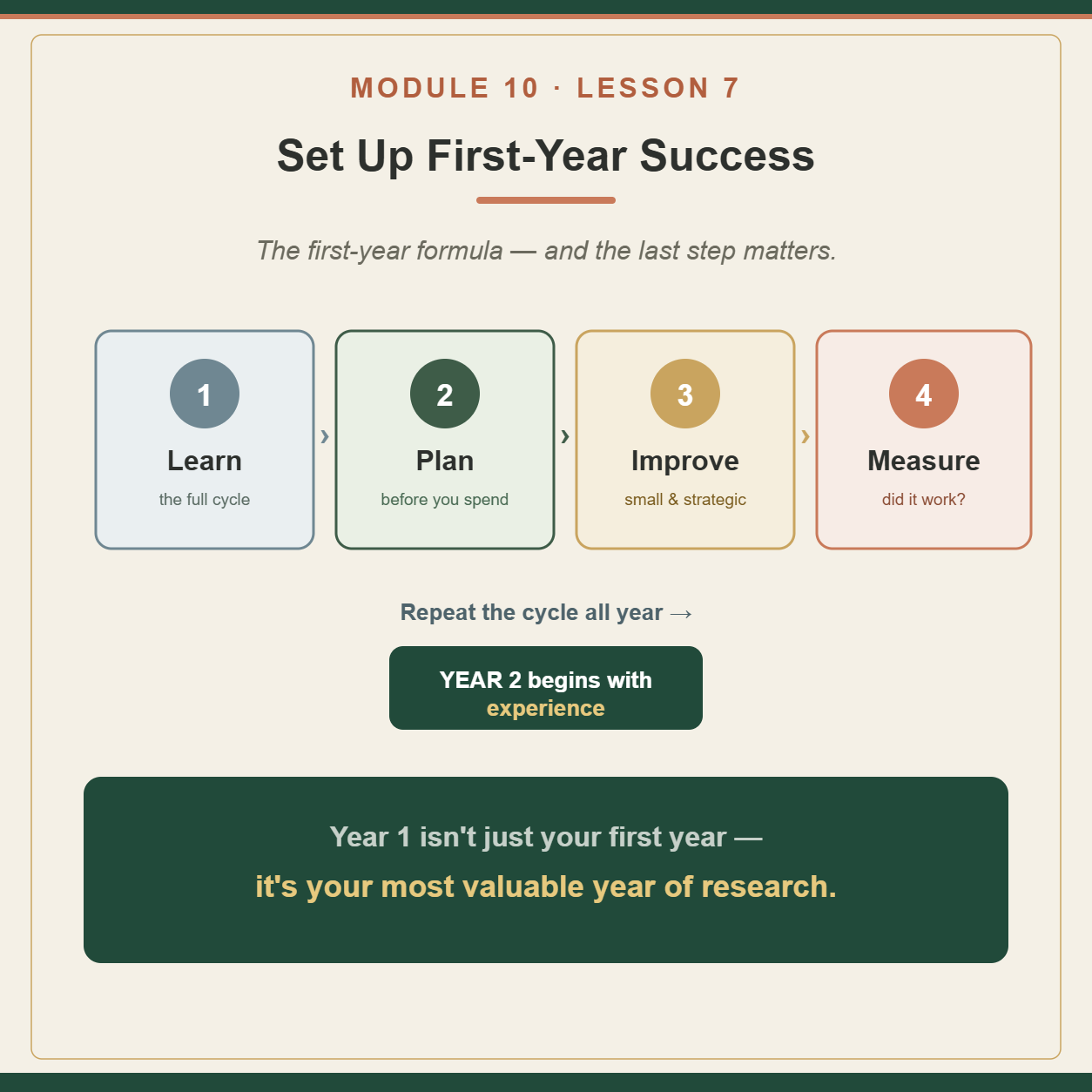
Learn → Plan → Improve → Measure
That last step matters. Don’t simply make changes — measure whether they actually worked.
Keep learning the full cycle
Even after 90 days, you’re still learning. Your first full year shows you what one season can’t — peak and shoulder seasons, holidays, winterization, spring opening, seasonal renewals, heavy weather, utility failures, staffing shortages, and slow booking periods. Use Year 1 to understand the complete operating cycle.
Change deliberately, protect your guests & team
You may have a long list of ideas — that doesn’t mean they all belong in Year 1. Prioritize by what improves the campground, revenue, risk, and guest experience now, and what can wait. Sometimes the best decision is finishing improvements already underway before starting another. Respect the guests you inherited — seasonal campers, repeat families, groups — and understand what they value before changing it; not every old tradition is outdated. Respect the staff, but set expectations — longtime employees know the property, guests, and history, and respect and accountability can exist together.
Protect your cash
Campgrounds have surprises — a failed pump, a fallen tree, a burned-out pedestal, a septic problem, a roof leak, a major utility bill. Don’t assume every available dollar should be reinvested immediately. Maintain working capital and emergency reserves. Cash gives you time to make better decisions.
Fix small things fast — big things strategically
Small problems become big ones: a leaking faucet, loose railing, broken sign, dead light, a confusing reservation setting. If it’s inexpensive, obvious, and clearly needs fixing — fix it. Quick wins improve the guest experience and stop small problems from multiplying. Large projects need a different approach: get professional input, scope and estimate, determine priority, review cash flow and timing, understand permits, evaluate ROI, and build it into your capital plan. Urgency and importance aren’t always the same thing.
Keep a detailed maintenance log
Document what broke, when, what was repaired, by whom, at what cost, whether it recurs, and when major equipment was serviced. Over time you’ll see patterns, budget better, and spot systems approaching replacement — and if you ever sell, strong maintenance records help the next buyer understand how the property was cared for.
Communicate
Good operations require constant communication — with staff, guests, seasonals, vendors, and professionals. People handle change far better when they understand what’s happening and why. Making a meaningful change? Explain it. Project will cause inconvenience? Communicate early. Silence creates assumptions; communication creates understanding.
Track your numbers & measure your improvements
Don’t wait until tax season to learn how the campground performed. Regularly review revenue, occupancy, average daily rate, ancillary revenue, payroll, utilities, repairs, marketing, cash flow, and NOI against your budget — and ask, are we performing the way we expected? If not, why? Then measure your improvements: added an amenity — did guests use it? raised rates — did occupancy change? upgraded WiFi — did reviews improve? Don’t assume an improvement worked just because you completed it.
USE YEAR 1 AS YOUR RESEARCH YEAR
Your first year gives you a complete cycle of information: when people book and cancel, when revenue and expenses peak, which sites perform best, which amenities guests actually use, which employees shine under pressure, which problems repeat, which marketing produces reservations, and what you underestimated before buying. Document those lessons — they shape Year 2.
DON’T EXPECT YEAR 1 TO BE PERFECT
You’ll make mistakes, change your mind, and hit expenses you didn’t anticipate — that’s part of learning the business. The goal isn’t a perfect first year. It’s to end Year 1 knowing far more about the campground than you knew on Day 1 — with a clearer financial picture, a capital plan, a stronger team, better systems, and a Year 2 plan built on experience, not assumptions.
LESSON TAKEAWAY
Learn before you change. Plan before you spend. Protect your cash. Fix small problems quickly, handle large ones strategically. Track your numbers, document what you learn, and measure the results of your decisions. Your first year isn’t just your first year of ownership — it’s your most valuable year of research. Use it well, and Year 2 begins with something you didn’t have on closing day: experience.