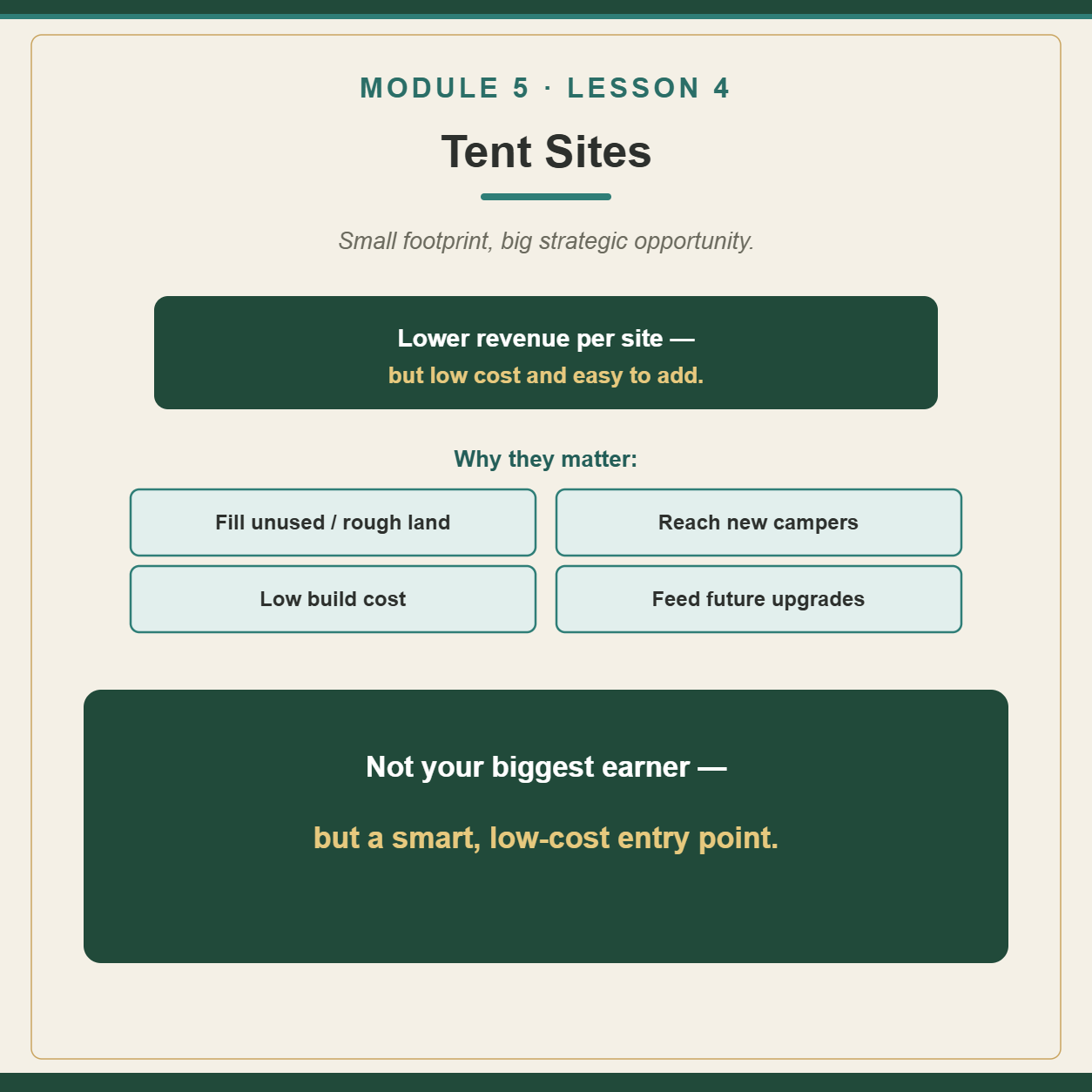
Tent sites typically generate less revenue than RV sites or cabins — but they can play an important strategic role. For many campgrounds, tent camping introduces new guests to the outdoor lifestyle and builds future customer loyalty. The key is to see tent sites for what they really are: not a profit center, but a front door.
Advantages of Tent Sites
- ✔ Lower development costs
- ✔ Easy to maintain
- ✔ Great for overflow during busy weekends
- ✔ Popular with younger campers and families
- ✔ Appeals to hikers, cyclists, paddlers, and budget-conscious travelers
- ✔ Introduce new campers to the camping lifestyle
Tent sites sit at the budget end of the market — the national average runs around $52 a night, and primitive sites less.
Challenges
- ✔ Lower revenue per site
- ✔ Highly weather dependent
- ✔ Greater use of bathhouses and common facilities
- ✔ Higher turnover during peak seasons
- ✔ Usually lower profit than RV sites or cabins
A Long-Term Perspective: Today’s Tent Camper, Tomorrow’s RV Owner
Many experienced owners view tent campers as future RV owners. Today’s tent camper may become tomorrow’s travel-trailer owner, fifth-wheel owner, motorhome owner, or seasonal camper. Picture every guest on a journey — tent → RV → cabin → seasonal — where each stream is a rung a customer can climb over a lifetime. Tent sites are the first rung, and a great first experience can create a loyal customer for years.
“In fifty years in this industry, I’ve watched plenty of buyers overlook tent sites — and I’ve watched the smart ones use them. Today’s tent camper is tomorrow’s RV owner; that kid in a two-man tent comes back in ten years towing a fifth-wheel and renting a cabin for his folks. Tent sites won’t pay the big bills, but they’re cheap to run and they plant customers. Treat them as the front door to a park, not the foundation of it.”
Three Strategic Plays Most Owners Miss
1. Treat check-in as customer acquisition. The real value of a tent camper isn’t the night — it’s the relationship. Capture every tent camper’s email and stay in touch. A $40 camper you nurture can become a $5,000 seasonal in five years. You’re acquiring a future customer for the price of one night.
2. Market group & event camping. A tent field is dead on a normal Tuesday — but hand it to a scout troop, a family reunion, a club rally, or a small festival on a weekend and it earns real money while filling your cabins, store, and activities at the same time. Most owners never market this. It’s where tent sites can genuinely move the bottom line.
3. Use tents as a glamping test lab. Before sinking serious capital into glamping (the next lesson), put up a couple of canvas tents or platforms in your tent area and test whether your market will pay a premium — low-risk research that can prevent a six-figure mistake.
Think About Revenue Per Acre
Most buyers don’t purchase a campground because of its tent sites. But well-designed tent areas can generate additional seasonal revenue, increase holiday occupancy, support events and group camping, and complement your other lodging. Tent sites are usually bonus revenue — not the primary driver of value.
Lesson Takeaway
Tent sites may not produce the highest revenue, but they serve an important purpose: they attract new campers, expand your customer base, host groups, test new ideas, and feed every other stream in the park. Used wisely, they turn dead land into income and first-time campers into lifelong customers.
“Today’s tent camper could become tomorrow’s seasonal customer.”