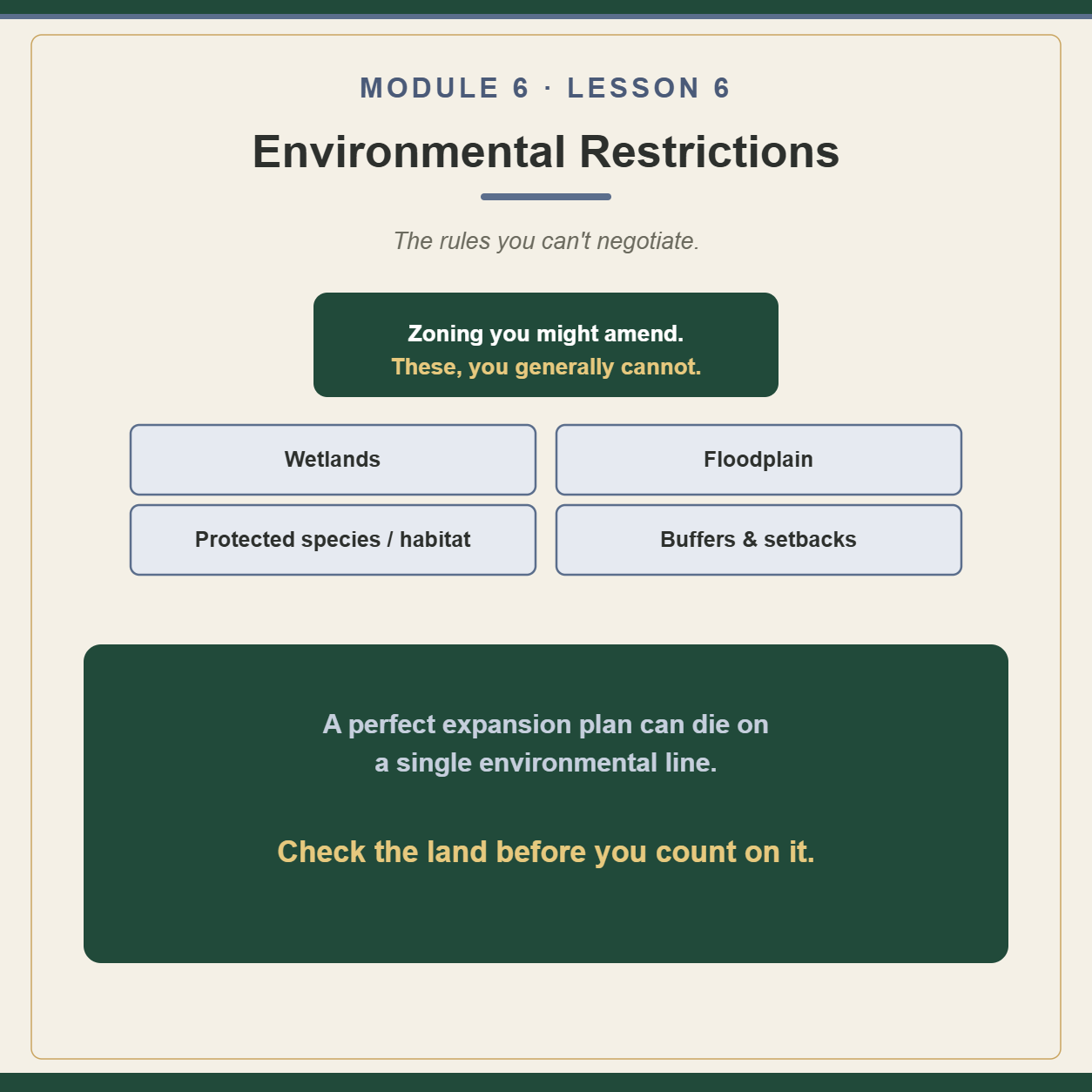
THE RULES YOU CAN’T NEGOTIATE
Zoning you might amend. A special permit you might argue. But environmental restrictions are different — they’re federal and state law (wetlands, floodplains, protected species, protected waters), and you don’t variance your way past the Army Corps of Engineers. This is the one gatekeeper that can permanently delete land from your plan, and a buyer has to know which acres are simply off the table.
WHY SO MUCH LAND ISN’T USABLE
A large share of many campgrounds’ acreage can’t be developed, because of:
- Wetlands
- Protected species habitat
- Flood zones
- Drainage paths
- Shoreline protection
- County setbacks
- Utility easements
- Steep slopes
These areas can’t be developed without major approvals — and sometimes not at all.
A “100-acre” park can include 40 acres of wetland and floodplain you will never build on — and then required buffers and setbacks eat into what’s left. The only number that matters for expansion is net buildable acres. Get a wetland delineation and a FEMA floodplain map, and calculate it before you pay a dollar for “room to grow.”
YOU INHERIT THE LIABILITY — NOT THE SELLER
Environmental problems run with the land, not the person who caused them. Buried fuel tanks, old dumping, a failing septic leaching into a stream, an existing violation or a restoration order — when you close, you own all of it. A Phase I Environmental Site Assessment is how you find these before they become your problem. Make it — and the wetland and floodplain findings — a condition of the deal.
THE FLIP: PROTECTED LAND IS THE PRODUCT
Here’s the part that’s easy to miss: the land you can’t develop is often the land that fills your sites. Campers pay for nature — the woods, the water, the quiet. That undevelopable wetland is also the view, the fishing, and the birdsong people drive hours for. Steward it, and it pays you back every season. And crossing the line — filling a wetland, ignoring a buffer — brings personal, six-figure federal penalties and stop-work orders. The smart move and the right move are the same one: don’t cross it.
Total acres impress. Net buildable acres pay. Find the protected land, subtract it, and value the park on what you can legally and responsibly use — never on the brochure’s acreage.
“Don’t cross the line — protect the land. The wetlands and the woods aren’t in your way; they’re the reason people come. I’ve watched owners try to sneak a few sites into a buffer and lose far more in fines and goodwill than they ever could have earned. Respect the boundaries, take care of the ground, and the ground takes care of you. That’s not just good conscience — it’s good business.”