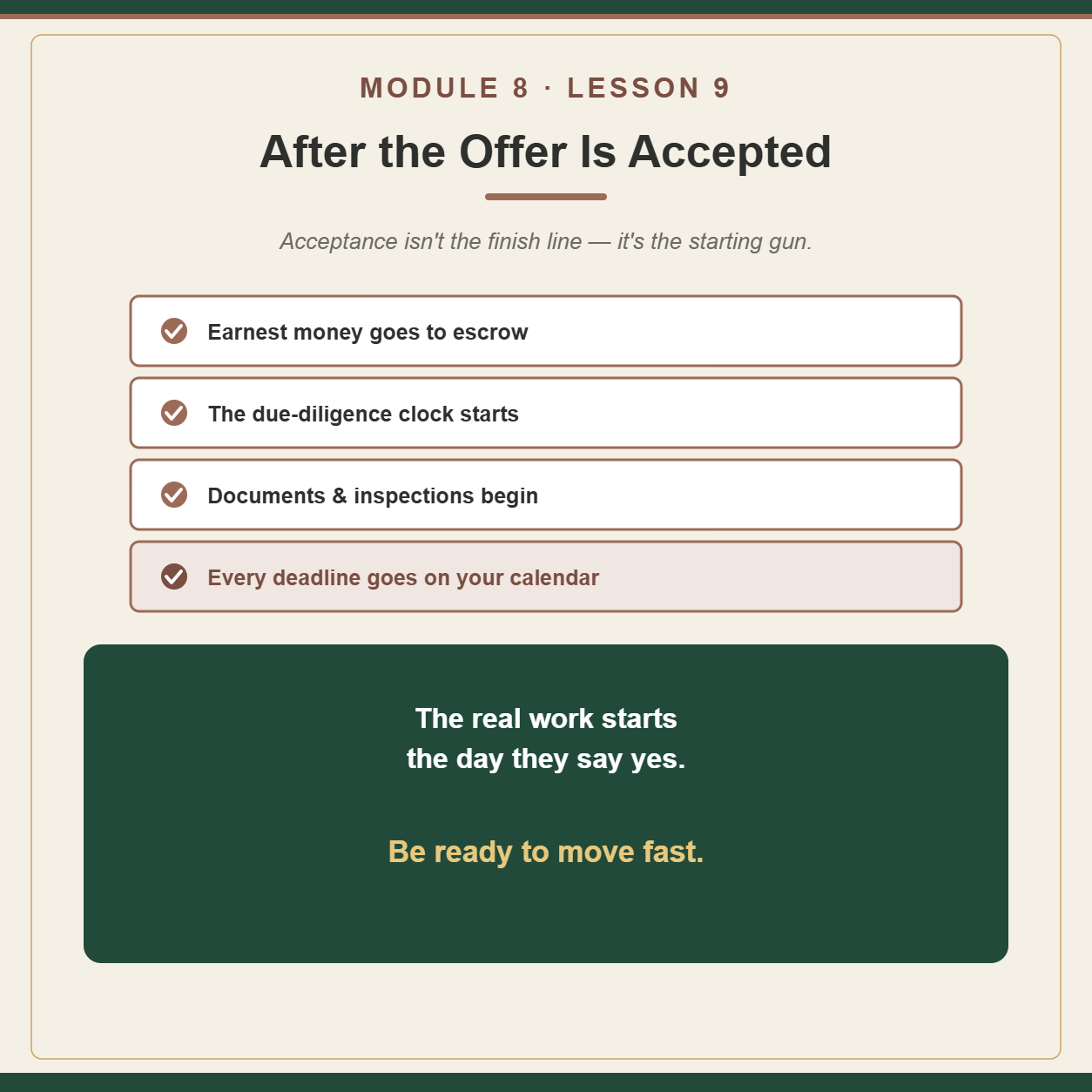
ACCEPTANCE ISN’T THE FINISH LINE — IT’S THE STARTING GUN
Getting your offer accepted feels like the big moment — and it is — but it’s really the start of the real work. The moment the seller signs, the books open and the verification begins. This is where facts replace assumptions.
WHAT HAPPENS THE MOMENT THE SELLER SIGNS
You receive the full file — complete financials, tax returns, utility maps, engineering documents, septic and well reports, payroll details, reservation data, and rate history. Everything you requested.
You verify all of it. This is where you confirm the business performs the way it was represented.
Your professionals step in to inspect the property and its systems.
The detailed, on-site work happens after the offer — which is exactly what protects the seller’s business.
With verified numbers in hand, the bank moves into underwriting.
Title work and the legal path to closing get underway.
Most buyers think all of this happens before the offer. It doesn’t — and now you know why.
Don’t rely on your own eyes. Bring in professionals to inspect:
EXPECT A LONG PUNCH LIST — DON’T PANIC
Here’s the part nobody warns you about: when the inspection reports come back, the list of issues can look terrifying. You may catch yourself thinking you should just bulldoze the place and start over. Breathe. Every campground has a long punch list — it’s the nature of an outdoor business exposed to the elements. The reports aren’t there to scare you off; they’re there to help you plan.
THESE BUSINESSES ALWAYS NEED REPAIRS
Because of where campgrounds sit and the weather they take, they live in a constant state of repair — the land itself is always trying to return to its natural state. Budget for ongoing maintenance from day one. It’s not a red flag; it’s the cost of admission for owning a beautiful piece of the outdoors.
USE DUE DILIGENCE TO PLAN, NOT JUST TO PASS OR FAIL
The goal of this stage isn’t only to decide whether to proceed — it’s to know exactly what you’re buying so you can budget, prioritize, and, where a real issue turns up, address it with the seller. Keep communicating, keep your timeline tight, and keep moving toward the closing table.
“Once you’re under contract, get this business inspected by real experts of the trade — utilities, buildings, the health department, state licensing, code requirements, all of it. And I’ll warn you: after those inspections you’ll look at the punch list and think about just tearing the whole thing down and starting over. Don’t panic. Every one of these parks needs constant repairs — it’s the nature of an outdoor business. Where they sit and the weather they take, the land itself is always trying to go back to its natural state. That’s not a reason to run from a good park; it’s just the cost of admission. Know it, budget for it, and keep moving toward closing.”
Acceptance opens the books. Verify with experts, expect a long punch list (every park has one), and use what you learn to plan and budget — not to run from the right park.