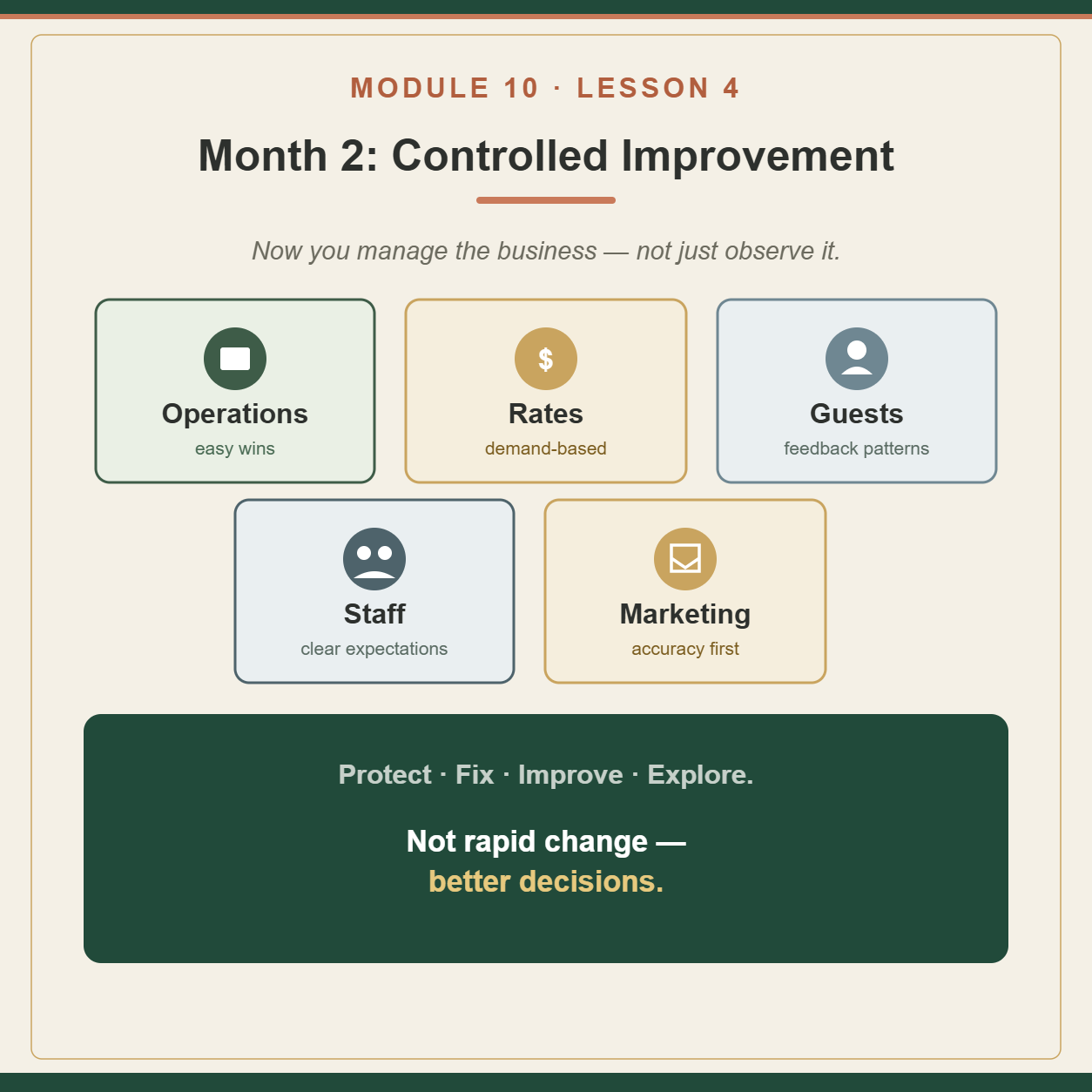
By the second month you understand the campground far better than you did on closing day. Now you can begin making small, thoughtful improvements while building a larger plan — this is your stabilization + planning phase. The key word is controlled.
1. Make small operational improvements
Start with changes that are low-risk, low-cost, easy to reverse, clearly beneficial, and unlikely to disrupt guests or staff: cleaning up website wording, correcting outdated info, improving check-in instructions and signage, organizing the office and store, fixing small maintenance items, tidying common areas, and simplifying internal procedures. These make the campground better without changing its identity.
Start with the easy wins. Look for the “why are we still doing it this way?” items — but make sure you understand the answer before you change it. Small improvements build momentum: they save staff time, reduce guest confusion, prevent repeat questions, and cut mistakes.
2. Evaluate your rates
By Month 2 you can begin analyzing pricing — which doesn’t mean raising rates immediately. First understand what you have (daily, weekend, holiday, weekly, monthly, seasonal, cabin, premium-site, and all the fees), then compare pricing with actual demand. Don’t only ask “what are competitors charging?” — ask: what’s my occupancy? which site types sell out first? which dates never sell? how far ahead do guests book? when did the previous owner last raise rates? how price-sensitive are seasonals? The park down the road charging $10 more doesn’t automatically mean you should.
Rate changes should have a reason — demand, occupancy, market, guest experience, improvements, operating costs, site quality — not simply “we bought the campground, so rates are going up.”
3. Start a guest feedback log
Track feedback in one place, in three columns. What guests love (friendly staff, clean bathhouses, big sites, quiet, location) — protect these; don’t accidentally remove something guests already value. What guests complain about (WiFi, roads, check-in confusion, site leveling, water pressure, noise) — track patterns, don’t react to every single complaint. What guests request (dog park, better WiFi, more full-hookups, golf carts, food) — a request is information, not an instruction; ten repeated requests mean far more than one.
4. Begin staffing adjustments
Month 2 is a good time to add structure: clarify responsibilities, schedules, reporting, opening/closing duties, guest-service expectations, emergency procedures, and who has authority to decide. People work better when expectations are clear. Add structure, not chaos — don’t change everyone’s job at once; find where responsibilities are unclear, duplicated, missed, or where someone is overloaded, then adjust deliberately.
ADDRESS PERFORMANCE ISSUES PROFESSIONALLY
If someone consistently underperforms, ignores safety, treats guests poorly, or damages morale, you may eventually need a staffing change. Handle it professionally: set clear expectations, document issues appropriately, follow applicable employment laws and policies, and never turn personnel decisions into campground drama. Staff — and guests — will watch how you handle difficult situations.
5. Review your marketing — accuracy first
Now that you understand the campground, review how it’s presented: Google Business Profile, website, social, directories, booking listings, review sites, photos, amenity descriptions, rates, policies, hours, and contact info. Before spending a dollar on advertising, make sure the basics are correct — old photos, wrong hours, outdated amenities, broken reservation links, old policies. There’s little value in driving more traffic to inaccurate information.
6. Learn from your reviews
Read recent reviews, but don’t obsess over every negative comment — look for recurring themes. Several mentions of “bathrooms always clean” is a strength to protect; several mentions of “check-in is confusing” may be an easy fix; one angry outlier nobody else echoes stays in perspective. Reviews are data — treat them that way.
7. Build your priority list
By Day 60 you can rank future improvements in four buckets:
PROTECT — what already works and shouldn’t be disrupted.
FIX — problems affecting safety, operations, revenue, or guest experience.
IMPROVE — where a reasonable investment creates meaningful value.
EXPLORE — bigger ideas (expansion, cabins, pool, major renovation) that need more research first.
Don’t confuse an interesting idea with an approved project.
8. Start thinking about ROI
Before committing money, ask: what problem does this solve? will guests actually value it? will it improve revenue, cut expenses, reduce staff workload, or improve retention? how much will it cost, and how long to pay back? Campground ownership makes spending money easy — there’s always something to improve. The better question is what should you improve first?
WHAT MONTH 2 SHOULD NOT BECOME
✗ A massive renovation · ✗ a complete staff overhaul · ✗ an aggressive rate increase · ✗ a spending spree · ✗ a rebrand before you understand the brand · ✗ a reaction to every review · ✗ a race to add amenities. Month 2 is intelligent refinement.
LESSON TAKEAWAY
Month 2 is when observation turns into action. Make the easy improvements, clarify responsibilities, study pricing, track guest feedback, clean up your marketing, and start ranking future projects — while still resisting the urge to do everything at once. The goal of Month 2 isn’t rapid change. It’s better decisions.