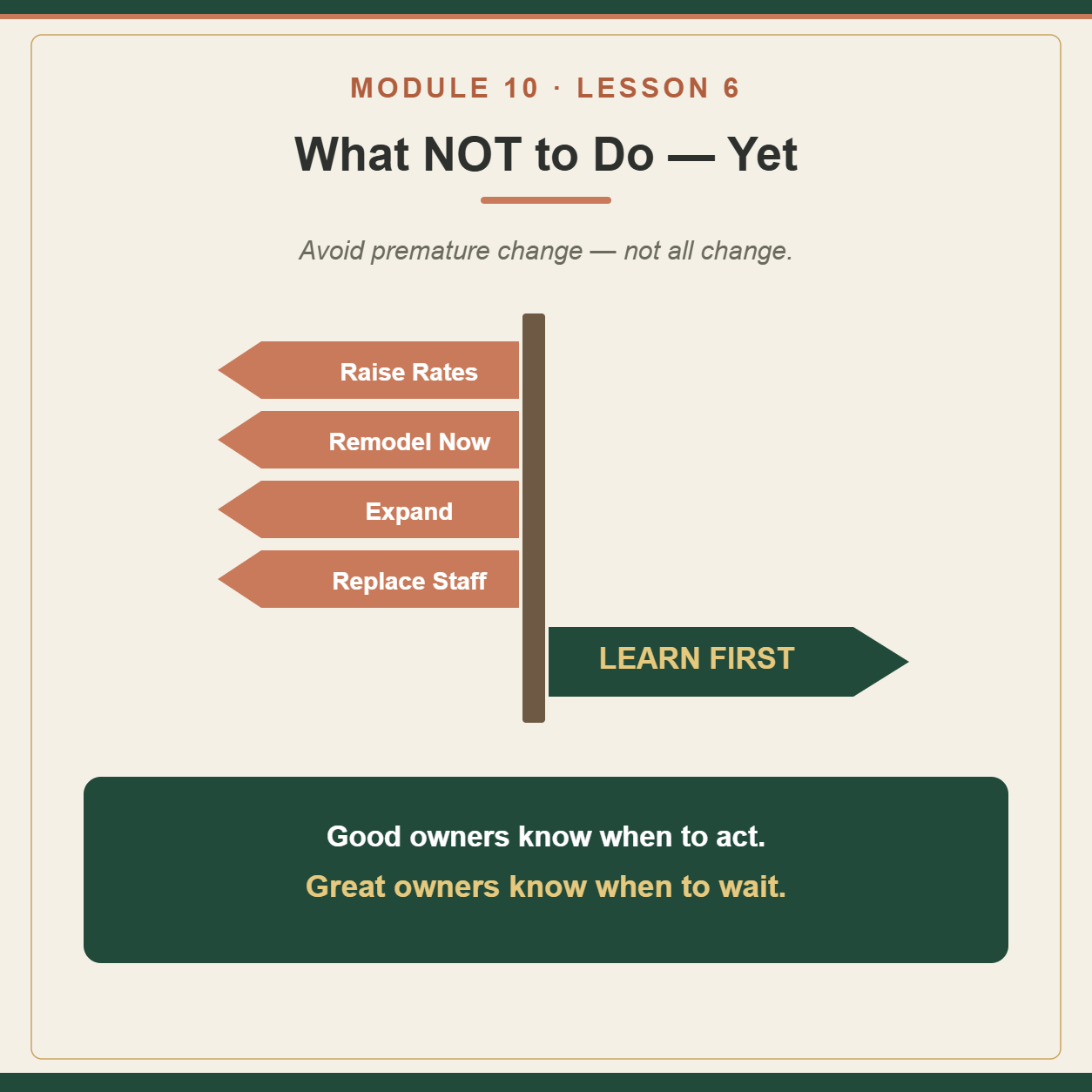
The first 90 days aren’t just about what you should do — they’re about knowing what to avoid. Excitement can lead to fast decisions and changes that create problems before you fully understand the campground. The goal isn’t to avoid change. It’s to avoid premature change.
Don’t make major rate hikes immediately. Raising rates before you understand occupancy, pacing, loyalty, seasonal expectations, and demand can create pushback — especially with longtime seasonals if there’s been little communication or visible improvement. Better: study the rates and market first, then make thoughtful, well-communicated adjustments.
Don’t fire everyone. Existing staff hold years of operational knowledge — where utility lines run, which sites flood, which systems fail, which vendors actually respond. Replace everyone at once and you can lose that overnight. Better: observe, set expectations, keep strong employees, train where needed, and make changes deliberately.
Don’t start a major expansion. Before adding sites, cabins, or amenities, understand zoning, permits, septic/water/electrical capacity, road access, drainage, demand, and capital needs. Expansion that looks easy on a map gets complicated once engineers and approvals are involved. Better: research first, plan second, build later.
Don’t launch a massive remodel. What you think guests want may not be what they value most — a beautiful new store does little if guests are complaining about low water pressure. Better: fix operational and infrastructure issues first, then invest based on guest feedback and real need.
Don’t change reservation systems too quickly. Reservation software touches bookings, deposits, availability, pricing, communication, and staff workflow — switching mid-season can cause lost or double bookings and payment problems. Better: learn the current system, document what works, and if you replace it, plan the transition carefully.
Don’t spend your cash too fast. After closing there’s a long list of things to buy — equipment, landscaping, signs, amenities, renovations — but campground cash flow is seasonal and unexpected repairs surface early. Better: protect your working capital, keep reserves, and separate what you want from what the campground actually needs. Cash gives you options — don’t spend away your flexibility.
Don’t change every policy at once. Visitor rules, quiet hours, cancellation and pet policies — some exist because of problems you haven’t experienced yet. Better: understand why a rule exists before removing it, then improve policies intentionally.
Don’t react to every complaint. One complaint doesn’t always mean a broken system — changing policy every time someone’s unhappy makes the campground inconsistent. Better: listen, document, look for patterns, then decide.
Don’t try to prove you’re the new owner. You don’t need to change the logo, signs, uniforms, rates, and website just so everyone knows ownership changed. Guests care whether the park is clean, safe, friendly, and functioning. Better: let your leadership show through the operation, not constant change.
Don’t make emotional decisions. A bad review, a frustrating employee, an unexpected repair bill — don’t make major decisions in the heat of the moment. Better: pause, get the facts, understand the impact, then decide.
WHEN SHOULD YOU ACT IMMEDIATELY?
There are exceptions — don’t wait 90 days on safety hazards, legal or compliance issues, serious employee misconduct, major financial problems, failing utilities, or security concerns. Learning first doesn’t mean ignoring urgent problems. It means knowing the difference between something that needs immediate action and something that just feels urgent.
A SIMPLE RULE
Before a major change in your first 90 days, ask: Do I understand the problem? Do I have enough information? Is this actually urgent? What happens if I wait 30 days? Does this protect or disrupt the operation? If you can’t answer those yet, you may need more time.
LESSON TAKEAWAY
Your first 90 days aren’t the time to prove how fast you can transform the campground. Avoid major rate jumps, mass staff changes, big expansion, major remodeling, rushed software swaps, overspending, and emotional decisions. Keep the operation stable while you learn. Good owners know when to act. Great owners also know when to wait.