You now understand what due diligence is, when it happens, what to review, who to hire, which red flags matter, and how to move through the process without creating unnecessary chaos. The next step is turning that knowledge into a repeatable process.
Your due-diligence toolkit
Use these tools to stay organized, protect yourself, and keep the transaction moving. Download links are at the bottom of this lesson.
- Due-Diligence Master Checklist — your central tracker covering financials, operations, utilities, buildings, infrastructure, licenses, title, survey, insurance, environmental, financing, and final closing confirmations. So nothing important falls through the cracks.
- Document Request List — a structured list organized by phase and category, so you ask for the right information in one organized, seller-friendly pass instead of scattered requests.
- Seller-Friendly Questionnaire — clear questions for the things that don’t come from a document: operations, staffing, utilities, maintenance, seasonal campers, vendors, improvements, known issues, and property history.
- Inspector Checklist — campground-specific systems for you and your inspection team: RV sites, pedestals, water, septic and sewer, bathhouses, cabins, roads, drainage, buildings, amenities, and equipment.
- Renegotiation Guidelines — a worksheet to separate normal maintenance from material findings, walking you through whether an issue actually changes the deal.
- Due-Diligence Timeline Template — track every moving piece and deadline, from contract date through closing.
Your action plan
Once you’re under contract:
1. Start the Master Checklist immediately.
2. Send the organized Document Request List.
3. Build your professional due-diligence team.
4. Schedule inspections early.
5. Review financials with your accountant or lender.
6. Track questions and missing information in one place.
7. Investigate red flags before drawing conclusions.
8. Keep every contractual deadline on your calendar.
9. Resolve material issues before the due-diligence period expires.
10. Make your final decision based on facts.
Before you move forward
By the end of due diligence, you should be able to answer:
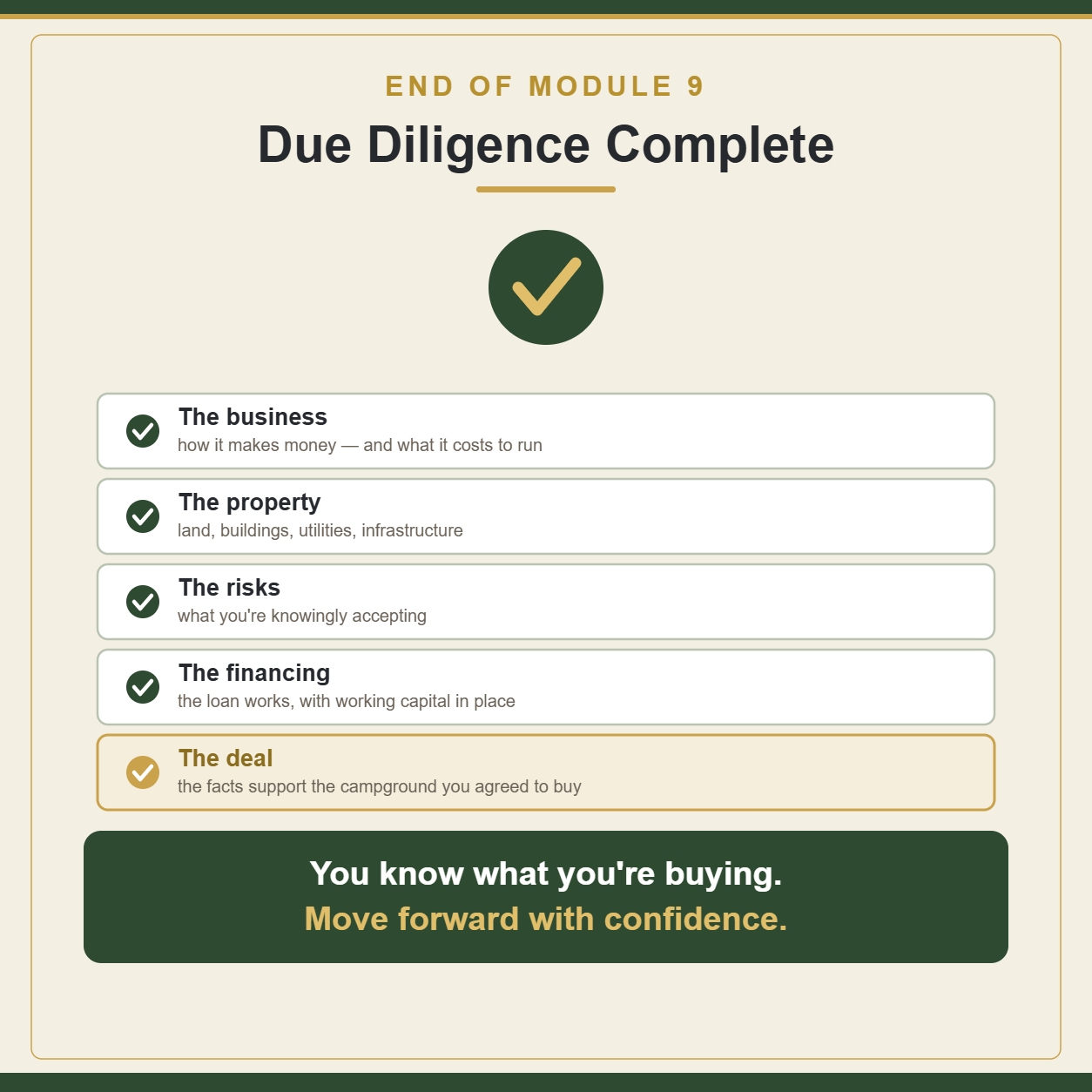
The business — Do I understand how this campground makes money and what it truly costs to operate?
The property — Do I understand the condition of the land, buildings, utilities, and infrastructure?
The risks — Do I understand the major risks I’m accepting?
The financing — Can I finance the purchase and operate with adequate working capital?
The deal — Do the facts support the campground I agreed to purchase?
If you can answer those confidently, due diligence has done its job.
FINAL THOUGHT
Due diligence isn’t about finding a perfect campground. There isn’t one. It’s about replacing assumptions with facts, identifying the issues that truly matter, and understanding the business before you become the owner.
Be thorough. Be organized. Use professionals. Ask questions. Understand the risks. And when the facts support the deal — move forward with confidence. The goal isn’t to eliminate every risk. It’s to make sure you know what you’re buying.
DOWNLOAD · YOUR DUE-DILIGENCE TOOLKIT
Six tools to run an organized, professional due-diligence process from accepted offer to confident closing. Print them, share them with your team, and work through them as you go.
📄 Due-Diligence Master Checklist