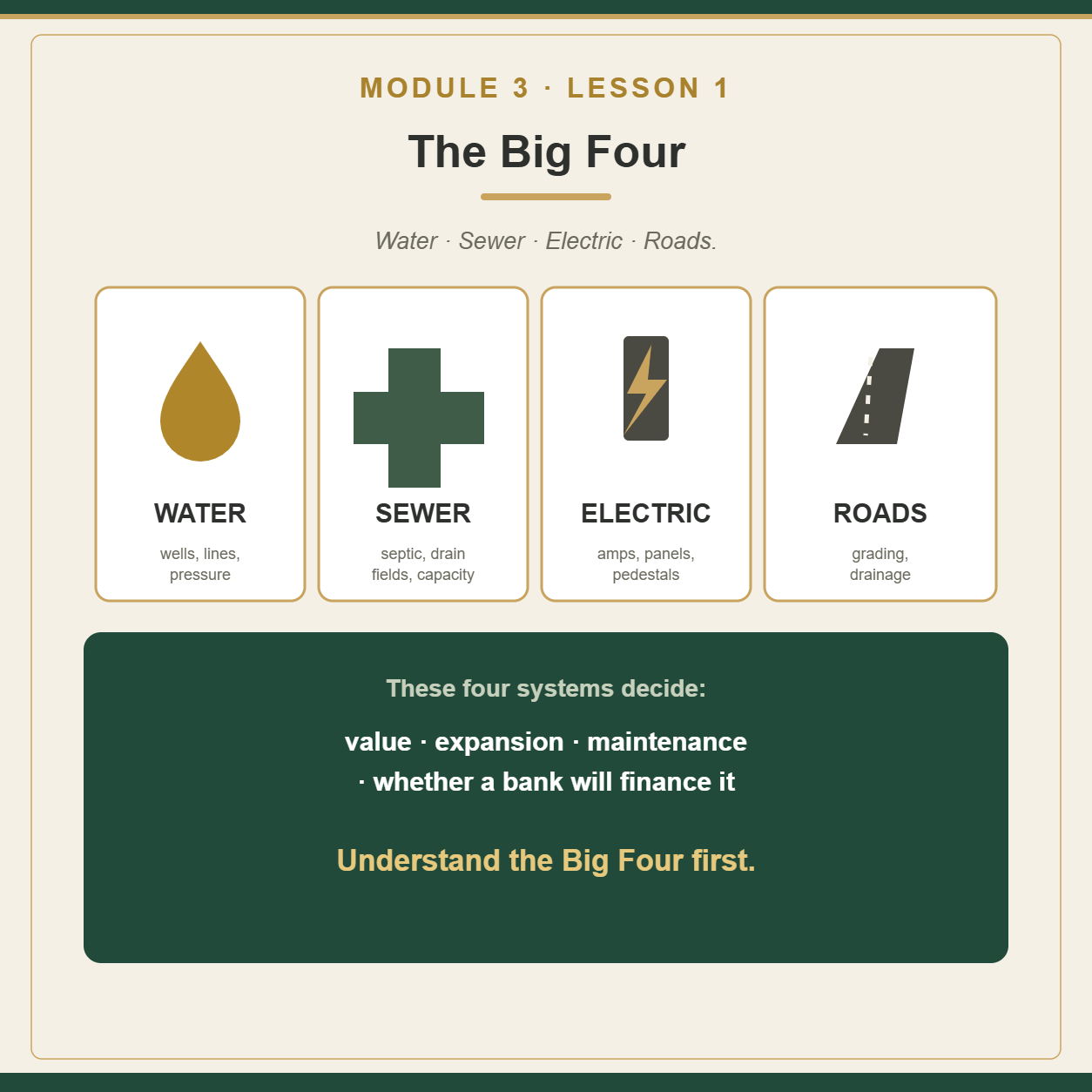
These four systems determine:
✔ The park’s current value
✔ Future expansion potential
✔ Long-term maintenance costs
✔ Whether lenders will finance the park
✔ What future upgrades may be required
These systems are often the most expensive parts of a campground to replace and are frequently the hidden costs buyers overlook.
1. Water System
Your water system may be:
- City water (easiest and often preferred)
- Well water (common in rural parks)
Buyers should understand:
- Water pressure
- Age of the well pump
- Water line material (PVC, galvanized, poly, HDPE)
- Known breaks or leaks
- Testing requirements (weekly, monthly, annual depending on system classification)
- Winterization process
- Backup systems
- Water quality
- Water availability
Regional factors also matter.
Some areas of the United States have:
- water restrictions
- seasonal limitations
- drought concerns
- limited water availability
Strong water quality and dependable supply can have a significant impact on operations and future expansion.
🚨 Red Flags
- Low pressure
- Repeated line breaks
- Galvanized pipes
- Undocumented well maintenance
- No frost-free hydrants in cold climates
- No isolation valves
- Water shortages or restriction concerns
2. Sewer / Wastewater System
Often one of the most complicated systems in a campground.
Types:
- City sewer (typically best for future upside)
- Septic systems (most common)
- Multiple septic fields
- Wastewater treatment plants (more complex)
- Holding tanks (higher cost)
- Lagoon systems (older parks)
Public sewer often provides the greatest flexibility because it may support:
✔ future site additions
✔ additional cabins
✔ glamping development
✔ expanded amenities
Buyers need to understand:
- Size and capacity
- Age of tanks and fields
- Pump replacement history
- Tank material
- Steel (bad)
- Concrete (good)
- Plastic (acceptable)
- Code compliance
- Future replacement timeline
Always review sewer systems with a licensed professional.
🚨 Expensive Risks
- Drain field failure (can exceed $50,000–$300,000+)
- Tank collapse
- Illegal hookups
- Combined grey/black lines
- No accurate system maps
3. Electrical System
Buyers MUST understand electrical systems because they are one of the highest future upgrade costs.
Key questions:
- Is the park 30 amp, 50 amp, or mixed?
- How many sites share each transformer?
- Wiring type?
- Age of pedestals?
- Condition of breakers?
- Is electrical properly grounded?
Electrical demand continues changing.
RV manufacturers continue adding:
- larger air conditioning systems
- residential refrigerators
- washer/dryers
- electric fireplaces
- more electronics
- increased power consumption
Campground electrical systems that worked years ago may struggle to support modern RV demand.
Electric is also commonly one of the highest operating costs in a campground.
🚨 Costs Buyers Never Expect
- Upgrading to 50 amp: $2,500–$5,000 per site
- Transformer upgrades: $10,000–$40,000+
- Underground line replacement: $100,000+
- Miswired pedestals can create fire hazards
Electrical determines:
✔ Whether big rigs stay
✔ Whether monthly guests overload systems
✔ Whether rates can increase
✔ Expansion capability
4. Roads & Infrastructure
Roads matter more than many buyers think.
Bad roads create:
- poor guest experience
- dust complaints
- drainage issues
- bad reviews
- maintenance costs
Types:
- Gravel roads (most common)
- Dirt roads (lower-cost parks)
- Chip & seal
- Asphalt
Costs buyers underestimate:
- Paving roads: $100,000–$400,000
- New gravel annually: $5,000–$30,000
- Full grading + gravel: $30,000–$150,000
Heavy rain and storm events should also be evaluated.
Buyers should inspect for:
- washouts
- drainage problems
- standing water
- erosion
- culvert condition
- low spots
- flooding patterns
Water damage and erosion problems can quietly become major future expenses.
LESSON TAKEAWAY
Pretty cabins and amenities attract attention.
Infrastructure determines whether the campground can operate, grow, and support future value.
“The most expensive campground problems are often the ones you cannot immediately see.”