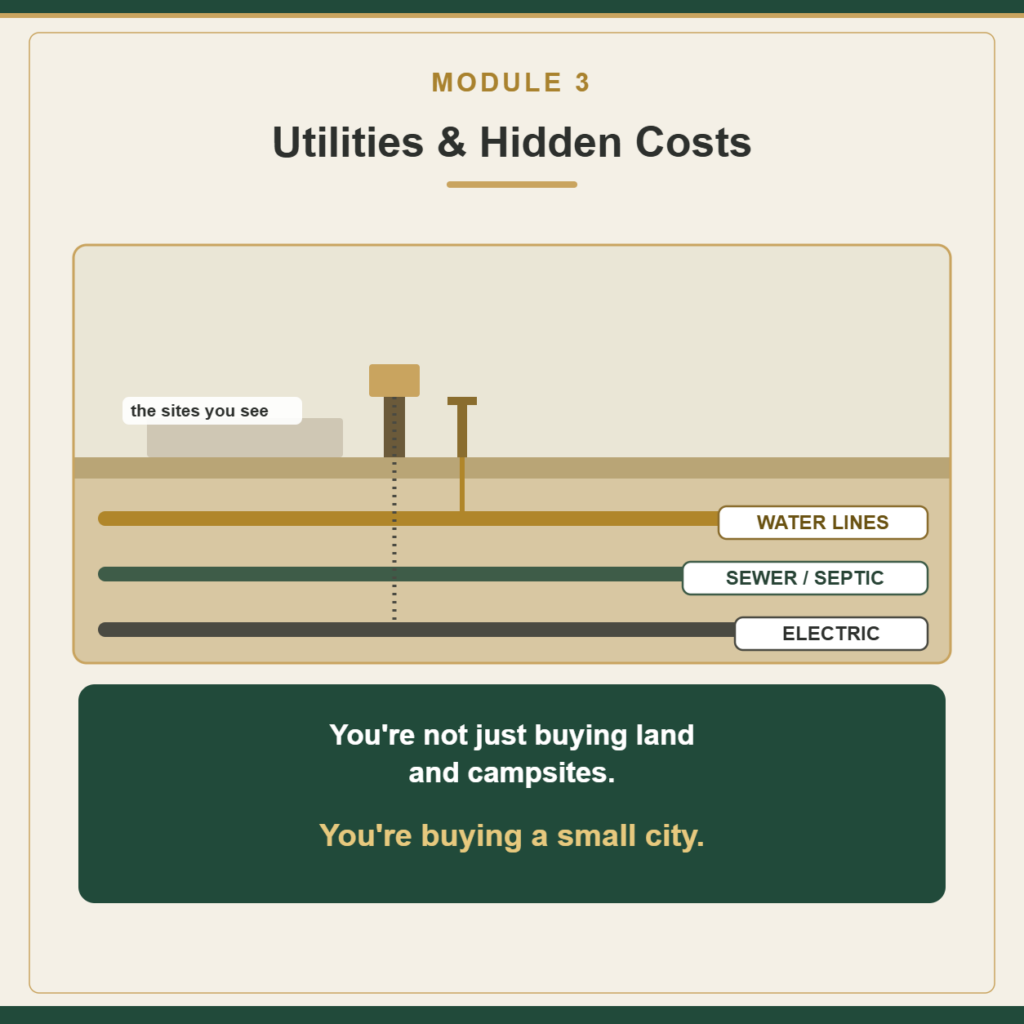
MODULE 3 — UTILITIES, INFRASTRUCTURE & THE HIDDEN COSTS BUYERS NEVER SEE
WHY THIS MATTERS Utilities and infrastructure are the backbone of a campground. They are often: ✔ the most expensive systems to replace✔ the hardest systems

Estimated time: 90–120 minutes
Water, septic & electric — the systems that run a park
The hidden costs buyers never see
Spotting deferred maintenance before you buy
Infrastructure module — dense but critical.
WHY THIS MATTERS Utilities and infrastructure are the backbone of a campground. They are often: ✔ the most expensive systems to replace✔ the hardest systems
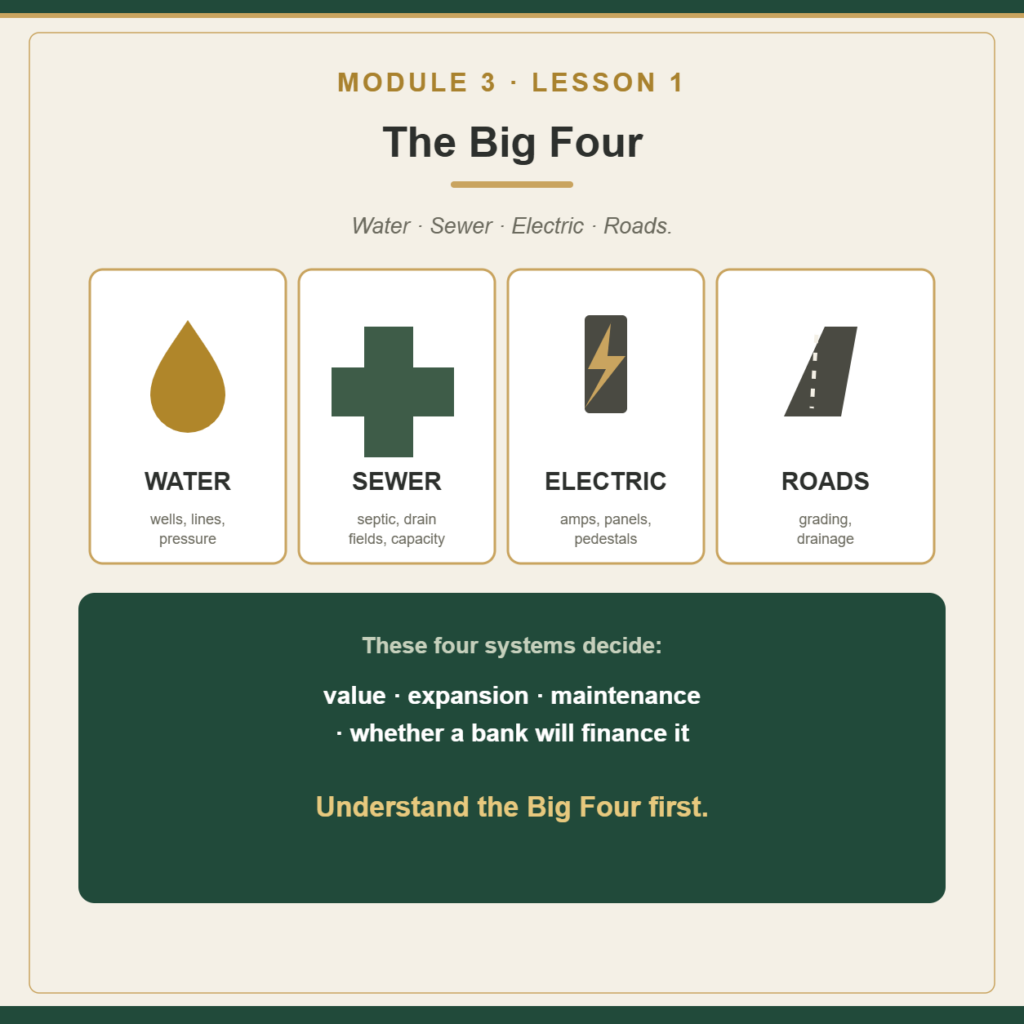
These four systems determine: ✔ The park’s current value✔ Future expansion potential✔ Long-term maintenance costs✔ Whether lenders will finance the park✔ What future upgrades may
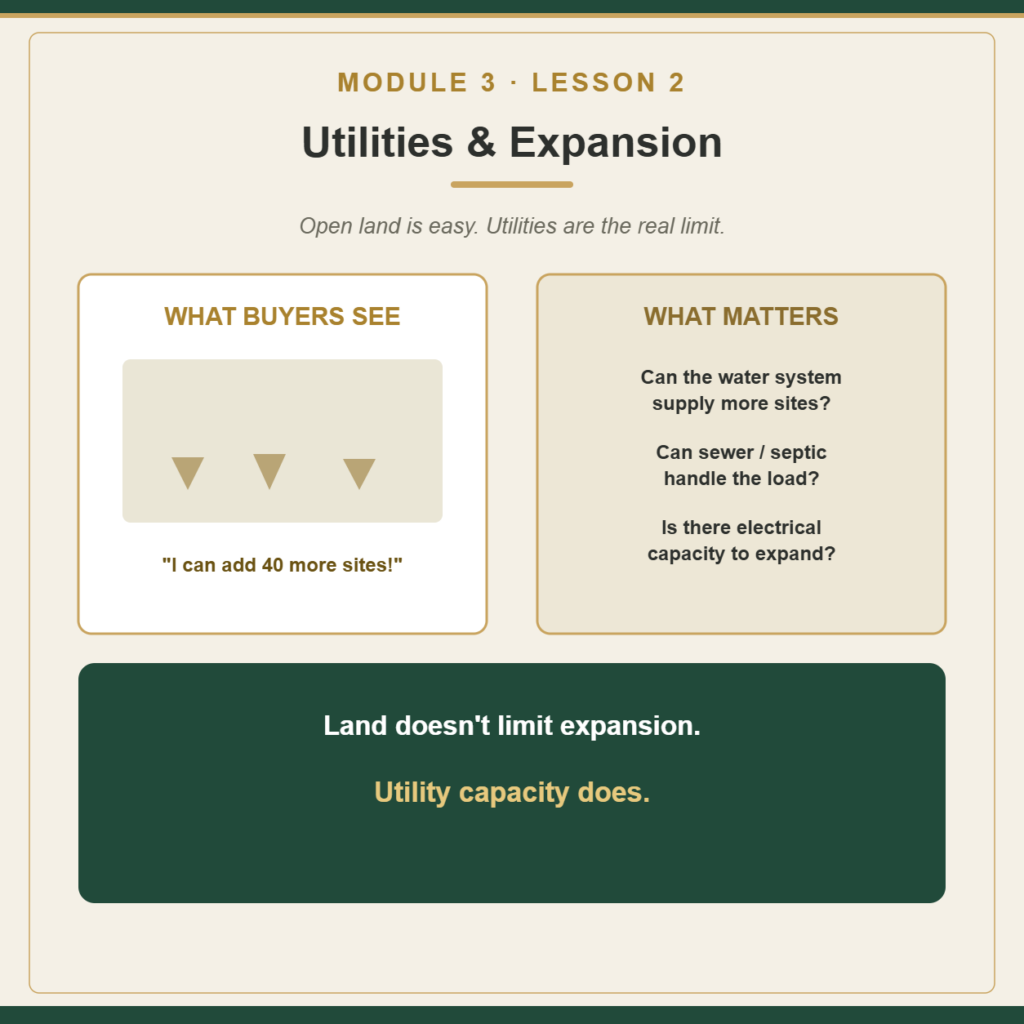
Buyers love expansion opportunities but almost never understand what is actually required. Many buyers see: …and immediately assume: “I can add more RV sites.” Unfortunately,
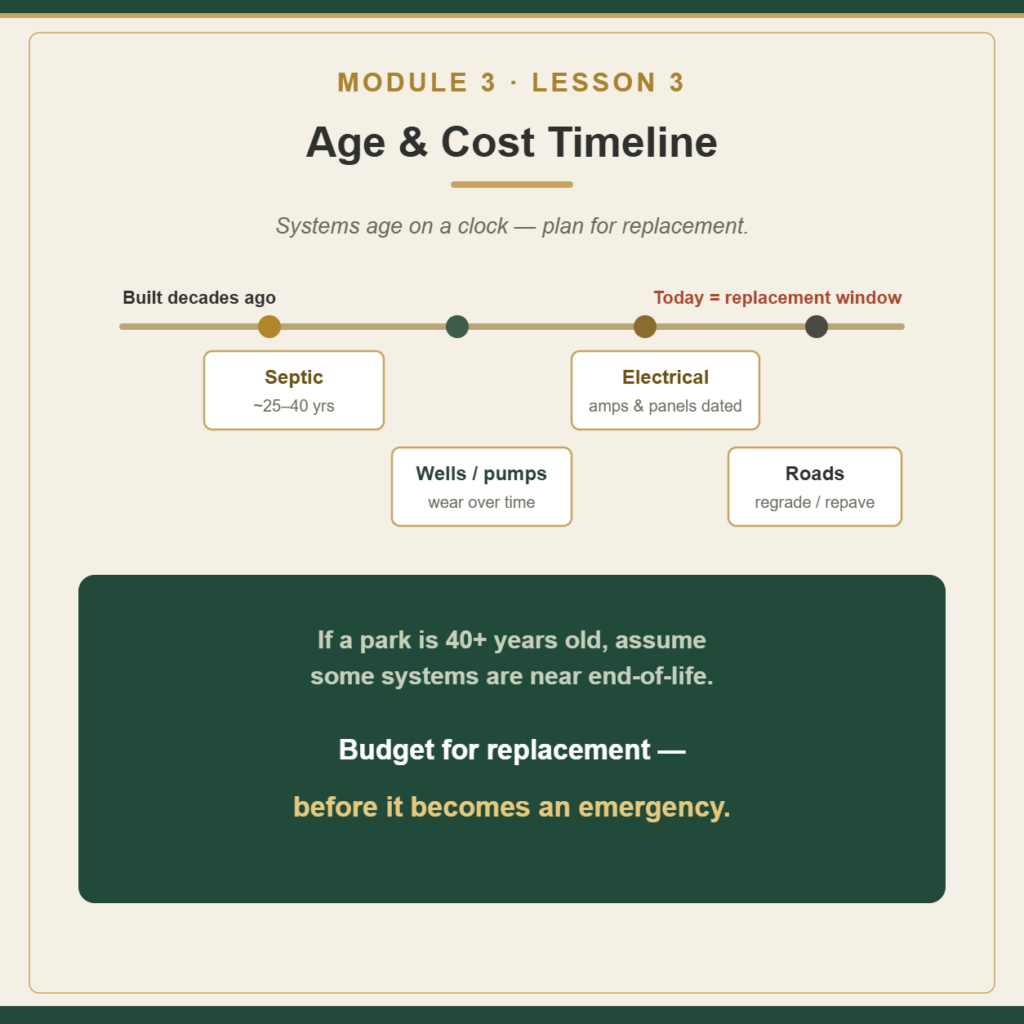
Many RV parks across the United States were originally built during the: 1960s–1980s That means many buyers are purchasing systems that may already be approaching

Buyers must understand: You are not simply buying land and campsites. In many ways, you are buying your own small city. And small cities come
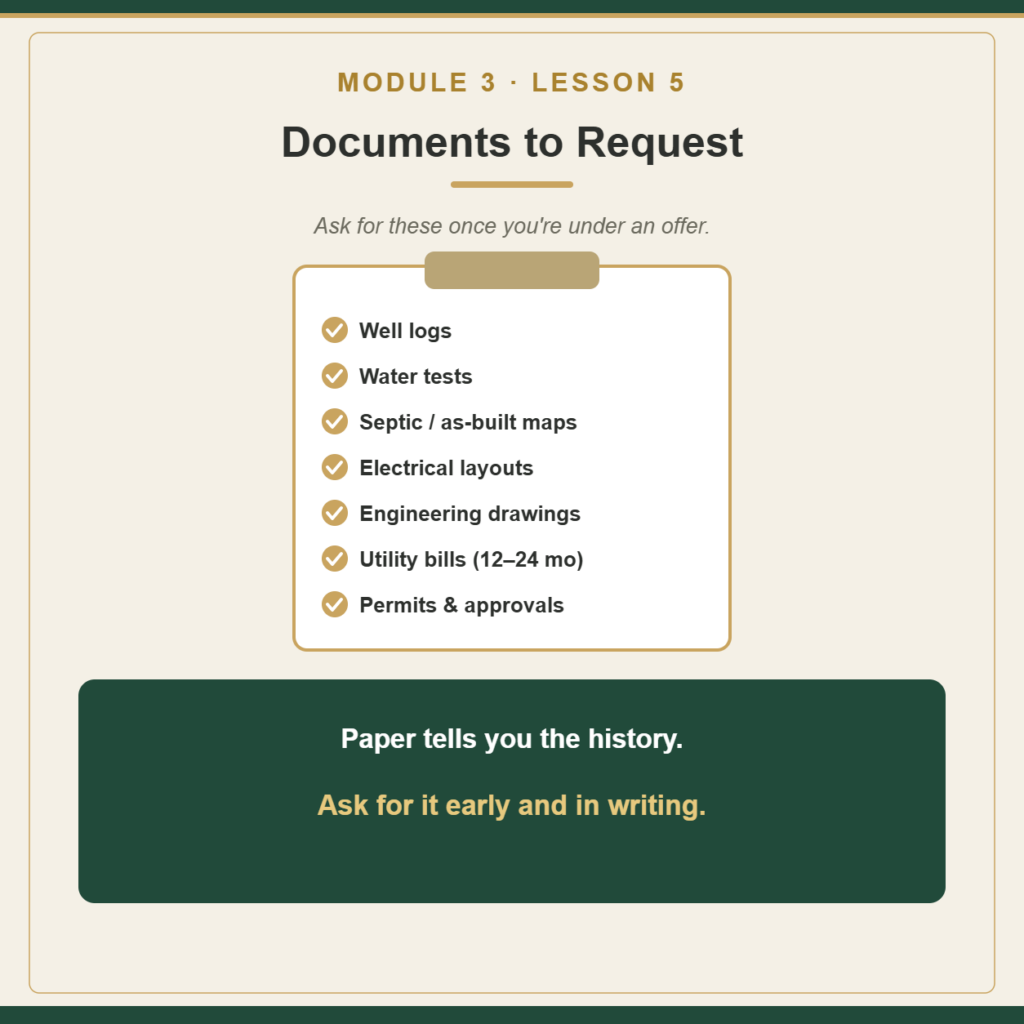
Buyers will want these documents during due diligence: ✔ Well logs ✔ Water tests ✔ Septic / as-built maps ✔ Electrical layouts ✔ Engineering drawings
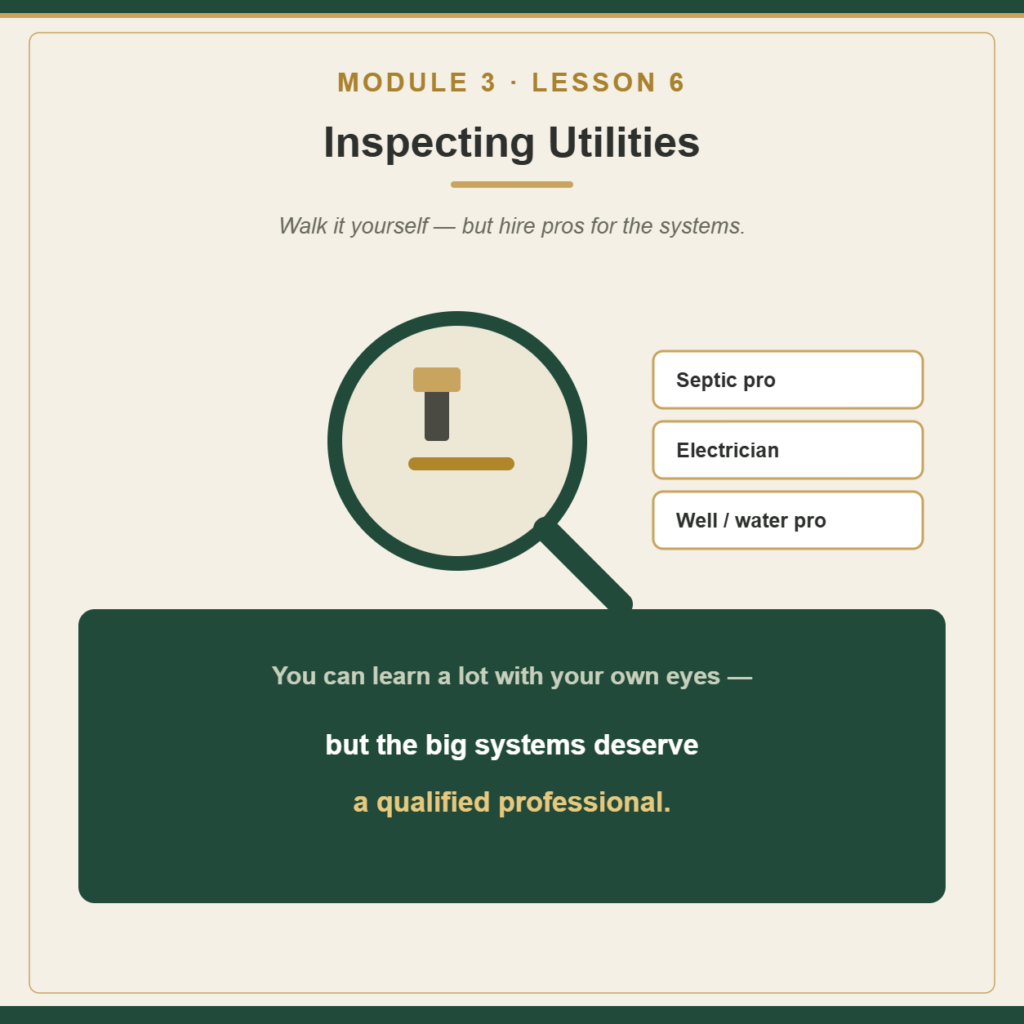
During due diligence, buyers should strongly consider hiring qualified professionals to inspect major utility systems. Buyers can visually inspect and learn a tremendous amount, but
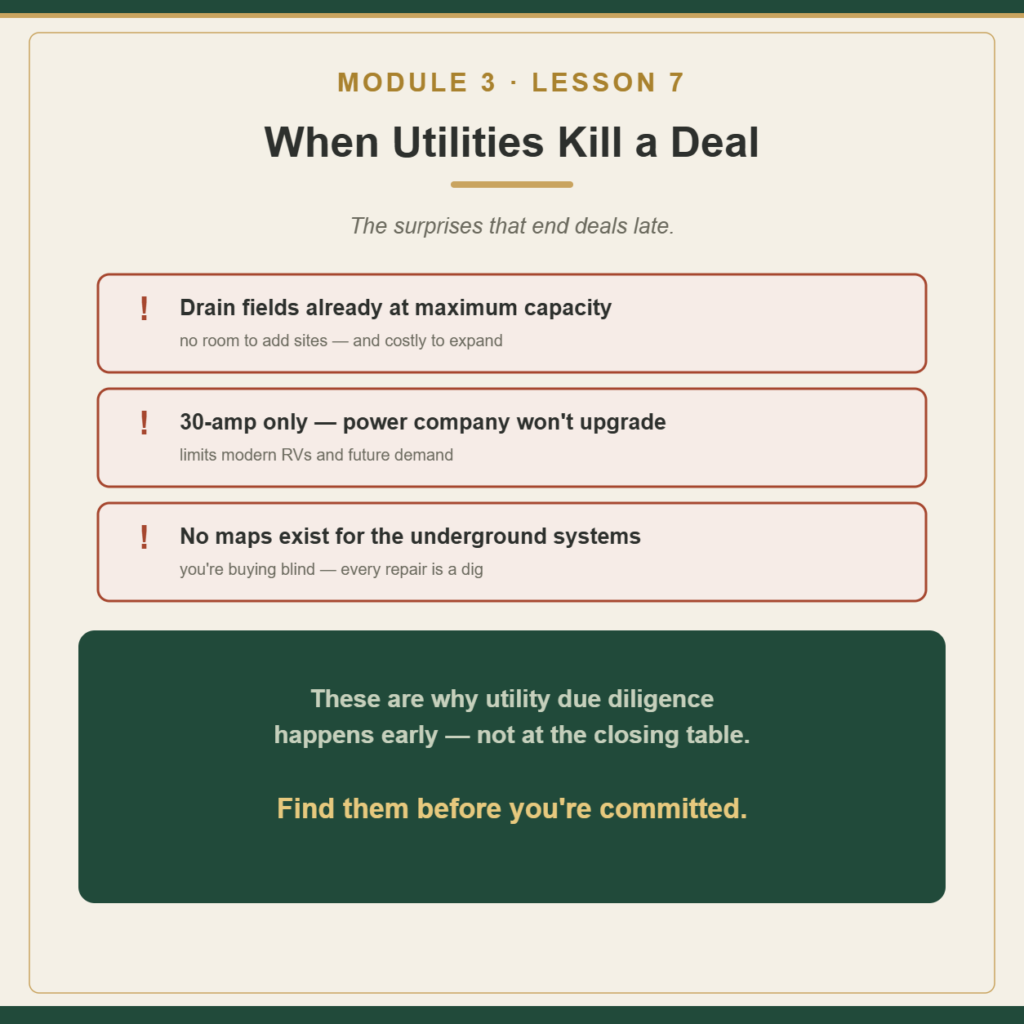
Deals commonly fall apart when buyers discover issues they never expected. Examples: ❗ Drain fields are already at maximum capacity ❗ Park is 30 amp
Congratulations — you just completed one of the most overlooked areas of campground buying. Campgrounds are not simply sites and scenery. They are operational businesses