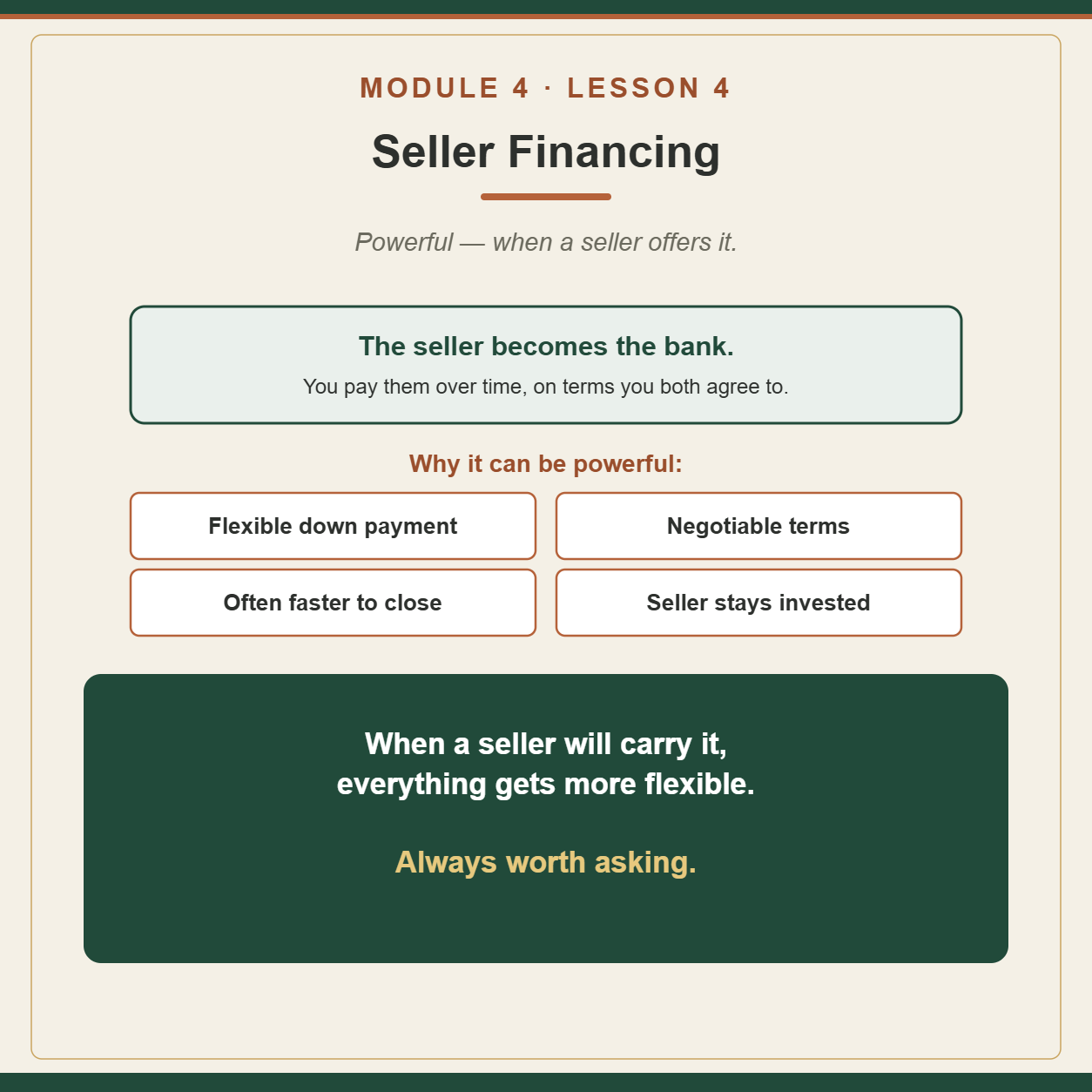
Seller financing is one of the most powerful financing tools available in the campground industry — when a seller is willing to offer it.
For many buyers, it can create opportunities that traditional lenders cannot. But seller financing is built on one thing above all else: trust.
Typical Seller Financing Structure
Every transaction is different, but a common structure may include:
- ✔ 20–40% down payment
- ✔ 5–7% interest rate
- ✔ 3–10 year balloon payment
- ✔ 20–25 year amortization
- ✔ Flexible qualification requirements
- ✔ Faster closings
- ✔ Less bank involvement
Why Sellers Offer Financing
Seller financing can provide benefits for both parties. For sellers:
- ✔ Potential tax advantages
- ✔ Larger pool of qualified buyers
- ✔ Opportunity to achieve a stronger purchase price
- ✔ Ongoing income from interest
- ✔ Faster transactions
Why Buyers Like Seller Financing
- ✔ More flexible qualification standards
- ✔ Flexible deal structures
- ✔ Faster closings
- ✔ Lower bank-related costs
- ✔ Direct communication with the seller
What Buyers Often Misunderstand
If a seller offers financing, treat it like a valuable opportunity. Not every seller is willing to finance a campground. Seller financing is earned through:
- ✔ honesty
- ✔ preparation
- ✔ financial strength
- ✔ professionalism
- ✔ trust
Sellers want confidence that you’ll protect the business they’ve spent years building.
“Seller financing isn’t free money. It’s borrowed trust.”
Working Capital Still Matters
Seller financing helps purchase the campground. It usually does not provide the cash needed to operate it. You’ll still need money available for:
- ✔ payroll
- ✔ utilities
- ✔ insurance
- ✔ repairs
- ✔ unexpected maintenance
- ✔ slower seasons
Never spend every available dollar on your down payment. Strong buyers keep reserve funds available after closing.
Understanding Loan Position
If you later refinance with a traditional lender, that lender will almost always require first lien position. The seller’s note will typically move to second position unless another arrangement is negotiated. Understanding this before closing helps avoid surprises later.
Choose the Right Lending Partner
Not every bank understands campgrounds. Some lenders decline campground loans simply because they have little experience with hospitality businesses. That doesn’t necessarily mean your deal is weak. Work with lenders who understand:
- ✔ campgrounds
- ✔ RV parks
- ✔ resorts
- ✔ hospitality businesses
The right lender can make a tremendous difference.
Seller Financing Can Be a Bridge
Many successful buyers use seller financing as a stepping stone. The strategy is simple:
- Purchase the campground.
- Operate it successfully.
- Build a track record.
- Improve the financial statements.
- Gain experience.
- Refinance into conventional financing when the timing is right.
This approach often opens the door to better financing options in the future.
Lesson Takeaway
Seller financing isn’t simply another way to buy a campground. It’s often a relationship built on trust, confidence, and shared goals.
When properly structured, seller financing can help buyers gain experience, preserve flexibility, and position themselves for long-term success.
“A seller isn’t just financing your purchase — they’re investing confidence in your ability to carry their legacy forward.”