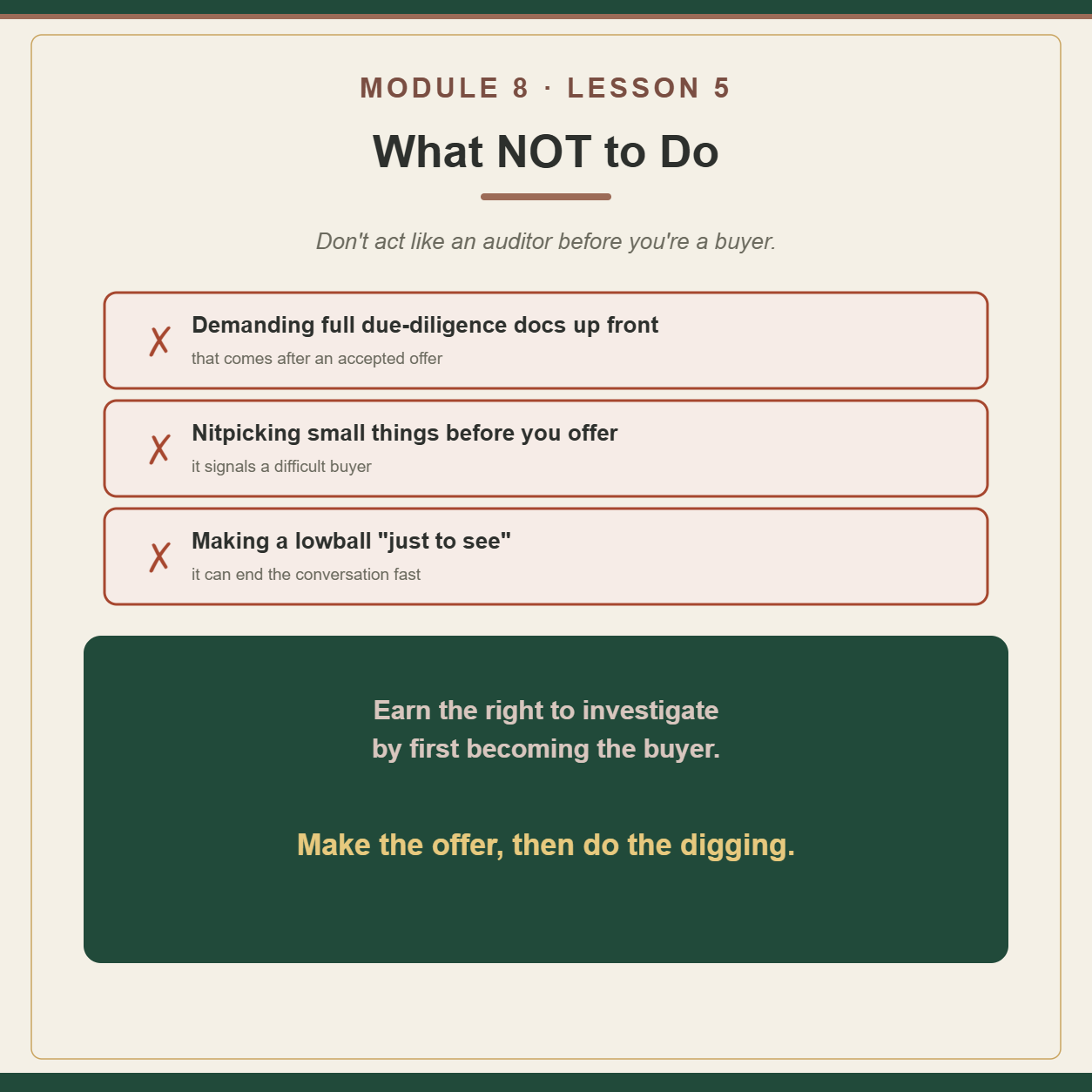
DON’T ACT LIKE AN AUDITOR BEFORE YOU’RE A BUYER
The fastest way to lose a park you want is to behave like a due-diligence auditor before you’ve made an offer. And to be clear — the problem isn’t wanting the information. The problem is demanding it from the seller, in the wrong way, at the wrong time. That signals “tire-kicker,” not “buyer,” and it quietly pushes your offer to the bottom of the pile.
WHAT NOT TO DO BEFORE YOU OFFER
These are due-diligence activities — and due diligence comes after an accepted offer, not before. Push for them too early and you look unserious, disrespect the seller’s confidentiality, and burn the goodwill you’ll need later.
Here’s what most buyers don’t realize — the information is already being gathered for you. A good brokerage collects the key preliminary details upfront and makes them available to qualified buyers:
✓ An income summary and the general financial picture
✓ Enough to decide whether it’s worth pursuing
The deep confidential file — tax returns, detailed P&Ls, utility maps, engineering documents — opens after your offer is accepted, during due diligence. So you rarely need to demand anything from the seller directly. Qualify, review what’s provided, and make a serious offer — the rest arrives right on schedule.
Your site visit is for seeing the park and building rapport — not for haggling on price. Negotiate on the spot and you tip your hand, make emotional decisions, and risk the relationship before it even starts. Let an experienced broker do the negotiating: it’s their job, they do it without the emotion, and they’ll protect both the deal and the relationship.
WHAT TO DO INSTEAD
Do this, and you earn the very access you were tempted to demand. The offer opens the full file; your professionalism keeps it open.
“Whatever you do, don’t try to negotiate on your visit to the campground. That’s not the time, and it’s not your job. Walk the property, ask your reasonable questions, be gracious — and let the professionals who’ve been doing this for decades handle the negotiation. A good broker negotiates without the emotion, protects the relationship, and gets you a better deal than you’ll ever get haggling on the seller’s porch. Look, listen, and let the pros do the talking on price.”
Before you offer, your job isn’t to pry documents out of the seller or haggle the price — it’s to be a serious, respectful buyer. The preliminary information comes through the broker, the full file comes after your offer, and the negotiating is your broker’s job. Work the process and it works for you.