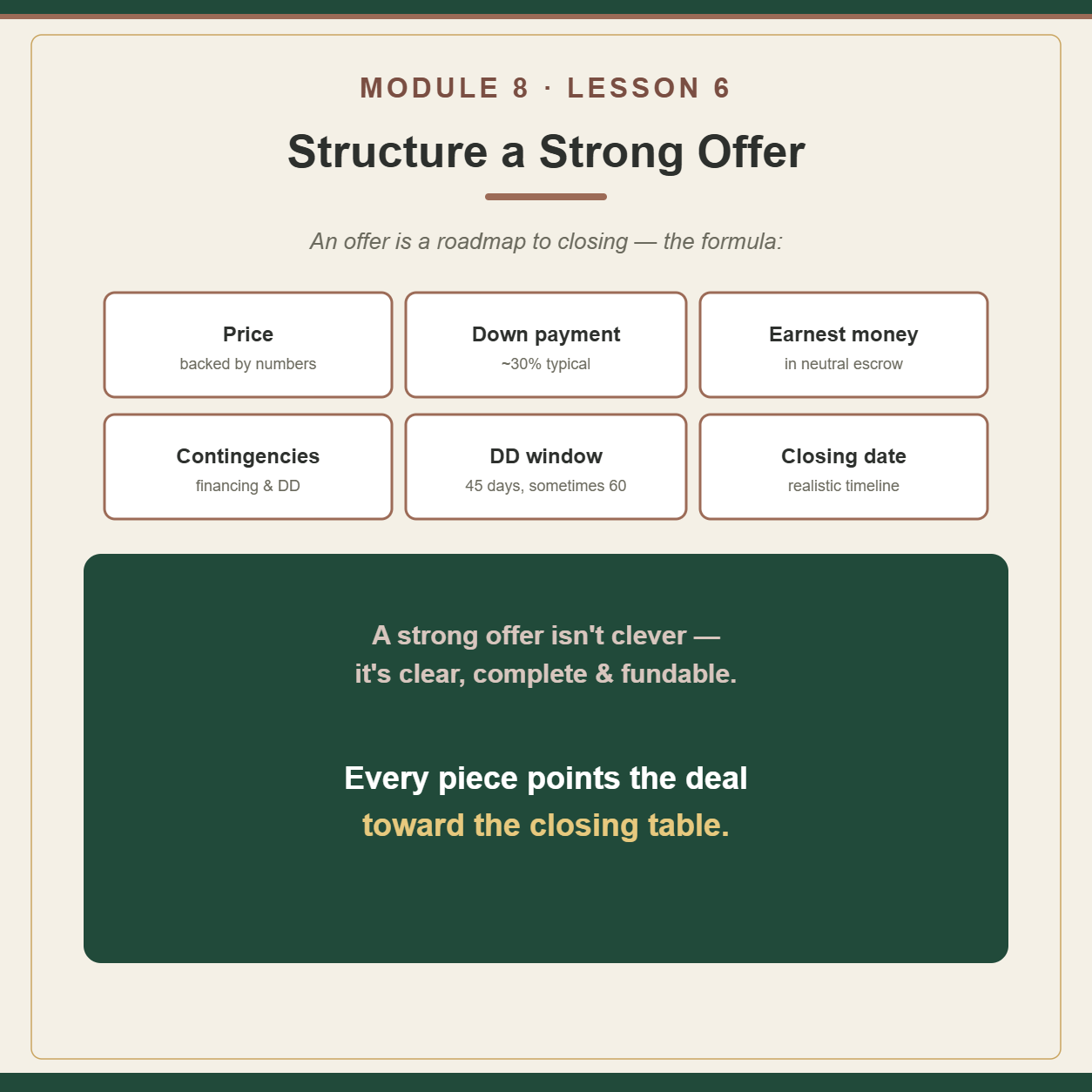
AN OFFER IS A ROADMAP TO CLOSING
A strong offer isn’t about being clever — it’s about being complete. It’s more than a price; it’s a roadmap that tells the seller exactly how this deal reaches the closing table.
Every strong offer answers one question: “If the seller accepts today, does everyone know exactly what happens next?” A strong offer removes uncertainty — it spells out the price, the financing, the timeline, the contingencies, and the path to closing. The easier it is to understand, the easier it is to say yes.
Every good offer has the same seven parts, each doing a job:
State the purchase price clearly and up front. And if your price differs from the asking price, be ready to explain why — with facts, not emotion.
Plan for about 30% down and have that cash ready — it’s the safe number to underwrite yourself against. If you can put down less with SBA or seller financing, even better; just don’t count on it.
Say exactly how you’ll pay — bank loan, SBA, seller financing (if offered), cash, or a hybrid. Clarity here builds the seller’s confidence you’ll close. And never assume seller financing is available unless it’s actually been discussed.
A contingency is simply a condition that must be satisfied — or you don’t have a deal. So you only need the few that truly matter. These are normal and expected:
But avoid the moves that make you look unserious:
The more uncertainty you create, the weaker your offer becomes — and the longer you drag things out, the more likely you lose the deal.
Standard is 30–45 days for due diligence, then about 30 days to close after it ends. A tighter window makes you look stronger — but never promise a timeline you can’t realistically deliver.
Our guidance: 45 days is plenty for due diligence. Sixty can make sense on a larger or more complex park. But 90-plus days works against you — you rarely need it, and it only wears the seller down. A shorter, confident window makes your whole offer stronger.
Typically $10,000–$50,000+ depending on the size of the park, held in escrow, and it usually “goes hard” after due diligence. Here’s the part buyers miss: your deposit isn’t truly at risk until all of your conditions have been met by all parties. Just make sure it’s held by a neutral third party — an independent title or escrow company. If that title company is owned by the buyer’s or seller’s attorney, use a different one.
Give a specific date, or “within 30 days of due-diligence completion.” Sellers crave certainty on timing — a clear closing date is a gift.
PUT IT TOGETHER
Line those seven parts up and your offer answers the one question that matters: if the seller says yes today, everyone knows exactly what happens next. Here’s what that looks like on one page:
“Figure thirty percent down and have that cash ready — if you can do it for less, wonderful, but never count on it. On contingencies, understand what one actually is: a condition that has to be resolved, and if it can’t be, you simply don’t have a deal — so you only need the few that truly matter, and the longer you drag them out, the more likely you lose the deal. And your earnest deposit? It has no real value until every condition has been met by all parties, so it’s not the risk buyers fear. Just make sure it’s held by a neutral third party — an independent title or escrow company. And if that title company happens to be owned by the buyer’s or the seller’s attorney, go somewhere else. You want a truly independent party holding the money.”
An offer is more than a price — it’s a roadmap to closing. Follow the formula and yours reads like a professional’s: a clear price, a real way to pay, only the contingencies that matter, and a confident path to the closing table.