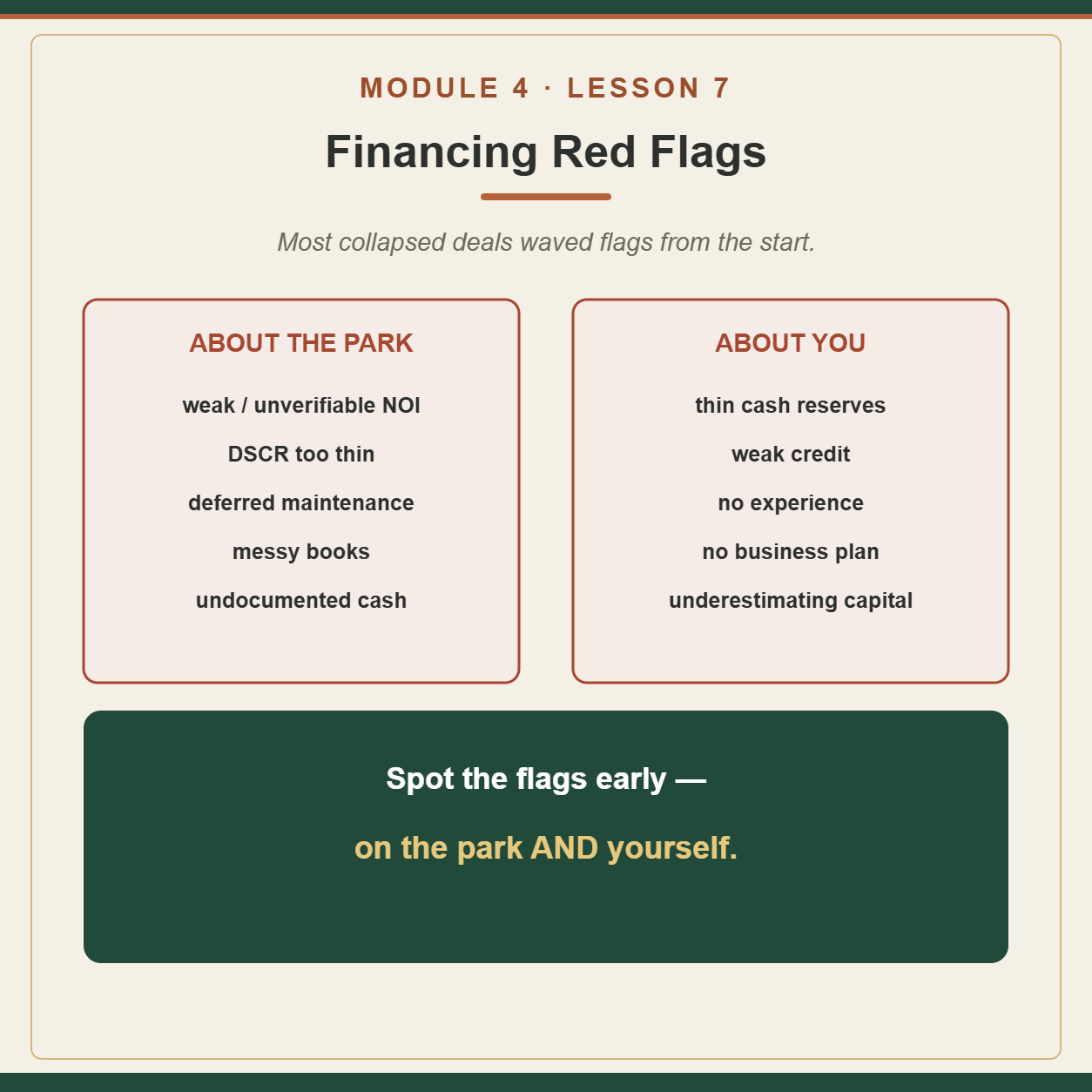
Most deals that collapse at financing were waving red flags from the start. They fall into two kinds — flags about the park, and flags about you, the buyer. Learn to spot both before you waste months or your savings.
Red Flags in the Park
- Messy books the seller can’t explain. Older parks rarely have clean P&Ls — that’s normal, and fixable with an accountant. It’s only fatal when the seller can’t or won’t produce real numbers at all.
- The park doesn’t meet DSCR. If the income won’t service the debt at that price, the bank says no — no matter how much you love it.
- Ignored capital expenditures. Roads, septic, electrical, pads. Pretending they don’t exist doesn’t make them disappear — budget for them.
Red Flags in the Buyer
- No proof of funds. No bank moves forward without it. Have it ready before you make offers.
- Going in undercapitalized. The fastest path to a brutal first year (see Lesson 5).
- Too much personal debt. Banks weigh your whole financial picture, not just the park’s. Heavy personal debt can sink an otherwise good deal.
- Wanting only 10% down. Not realistic for most campground financing — plan on 20–30%+.
- Counting on 100% financing. Easy in, hard out.
- Wanting to be absentee in year one. Banks want owner involvement, especially early.
“The easiest deals to get into are often the ones that bury you. I’ve watched buyers chase 100% financing like it’s a win — no money down, walk right in. But take on a park with no cushion and no plan to run it better than the last owner, and you’re one slow season from a real bad day. Keep your personal debt low, keep cash in reserve, and never go in undercapitalized. The goal isn’t just to get in — it’s to still be standing three years later.”
Lesson Takeaway
The deals that close — and survive — aren’t the ones with the easiest entry. They’re the ones where the park’s numbers work and the buyer walked in prepared. Spot the red flags early, and you protect both your money and your future.
“An easy way in is often the hardest way out.”