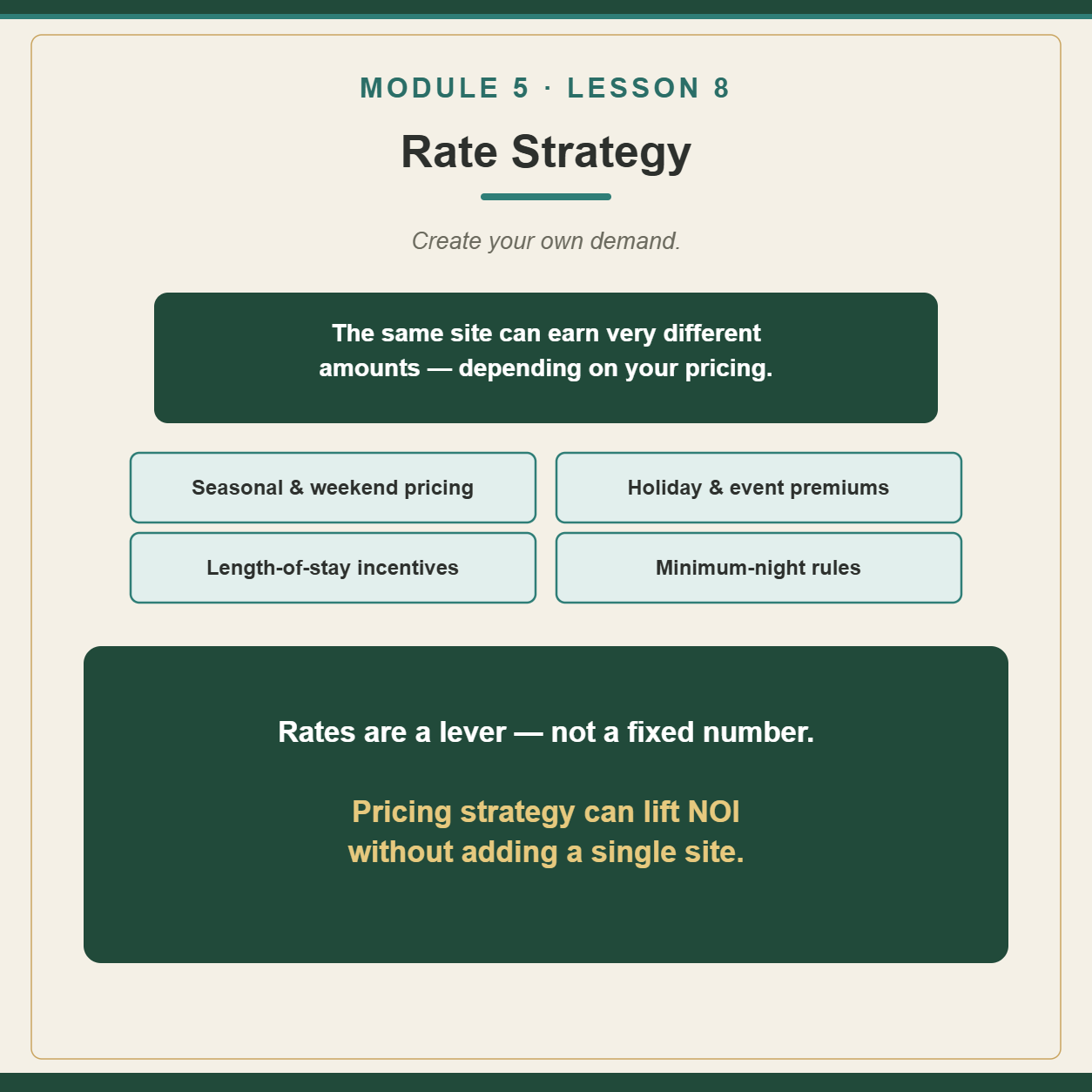
Rate strategy is one of the biggest blind spots for buyers — and one of the fastest ways to grow income. Most parks undercharge dramatically. It works on two levels: pricing smarter on the demand you already have, and creating demand you don’t.
Level 1 — Price Smarter (the quick wins)
Small, simple moves add up fast:
- Raise rates $5–$10 — most parks are underpriced, and small increases compound across every site and night.
- Charge separately for 50-amp.
- Add or raise cabin cleaning fees.
- Raise seasonal rates.
- Charge for early check-in / late checkout.
- Use dynamic pricing — flex rates with demand for roughly 20–30% more on the same sites (Lesson 7).
- Tier your premium sites — waterfront, pull-through, shade, and view sites should cost more than the back row.
- Meter the electric on seasonal and long-term sites. Otherwise campers run the AC with the windows open on your dime — sub-metering turns a runaway cost into recovered revenue.
Together these can add $30,000–$150,000+ a year depending on park size — with zero new construction.
But Earn the Increase
One caution: when you first buy a park, you can’t raise rates dramatically overnight — your loyal campers will revolt. Earn it. Show visible upgrades, add something new, and raise rates inch by inch as guests watch the park get better. People happily pay more for a place that’s clearly improving; they resent paying more for the same old thing.
Level 2 — Create Your Own Demand (the real strategy)
Here’s the ceiling on pricing tactics: you can only optimize the demand you already have. The biggest rate increases come from creating demand that wasn’t there — making your park a place people will pay anything to get into. When demand outruns supply, price takes care of itself, and a waiting list is the ultimate pricing power.
A true story
A buyer we worked with bought a park in the middle of a corn field. Everyone told him no one would camp there. He said, “Yes they will — I’m going to create my own demand.” And he did. He built a beautiful park: a pool, a water park, amazing sites. Today it’s so in demand it carries a waiting list — and the park sold for over $12 million. He didn’t find demand. He built it.
You can fine-tune a price all day, but vision sets the rate. Give people a reason to pay more — an experience, an amenity, a destination worth driving to — and the rate follows. The everyday version of this — theme, curb appeal, hospitality, and yes, flowers — is big enough to be its own lesson: the Experience Premium.
“Most owners are scared to raise their prices a nickel — and a lot of the time it’s because their campers have become friends. You see the same families every summer, and nobody wants to be the one who raises the rate on a buddy. I understand that. But good people are happy to pay a little more for a park that’s clearly getting better. Meanwhile I’ve watched buyers create demand out of thin air — one built a park in the middle of a corn field into a place people line up to get into. That’s the highest rate strategy there is: don’t compete on price, become the park people can’t get into. Raise your rates — but build something worth the rate.”
Lesson Takeaway
Price smarter on the demand you have — most parks leave real money on the table — and then build demand you don’t. The parks that command the highest rates aren’t the cheapest or the biggest; they’re the ones people can’t get into.
“You can optimize a price. But vision sets the rate.”