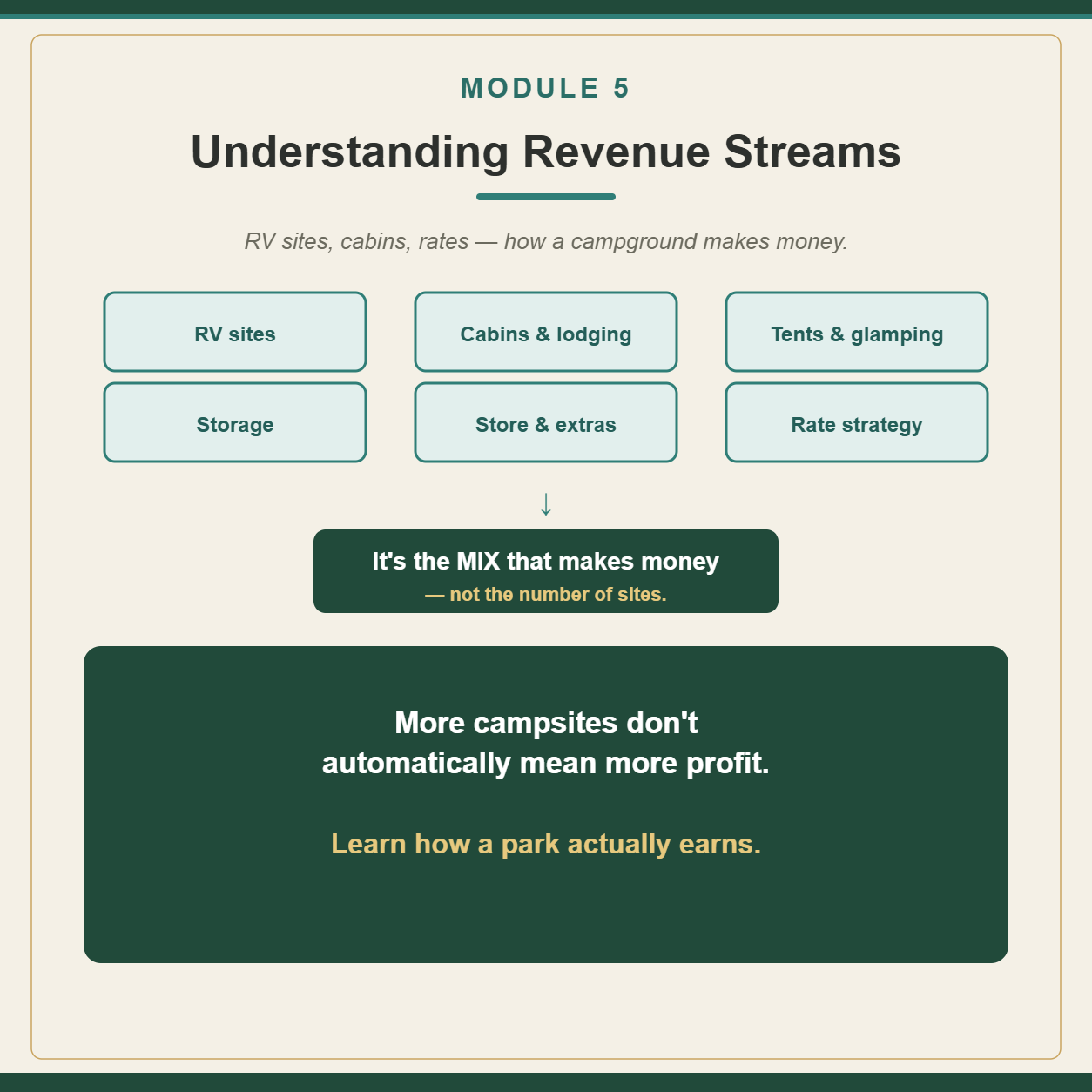
One of the biggest mistakes new buyers make is assuming that more campsites automatically mean more profit. They don’t. Revenue is determined by how a campground operates — not simply by how many sites it has.
A 50-site campground can outperform a 100-site campground because of:
- ✔ better rates
- ✔ stronger occupancy
- ✔ diversified revenue streams
- ✔ better expense management
- ✔ higher guest spending
This module teaches you to stop looking at site count and start understanding what actually drives revenue, profitability, and long-term value.
The question to carry through every lesson in this module:
“If you bought this campground tomorrow, where would you make your next $50,000?”
Stop asking “how many sites?” and start asking “where’s the opportunity?”
Revenue Is More Than Campsites
Successful campgrounds earn income from many different sources:
- ✔ RV sites
- ✔ Cabins
- ✔ Seasonal sites
- ✔ Transient camping
- ✔ Glamping
- ✔ Camp stores
- ✔ Propane
- ✔ Golf cart rentals
- ✔ Laundry
- ✔ Firewood
- ✔ Ice
- ✔ Boat rentals
- ✔ Events
- ✔ Recreation
- ✔ Premium services
Every campground has a different revenue mix. Understanding where the money comes from is one of the most important skills a buyer can develop.
Good Records Tell the Story
One of the first things to evaluate is the campground’s financial records. Strong records clearly show:
- ✔ where revenue comes from
- ✔ how each income stream performs
- ✔ operating expenses
- ✔ historical trends
- ✔ opportunities for improvement
The better the records, the easier it is to understand the business and make informed decisions.
By the End of This Module
You’ll understand:
- ✔ the major campground revenue streams
- ✔ how occupancy affects profitability
- ✔ why rates matter more than site count
- ✔ seasonal vs. transient income
- ✔ additional profit centers
- ✔ revenue opportunities buyers often overlook
- ✔ how good financial records reveal the true story of a campground
“Revenue isn’t measured by the number of campsites you own — it’s measured by how well you operate them.”