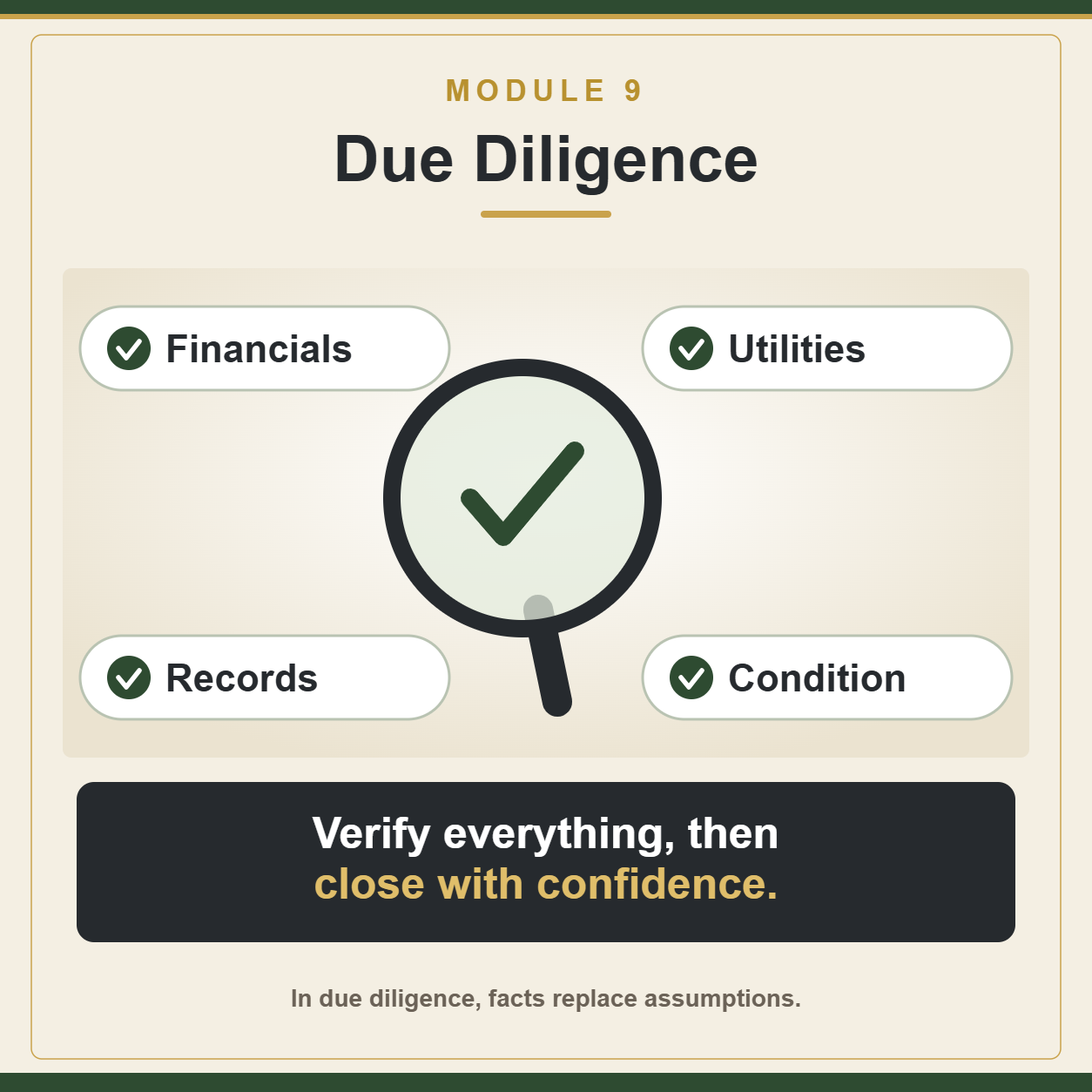
What to inspect, what to request, and how to do it the right way.
Due diligence is where the deal gets real
Once your offer is accepted, the real work begins. Due diligence is the stage where you verify that the campground, the business, and its financial performance are consistent with what you understood when you made your offer. This is where facts replace assumptions.
It is one of the most important stages of the entire purchase — and one of the stages buyers most often misunderstand. Due diligence should not be chaotic, adversarial, or a fishing expedition. It should be an organized verification process that helps you understand exactly what you are buying.
Why this module matters
Good campground transactions can fall apart during due diligence when buyers:
✗ Don’t understand the process
✗ Request information without a clear priority or plan
✗ Overwhelm the seller with scattered requests
✗ Misinterpret financial or operational documents
✗ Try to turn normal campground maintenance into a renegotiation
✗ Fail to hire the right professionals
✗ Wait too long to begin inspections, financing, or third-party reports
✗ Think full due diligence should happen before making an offer
✗ Lose sight of the campground they originally agreed to purchase
This module will teach you how to conduct due diligence thoroughly and professionally — protecting yourself while keeping the transaction organized and moving forward.
THE KEY IDEA
Due diligence is where you verify the deal you already agreed to pursue. You’re confirming the financial performance, the physical condition, the utilities and infrastructure, the property and legal records, the licenses and agreements, and the assumptions behind your offer.
You are not looking for perfection. You are looking for accuracy — and whether anything you discover materially changes the business, property, or economics of the deal.
What due diligence actually is
Due diligence is the formal verification period that generally begins after your offer or purchase agreement has been accepted. During this time, you and your professional team investigate the campground from several angles:
- Financial records — tax returns, profit-and-loss statements, revenue records, expenses, payroll, and other operating information.
- Physical condition — buildings, roads, campsites, utilities, equipment, amenities, and other improvements.
- Infrastructure — water systems, wells, septic and sewer, electrical systems, and other major campground infrastructure.
- Property information — surveys, title work, easements, boundaries, zoning, and expansion considerations.
- Operational records — licenses, permits, leases, vendor contracts, reservations, seasonal agreements, and other business records.
Depending on the property, you may also need inspectors, accountants, attorneys, lenders, surveyors, engineers, or environmental professionals. Your job is not to become an expert in every one of these areas — it’s to know what needs to be verified and who should verify it.
REMEMBER: EVERY CAMPGROUND HAS A PUNCH LIST
Campgrounds are outdoor businesses — roads, trees, water lines, electrical pedestals, bathhouses, roofs, septic systems, equipment, pools, and hundreds of components constantly exposed to weather, guests, and everyday use. Nearly every inspection will uncover something. A repair list does not automatically mean you’ve found a bad campground.
The real questions: What is the issue? What will it cost to correct? Was it already reflected in the price or condition? Does it materially change the business you believed you were buying?
Due diligence should answer three questions
1. Is the business performing as represented? Do the financial records reasonably support the revenue, expenses, and NOI you used when evaluating the property?
2. Is the property and infrastructure generally what I expected? Are there major physical, utility, environmental, title, or operational issues that materially affect it?
3. Can I move forward knowing what I now know? Due diligence is about making an informed decision — not an emotional one.
When is renegotiation appropriate?
Due diligence is not automatically a second round of negotiations. Normal maintenance, cosmetic issues, and ordinary campground repairs are part of owning an operating property. Renegotiation may be reasonable when due diligence uncovers a material issue that was not previously disclosed or reasonably understood — a major financial discrepancy, a significant infrastructure failure, an unexpected title or boundary problem, a licensing or zoning issue, or a major environmental concern. The key word is material. Not every discovery changes the deal.
Keep the seller’s trust
Due diligence works best when both sides communicate professionally. Sellers are often handing over years of financial records, contracts, permits, and operational information while still running the campground. Stay organized. Ask clear questions. Group document requests when you can. Respect confidentiality. Use your professional team. And when you find something you don’t understand, investigate it before assuming the worst. A buyer who handles due diligence professionally gives the seller confidence that the deal can actually make it to closing.
BY THE END OF THIS MODULE, YOU’LL UNDERSTAND
✓ What due diligence is — and what it is not
✓ Exactly when due diligence happens
✓ The three phases of the due-diligence process
✓ What documents buyers commonly request
✓ What inspections and professional reviews may be needed
✓ How to verify campground financials
✓ How to evaluate infrastructure and physical condition
✓ The red flags that deserve additional investigation
✓ The difference between a normal punch-list item and a material issue
✓ When renegotiation may be appropriate
✓ How to stay organized and maintain the seller’s trust
✓ How to move from an accepted offer to a confident closing
Done correctly, due diligence leaves you with fewer assumptions, better information, and a clear understanding of the campground you’re about to own. The goal isn’t to find a perfect campground — it’s to know exactly what you’re buying.