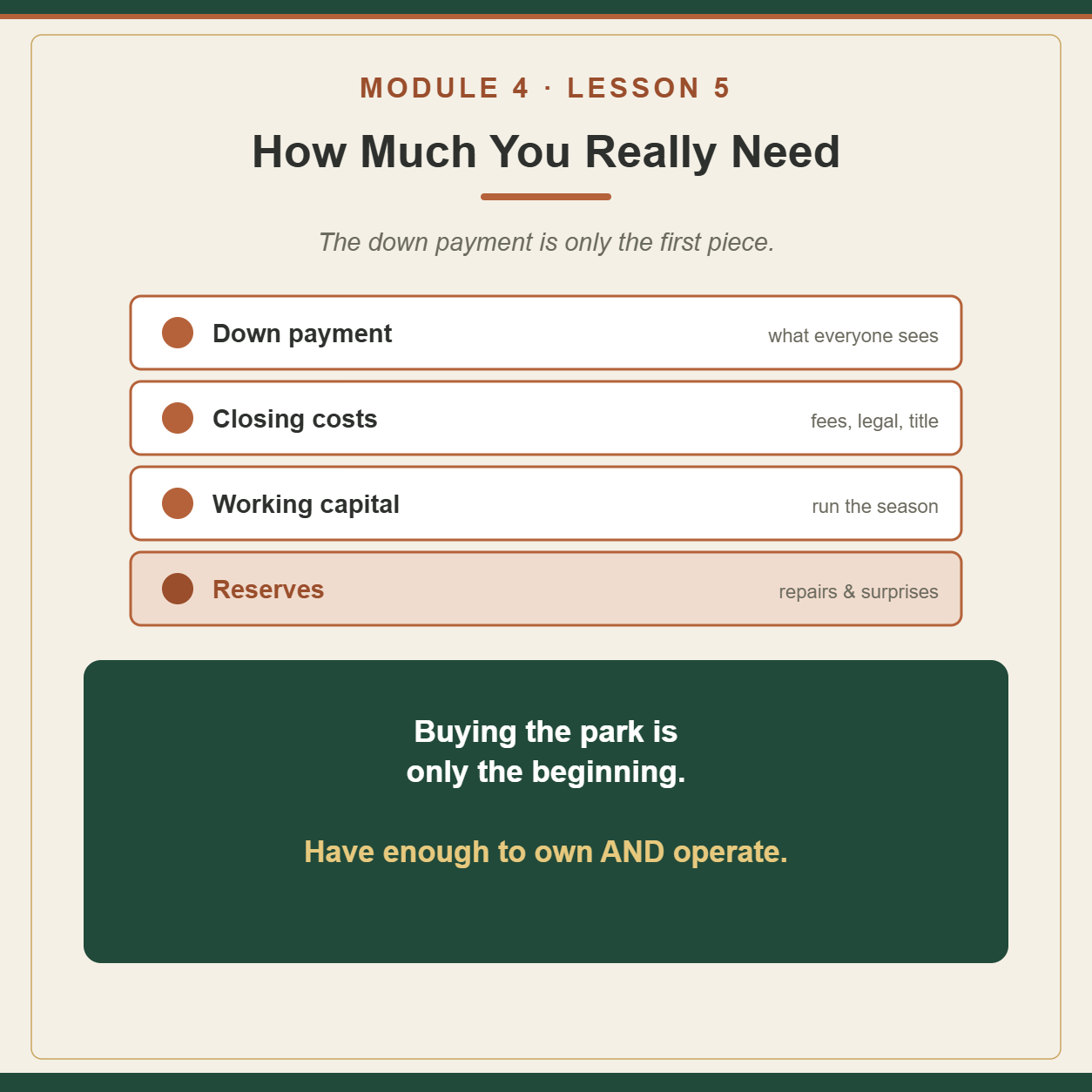
One of the biggest mistakes first-time buyers make is focusing only on the down payment. Buying the campground is only the beginning. Owning and operating it successfully requires additional capital.
Typical Capital Requirements
✔ Down Payment — approximately 30%
This is the standard expectation for many conventional commercial loans. Some financing programs may require less, while others may require more.
✔ Closing Costs — approximately 3–5%
These may include:
- Appraisal
- Environmental reports
- Legal fees
- Loan costs
- Recording fees
- Title insurance
✔ Working Capital — $30,000–$100,000+
Every campground is different. Working capital helps cover:
- ✔ payroll
- ✔ utilities
- ✔ insurance
- ✔ supplies
- ✔ marketing
- ✔ software
- ✔ unexpected repairs
- ✔ day-to-day operations
✔ Capital Improvements — $25,000–$250,000+
Many buyers immediately begin improving the campground. Examples include:
- ✔ roads
- ✔ electrical upgrades
- ✔ water systems
- ✔ sewer improvements
- ✔ bathhouses
- ✔ cabins
- ✔ landscaping
- ✔ site improvements
✔ Cash Reserves — always maintain reserve funds
Unexpected expenses happen. Weather happens. Equipment fails. Guests cancel. A strong reserve gives you options instead of stress.
Think Beyond the Purchase
The amount of cash you’ll need depends on how quickly you plan to improve and grow the campground. Many successful buyers focus on improvements that can increase revenue without requiring significant capital. Examples include:
- ✔ improving online marketing
- ✔ adjusting rates appropriately
- ✔ reducing unnecessary expenses
- ✔ improving guest experience
- ✔ increasing occupancy
- ✔ adding simple revenue opportunities
Not every improvement requires spending thousands of dollars. Some of the best returns come from better operations.
Plan for the Off-Season
If your campground operates seasonally, ask yourself: how much cash will I need to comfortably make it through the winter?
Consider:
- ✔ utilities
- ✔ insurance
- ✔ property taxes
- ✔ loan payments
- ✔ maintenance
- ✔ unexpected repairs
The off-season is where many first-time owners discover whether they planned well.
Additional Income Can Help
Many successful first-time buyers have:
- ✔ another business
- ✔ W-2 income
- ✔ retirement income
- ✔ investment income
- ✔ a working spouse
Additional income can provide flexibility while the campground continues to grow.
“How much cash you’ll really need comes down to one thing: how fast you can run this place better than the last owner did. Look for the revenue you can add with little or no money — fill more sites, extend a short season by a few weeks on each end, give guests more of what they already want. The quicker you lift income, the less cash you burn getting there. But respect the off-season — that’s when your reserves keep you alive. Keep at least 30% in the bank, and if you’ve got a second income coming in, even better. That cushion is what lets you run the business instead of the business running you.”
Lesson Takeaway
Buying the campground is only one part of the investment. Operating it successfully requires planning, discipline, and adequate reserves.
The strongest buyers don’t ask: “How little money can I buy this campground with?” They ask: “How much capital do I need to build a successful business?”
“Cash doesn’t just buy the campground — it buys you time, flexibility, and the opportunity to build something great.”