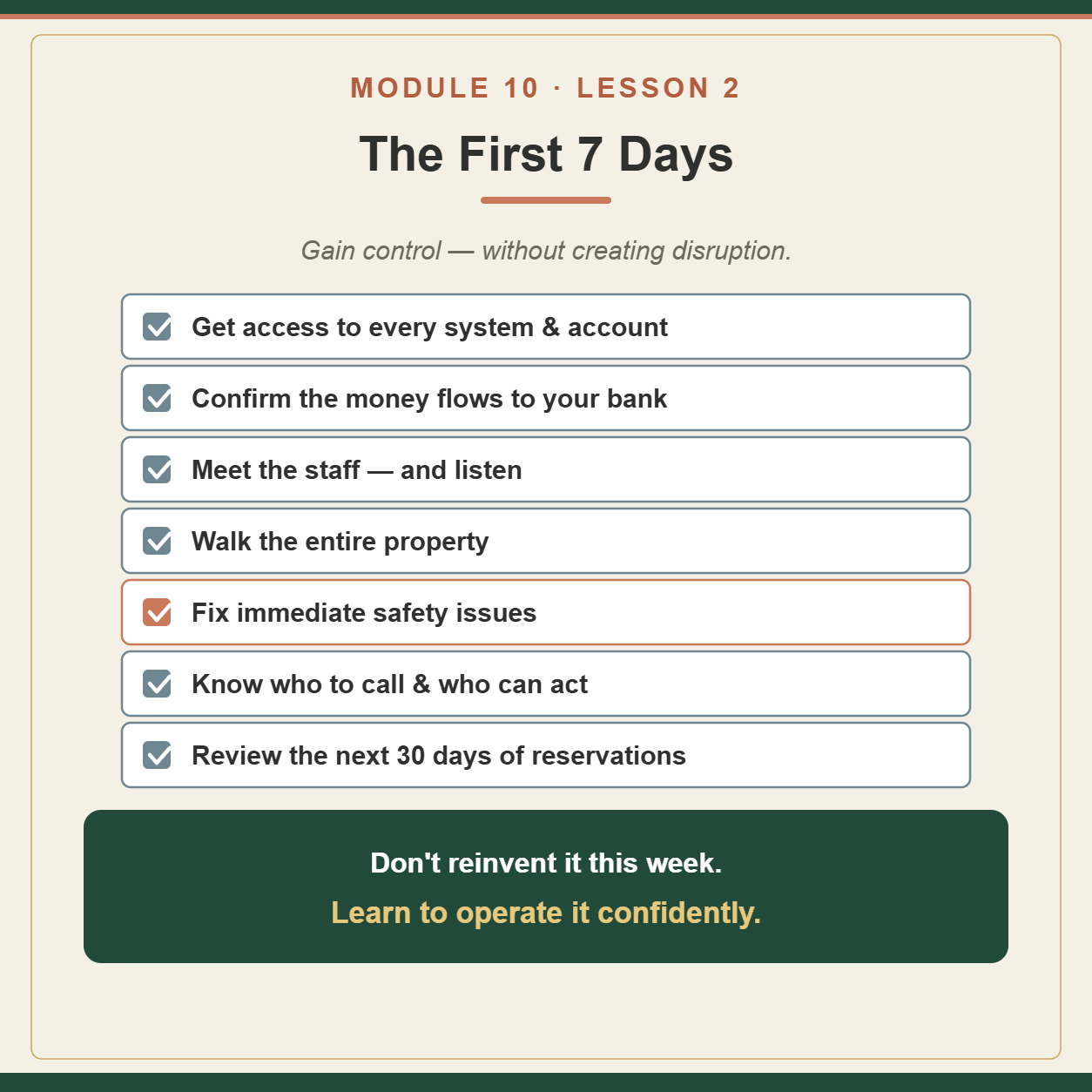
Your first week isn’t about changing the campground. It’s about gaining control of the operation, meeting the people, and making sure nothing critical is missed.
Week 1, simply: gain access, meet the team, walk the property, fix urgent safety issues, and keep the campground running.
1. Get access to everything
You can’t operate what you can’t access. Confirm ownership/admin access transferred for reservation systems, bank accounts, credit-card processors, payroll, accounting software, mail, vendor and utility accounts, insurance, state lodging/sales-tax accounts, website and domain, email, social media, gate systems and codes, WiFi, security cameras, phones, and work-order systems. Don’t assume access transferred at closing — test it, log in, confirm your passwords and admin-level rights work.
2. Confirm the money is flowing correctly
Verify how money is collected and where it goes: reservation and credit-card deposits, bank transfers, cash procedures, store sales, seasonal payments, refunds, payroll funding, and vendor payments. Make sure merchant processors and the reservation system are sending funds to your bank account. It sounds basic — it’s one of the very first things to confirm after ownership changes.
3. Meet the staff
Hold one simple introductory group meeting. Introduce yourself, learn names, understand each person’s role, and ask what works well and what creates problems. Most importantly — listen. Don’t walk in with a list of changes. Your employees know things about this campground you don’t know yet.
QUESTIONS TO ASK YOUR STAFF
What should I know about this campground? What breaks most often? What do guests complain about — and love? When’s the busiest part of the week? Which systems are hard to use? What maintenance issue keeps coming back? Is there anything urgent I should know?
4. Walk the entire campground
Don’t just drive through — walk it, and see it from the guest’s perspective: every road and site area, bathhouses, cabins, store, office, laundry, clubhouse, pool, playground, dump station, maintenance and storage areas, waterfront, trails, and the entrance and exits. Take notes and photos, and build a running list — but remember, not everything you notice needs to be fixed this week.
5. IDENTIFY IMMEDIATE SAFETY ISSUES — FIRST
Look for anything that could immediately harm a guest, employee, or property: exposed or damaged electrical, dangerous trees or limbs, trip hazards, serious leaks, unsafe stairs or railings, broken playground equipment, open panels, gas/propane concerns, road or pool/waterfront hazards, or fire-safety issues. If it’s an immediate risk, address it now — don’t wait for your 90-day plan.
6. Know who to call — and who can act
Identify your emergency contacts for electrical, plumbing, septic/sewer, well/water, propane, HVAC, tree emergencies, IT/reservations, security, and insurance claims. Then settle the key question: who on your staff has the authority to act when you’re not available? Emergencies don’t wait until you’re ready.
7. Review the next 30 days of reservations
Look ahead so nothing surprises you: occupancy, large groups, events, holiday weekends, seasonal arrivals, cabin bookings, special requests, existing discounts, and deposits already collected. You don’t want your first big holiday weekend to catch you off guard.
8. Communicate stability
Employees and guests may be nervous when ownership changes. You don’t need a dramatic announcement — just communicate that the campground is operating normally. Something like: “We’re excited to be here. We’re learning the campground, keeping what works, and looking forward to getting to know everyone.” That builds far more confidence than announcing a dozen immediate changes.
WHAT NOT TO DO IN WEEK 1
Avoid major strategic changes unless there’s an urgent reason:
✗ Overhaul pricing · ✗ Replace reservation software · ✗ Redesign staff roles
✗ Fire employees just because you’d do it differently · ✗ Launch major construction
✗ Change seasonal policies · ✗ Announce a huge list of improvements · ✗ Spend heavily on cosmetics
BY THE END OF WEEK 1, YOU SHOULD KNOW
Who runs what · where the money goes · how the systems work · what’s happening in the next 30 days · what immediate safety issues exist · who to call when something breaks. And most importantly — you kept the campground running.
LESSON TAKEAWAY
Week 1 is about gaining control without creating disruption. Get access, meet your people, walk the property, confirm the money, identify safety issues, and understand what’s coming — and resist the urge to change everything. Your job this week isn’t to reinvent the campground. It’s to learn how to operate it safely and confidently.