Many RV parks across the United States were originally built during the:
1960s–1980s
That means many buyers are purchasing systems that may already be approaching major replacement cycles.
Age does not automatically mean bad.
Many older campgrounds can be extremely successful and well maintained.
But buyers must understand:
older infrastructure often requires ongoing capital planning.
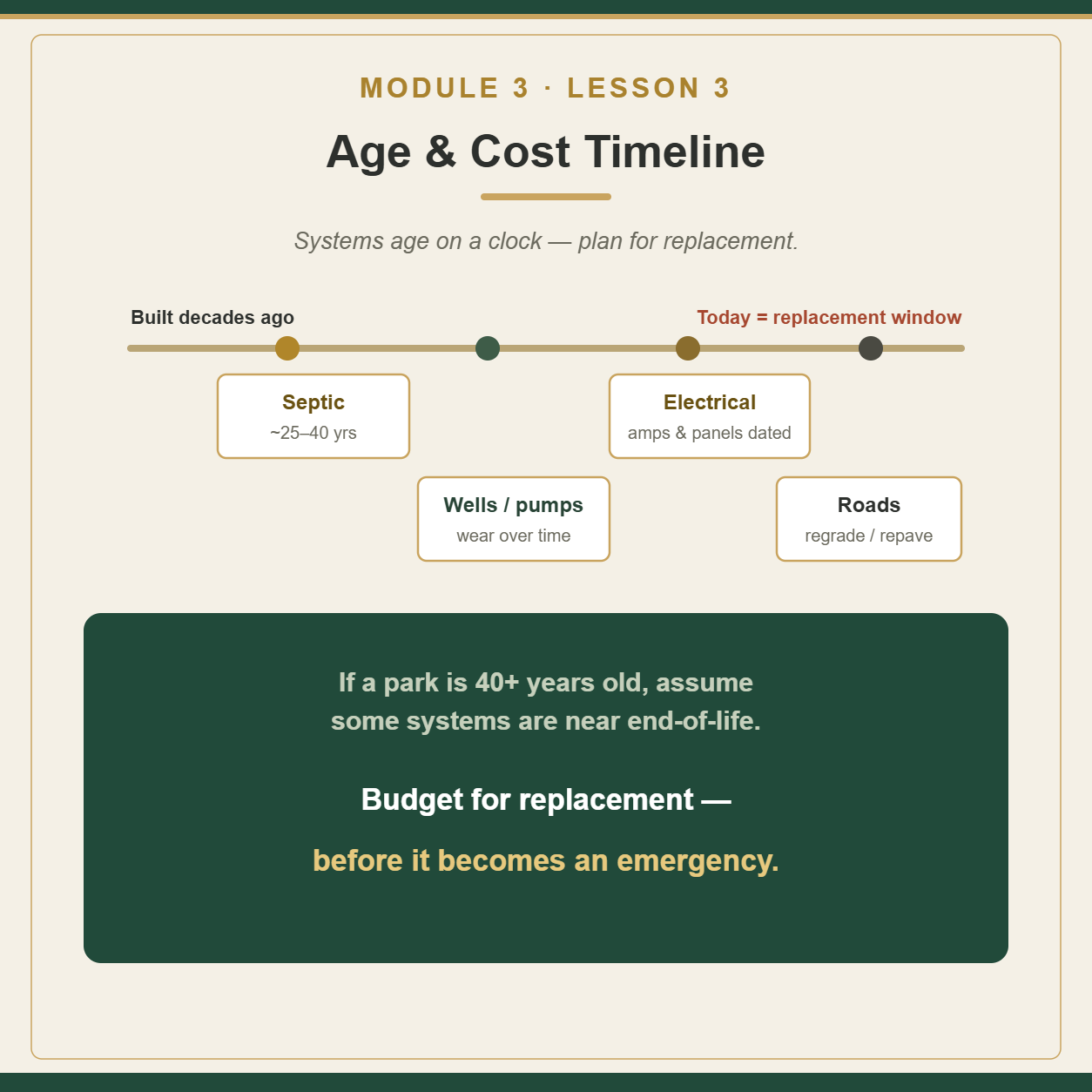
Buyers should expect potential replacement timelines such as:
✔ Well pump replacement every 10–15 years
✔ Septic pumping annually
✔ Drain fields and septic replacement approximately every 20–40 years
✔ Electrical pedestal replacement every 20–25 years
✔ Water line section replacement every 15–25 years
✔ Road resurfacing every 5–10 years
These items should become part of long-term capital planning and budgeting.
Additional Items Buyers Often Overlook
Older campgrounds frequently contain infrastructure materials that are no longer commonly used today.
Examples include:
Tree Root Intrusion
Tree roots naturally seek moisture and can create:
- blocked sewer lines
- cracked pipes
- drainage issues
- recurring maintenance problems
Large mature trees create beautiful campgrounds, but underground roots can create expensive surprises.
Orangeburg Pipe
Some older campgrounds may still contain:
Orangeburg pipe
Orangeburg pipe was made from compressed wood fibers and tar products and was commonly used years ago.
Over time it can:
- soften
- deform
- collapse
- restrict flow
The good news:
In some situations, replacement can be completed by installing smaller liner pipe through existing pipe sections rather than excavating and disturbing large portions of the campground.
This does not work in every situation, but it may reduce replacement costs.
Electrical Demand Continues Changing
Electrical expectations continue increasing.
Campgrounds have already evolved through:
15 amp → 30 amp → 50 amp
Buyers should begin thinking about:
future electrical demand
Modern RVs increasingly include:
- residential refrigerators
- multiple air conditioners
- washer/dryers
- fireplaces
- larger electronics
- electric vehicle charging
Future electrical needs may continue moving toward higher power requirements.
Planning ahead today can avoid expensive upgrades tomorrow.
LESSON TAKEAWAY
A campground may look beautiful on the surface while major infrastructure replacement timelines quietly approach underneath.
Strong buyers think beyond:
✔ today’s appearance
and begin planning for:
✔ tomorrow’s replacement costs
“The most expensive campground systems are often the ones you never see until they fail.”