Sellers usually think in two ways:
One of the most confusing parts of buying a campground is understanding how value is actually determined.
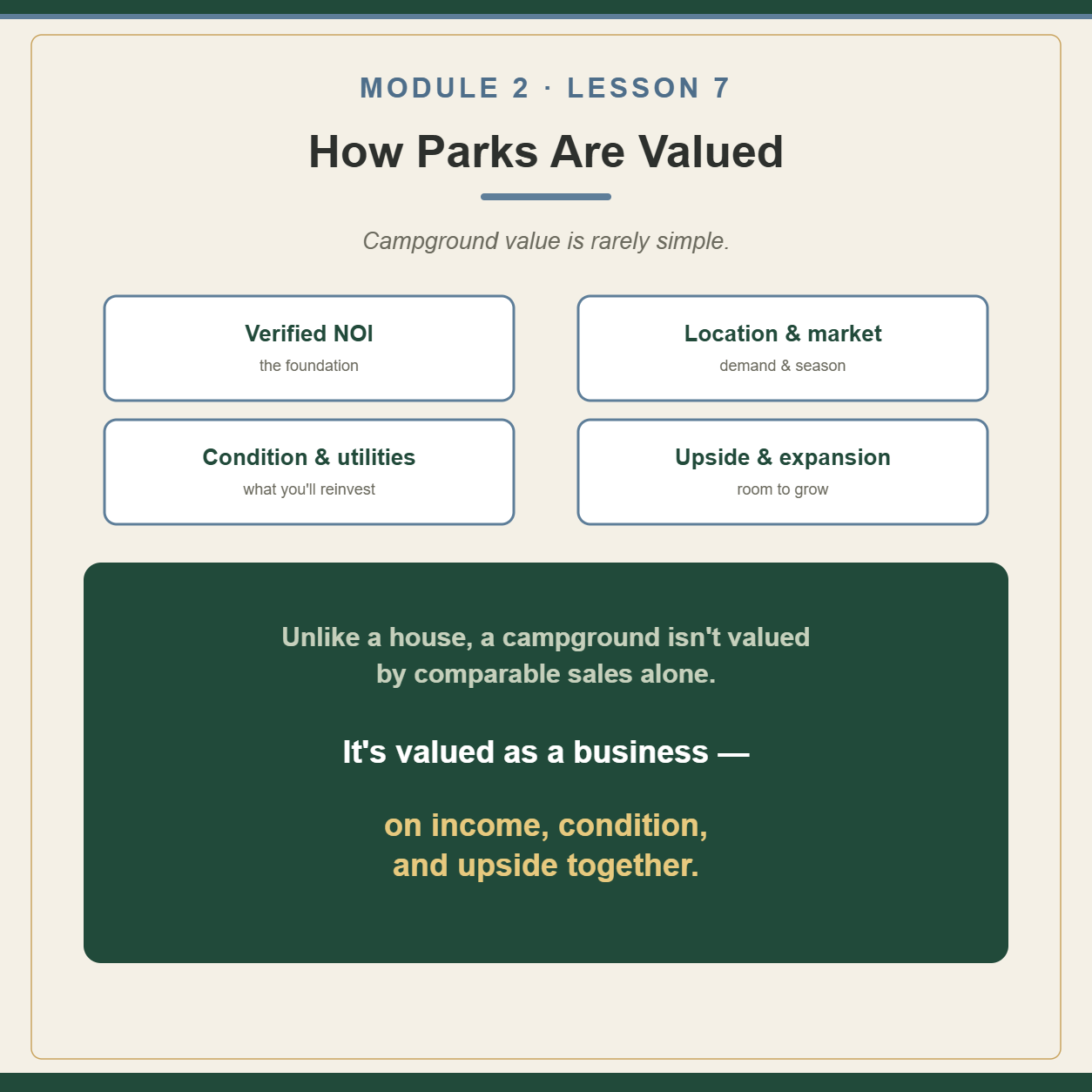
Unlike residential real estate, campground valuation is rarely simple.
Campgrounds are:
- businesses
- hospitality operations
- real estate assets
- lifestyle properties
- and operational systems
…all combined into one.
One of the most important things buyers must understand is:
“No two campgrounds are alike.”
Every campground operates differently.
Different:
- locations
- utility systems
- amenities
- operating styles
- customer demographics
- season lengths
- staffing structures
- and ownership philosophies
…can dramatically impact both profitability and value.
This is one reason campground valuation is far more nuanced than many traditional real estate asset classes.
There Are Multiple Ways Campgrounds Are being Valued
Campgrounds can be evaluated differently depending on:
- the buyer
- the lender
- the appraiser
- the broker
- or the purpose of the valuation
Banks often focus heavily on:
- tax returns
- P&Ls
- debt service coverage
- historical financial performance
- and lending risk
Appraisers in the campground industry often rely on:
- comparable campground sales
- adjusted NOI
- cap rate analysis
- infrastructure
- operational performance
- and market conditions
Investors may evaluate:
- future upside
- staffing costs
- expansion opportunities
- operational efficiencies
- and long-term return potential
Each approach may produce a different view of value.
Why Adjusted NOI Matters
Many experienced campground professionals rely heavily on:
✔ Adjusted NOI × Market Cap Rate
…as one of the primary ways to evaluate campground value.
Why?
Because adjusted NOI helps create a clearer picture of:
- the true operational performance of the business
- recurring operating costs
- actual earning potential
- and realistic cash flow
This approach attempts to separate:
- personal expenses
- non-recurring costs
- owner-specific operations
- and unusual accounting items
…from the actual operation of the campground itself.
Why Simple Multipliers Can Be Misleading
Some attempt to value campgrounds using simple revenue multipliers or generalized formulas.
The problem is:
Two campgrounds with similar gross revenue can produce dramatically different financial results.
For example:
- One park may have high labor costs, aging infrastructure, and thin profit margins
- Another may operate efficiently with lower expenses and stronger cash flow
Gross revenue alone does not tell the full story.
This is why experienced campground valuation often focuses more heavily on:
- adjusted NOI
- operational efficiency
- infrastructure
- market demand
- and long-term sustainability
rather than gross revenue alone.
Campgrounds Are Operational Businesses
One of the biggest mistakes new buyers make is viewing campgrounds exactly like traditional commercial real estate.
Campgrounds are not simply:
- land
- buildings
- and rental income
They are highly operational hospitality businesses.
The value of a campground can be influenced by:
- guest experience
- management quality
- online reviews
- amenities
- staffing
- maintenance
- market positioning
- and future vision
Operational execution often has a major impact on profitability.
Future Potential Also Impacts Value
Many campground buyers are not only purchasing:
- what the campground is today
- but what it could become tomorrow
Future value may be influenced by:
- expansion opportunities
- additional RV sites
- glamping additions
- cabin development
- rate increases
- branding improvements
- operational efficiencies
- or repositioning opportunities
This is one reason campground valuation can vary significantly between buyers.
Some buyers focus heavily on:
- current numbers
Others focus heavily on:
- future opportunity
Experienced buyers learn to evaluate both.
Why No Two Campgrounds Value Exactly the Same
Even parks with similar:
- site counts
- acreage
- or revenue
…may value very differently based on:
- infrastructure
- location
- utility systems
- operating style
- customer base
- season length
- management quality
- and long-term potential
This is why campground valuation is often more nuanced than many buyers initially expect.
LESSON TAKEAWAY
Understanding campground value requires more than looking at gross revenue or simple formulas.
Strong buyers learn to evaluate:
- operational performance
- adjusted NOI
- infrastructure
- guest experience
- market demand
- and future opportunity
The best campground buyers understand that campground valuation is part:
- financial analysis
- operational understanding
- and long-term vision.
“Campground valuation is not just about what a property earns today — it’s also about how it operates and what it has the potential to become.”