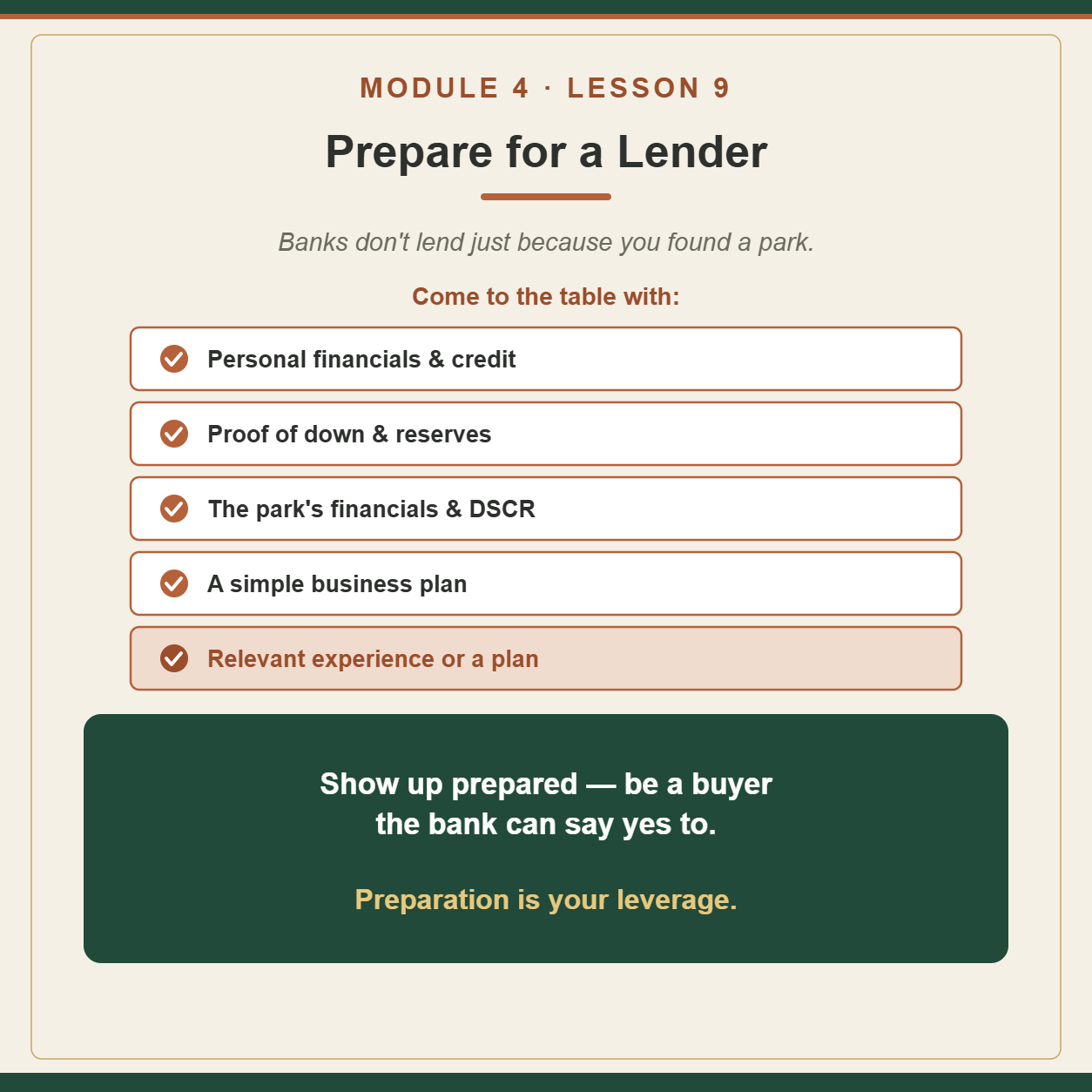
Banks don’t lend money simply because you found a campground. They lend because they believe you can successfully own and operate the business. The buyers who get financed fastest arrive with a complete, organized package before the lender even asks. Preparation comes in two parts.
About You
The lender wants to understand you as the borrower. Prepare:
- ✔ Personal Financial Statement (SBA Form 413 if applicable)
- ✔ Two to three years of personal tax returns
- ✔ Proof of available funds
- ✔ Resume highlighting business, management, or operational experience
- ✔ Personal credit history
- ✔ List of assets and liabilities
- ✔ Available working capital
The stronger your personal financial picture, the more confidence a lender has in your ability to own the campground.
About the Campground
The lender also wants confidence in the business. Be prepared to provide:
- ✔ Two to three years of Profit & Loss statements
- ✔ Business tax returns
- ✔ Adjusted financial statements with seller notes and add-backs
- ✔ Occupancy history
- ✔ Revenue mix
- ✔ Utility information
- ✔ Capital improvement history
- ✔ Deferred maintenance items
- ✔ Purchase Agreement or LOI
Your Business Plan Matters
One of the most overlooked parts of financing is the business plan. A lender wants to know: why will you succeed? Your plan should explain:
- ✔ Why this campground fits your goals
- ✔ How you intend to operate it
- ✔ Improvements planned during the first three years
- ✔ Conservative financial projections
- ✔ Cash reserve strategy
- ✔ Marketing strategy
- ✔ Growth opportunities
Banks appreciate realistic plans — not optimistic guesses. Use our template to build yours:
Know the Industry You’re Entering
Lenders have confidence in buyers who understand the campground business. Know the facts:
- ✔ More than 16,000 campgrounds operate across the United States (public and private).
- ✔ Nearly 88 million U.S. households identify as campers.
- ✔ RV shipments reached 342,220 units in 2025 — up 2.5% over the prior year.
- ✔ Many regions continue to experience campsite shortages.
- ✔ New RV sites can cost $25,000–$75,000 each to develop, depending on infrastructure.
Understanding your industry demonstrates preparation — not just enthusiasm.
Talk About Improvements
Don’t simply tell the lender you’re buying a campground. Explain:
- ✔ Improvements completed over the past several years
- ✔ Improvements you intend to make
- ✔ Why those improvements increase value
- ✔ How those improvements improve cash flow
Banks like buyers who think like business owners.
Show Conservative Projections
One of the biggest mistakes buyers make is presenting unrealistic projections. Instead:
- ✔ Under-promise, over-deliver
- ✔ Build projections on realistic occupancy
- ✔ Include maintenance reserves
- ✔ Include slower years
Conservative projections build lender confidence.
“Know your numbers better than the lender does. When a banker asks why this park, why this price, why this market, why this loan amount, why these projections — you should have the answer without looking at your notes. That, more than anything else, makes a buyer look bankable.”
How to Win the Lender
Hand the lender a complete package on day one — that alone can reduce approval time by weeks. And choose lenders who understand campgrounds, RV parks, and hospitality businesses. A lender familiar with the industry often sees opportunities other lenders overlook.
Lesson Takeaway
Getting financed isn’t about giving the best presentation — it’s about becoming the safest investment. Preparation builds confidence. Confidence builds trust. Trust gets deals funded.
“Lenders don’t fund dreams. They fund buyers who prove they’re prepared to turn those dreams into successful businesses.”