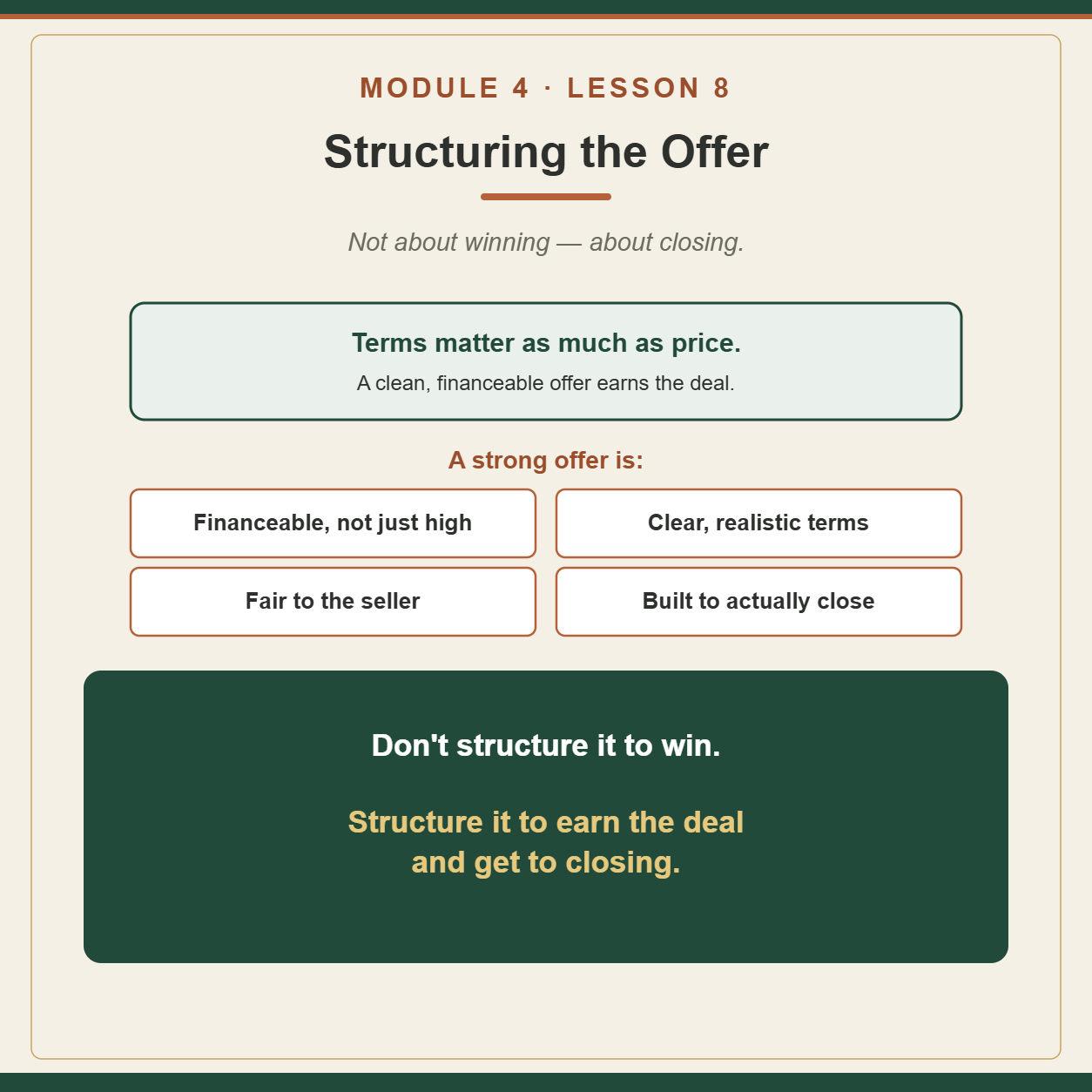
This lesson is really HG’s philosophy on buying campgrounds. A strong offer isn’t about winning a negotiation — it’s about earning the right to make one. The best buyers don’t try to out-maneuver the seller; they show up prepared, build trust, and structure a deal both sides are confident will close.
Do the Groundwork First
- Put together a real business plan. Know how you’ll run and grow the park.
- Go see it in person — before you make any offer. You can’t structure a smart offer on a park you’ve only seen online.
- Get to know the owner. Build a relationship. Sellers sell to people they trust.
- Show how it fits your criteria. List what you’re looking for and how closely this park matches.
- Provide a real financial statement. A genuine picture of your funds, not just a claim.
- Let your consultant do the negotiating. Emotion kills deals; a professional keeps it clean.
That business plan is the centerpiece — it shows the seller and the lender you understand the business and have a plan to run it well. Use ours to get started:
Negotiate with Facts, Not Emotion
One of the biggest mistakes buyers make is negotiating before they know the facts. Don’t negotiate based on assumptions, emotions, opinions, or what someone else paid. Negotiate after professional due diligence reveals the true condition of the business. Facts create leverage. Emotions destroy it.
Why Sellers Choose One Buyer Over Another
Sellers don’t always choose the highest offer — they choose the buyer they believe will actually close. Show the seller you’re that buyer:
- ✔ Financial ability — proof of funds and a clear down payment
- ✔ A realistic plan
- ✔ A real understanding of the business
- ✔ Readiness to move — clean, simple terms and no unnecessary delays
Confidence closes deals.
The Full-Price Strategy
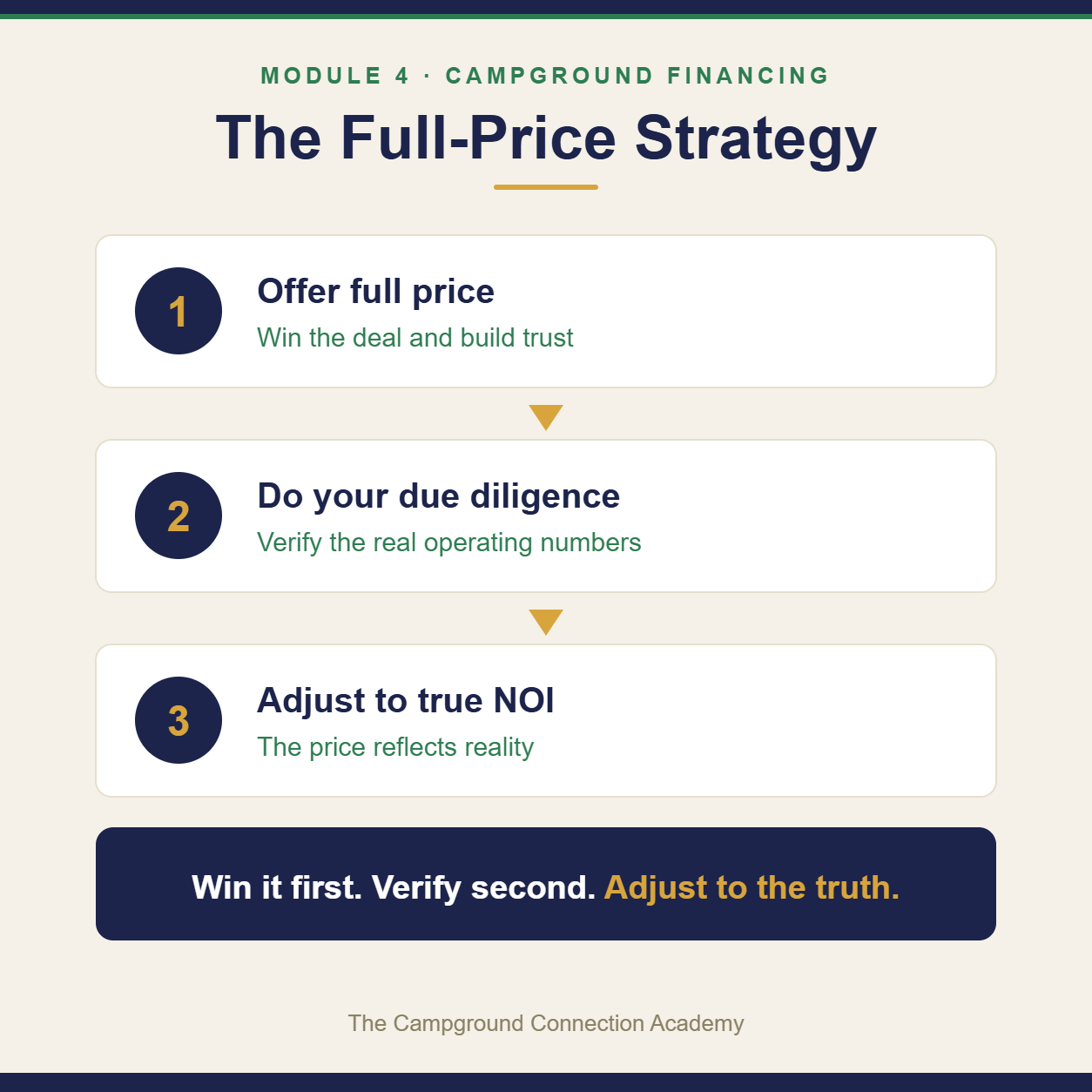
Don’t simply throw out a number — justify your offer. One effective strategy is to make a strong offer based on the information available today, while recognizing that professional due diligence may uncover facts that affect value. Done honestly, a strong offer shows respect for the seller and creates momentum toward a successful transaction.
If due diligence uncovers legitimate issues — cash flow, infrastructure, deferred maintenance, or operating performance — those facts may justify adjusting the purchase price. The key: negotiate with verified facts, not assumptions. That builds trust, protects both parties, and leads to better long-term transactions.
“After fifty years, here’s the one I keep coming back to: don’t fall in love with a campground before you understand its numbers. Every park has strengths and every park has weaknesses. The property has to earn your confidence through due diligence — not your emotions. The buyers who stay objective are the ones still standing years later.”
Lesson Takeaway
A successful offer is about much more than price. It’s about preparation, confidence, communication, financial strength, and professionalism. The strongest buyers don’t ask “How low can I offer?” They ask, “How can I structure an offer that gives both sides the confidence to move forward?”
Most courses teach you how to win negotiations. This one teaches you how to build transactions that actually close — and after 50+ years, that may be HG’s greatest lesson.
“The best negotiations aren’t won by one side — they’re built on facts, trust, and a shared path to closing.”