Every campground operates differently.
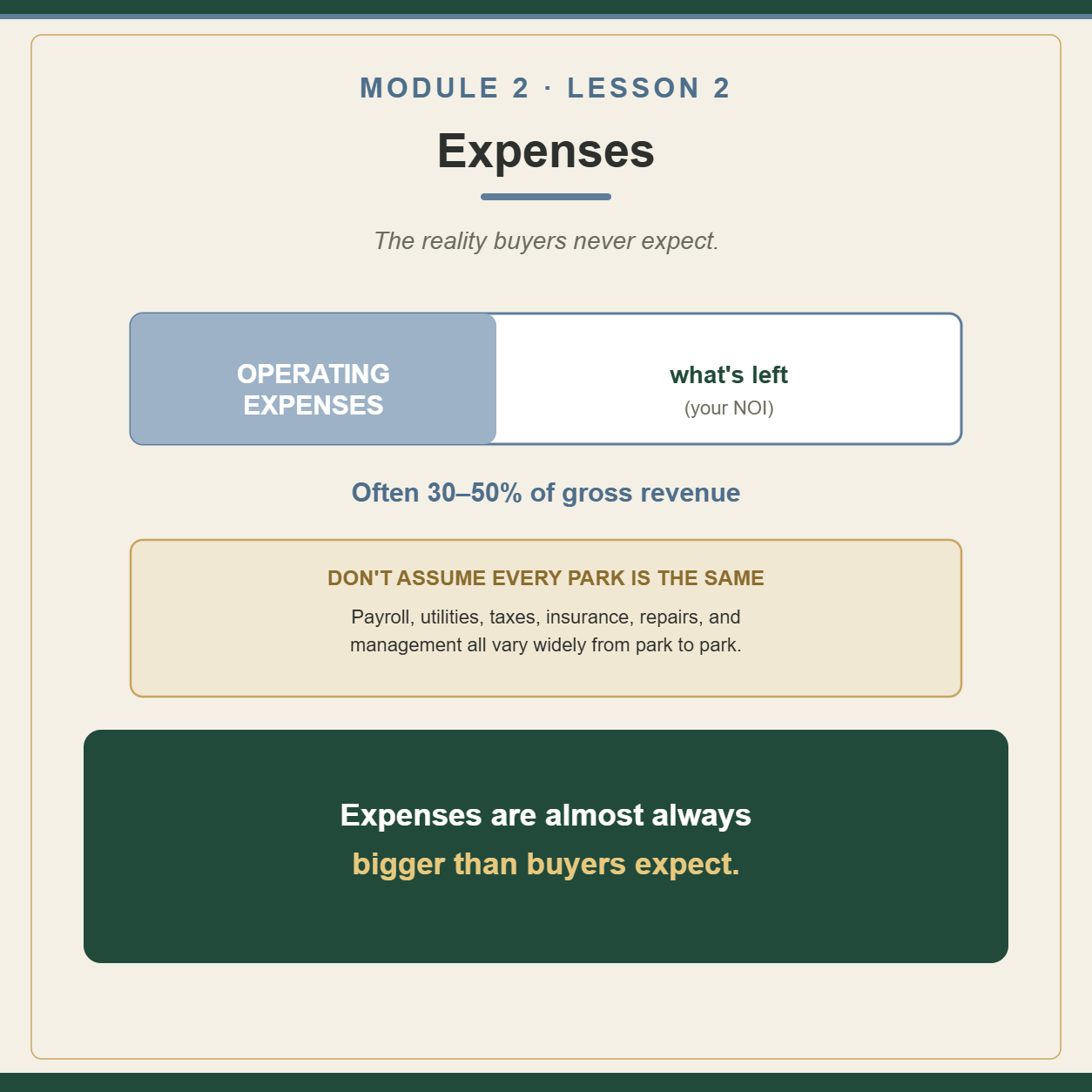
One of the biggest mistakes buyers make is assuming campgrounds operate under similar cost structures.
Average campground operating expenses often range between:
25% to 45% of gross revenue
But some parks operate far outside that range depending on:
- Guest expectations
- Amenities
- Infrastructure
- Staffing
- Park Design
- and the type of campers they serve
Higher-Cost Campground Operations
These parks often generate strong revenue but carry significantly higher operating costs:
- Cabin operations
- Glamping accommodations
- Onsite restaurants or food service
- Motels and lodging
- Entertainment attractions
- Large utility systems
- High payroll and staffing requirements
These businesses can produce impressive gross revenue while also requiring constant labor, maintenance, utilities, and operational oversight.
Lower-Cost Campground Operations
Other parks operate with much leaner structures:
- Seasonal RV parks
- RV-only operations
- Parks with limited amenities
- Long-term stay parks
- Simpler operational models
These parks may produce lower gross revenue while maintaining stronger profit margins and lower management complexity.
The Art of Profitability
Profitability is not only about revenue.
It is also about understanding the type of guest experience a campground is trying to create.
Different age groups often want completely different camping experiences.
Younger Campers
Younger campers often seek:
- adventure
- activities
- social experiences
- glamping
- entertainment
- outdoor recreation
These experiences may require more staffing, amenities, and operational costs, while younger travelers sometimes have less disposable income.
Older Campers
Older campers often prioritize:
- quiet environments
- larger sites
- comfort
- convenience
- cleanliness
- long-term stays
- stability and relaxation
Many retirees also travel with stronger retirement savings and different spending habits.
Finding the Right Balance
One of the biggest operational challenges campground owners face is balancing these different guest expectations.
Mixing very different camping styles together can sometimes create operational conflict and guest dissatisfaction.
Successful campground design often involves:
- targeting a specific demographic
- creating separate guest experiences
- or finding a thoughtful balance between multiple age groups and camping styles
As camping trends evolve, campground operations and expense structures will continue changing as well.
The parks that adapt successfully often understand both:
- operational efficiency
- and the customer experience they are trying to create.
Two campgrounds may appear similar on paper while operating completely differently behind the scenes.
Understanding:
- operating costs
- guest demographics
- staffing needs
- and operational complexity
…is critical when evaluating campground profitability and long-term sustainability.
You can’t compare two campgrounds apples to apples — operating structures vary dramatically.
“The most profitable campground is not always the one with the highest revenue — it’s the one built around a sustainable operating model.”